Quick answer
A 48 piece floor puzzle offers larger pieces and a bigger scene, ideal for kids ready for more challenge and floor play. A 35 piece tray puzzle uses smaller, inlaid pieces with outline guides, making it easier for beginners or children who need extra visual cues. Choose based on your child's puzzle experience and whether they prefer working on a table or the floor.
Piece count and difficulty
The 48 piece floor puzzle has 13 more pieces than the 35 piece tray puzzle. That extra challenge suits children who have mastered simpler puzzles and want a longer, more engaging activity. The 35 piece tray puzzle is a gentler step up from 20 or 24 piece puzzles, offering a manageable number of pieces with built-in guidance.
Format and play surface
Floor puzzles are designed to be assembled on the floor, with large pieces that are easy for small hands to pick up and position. Tray puzzles come in a sturdy tray with a printed outline underneath each piece, so kids can match shapes to the guide. This makes tray puzzles a better choice for car rides, restaurant tables, or any spot where a contained workspace helps.
Visual and tactile support
The tray puzzle includes definitive outlines that show exactly where each piece goes, reducing frustration for children who struggle with spatial reasoning. Floor puzzles rely on the image alone, encouraging kids to study the picture and develop pattern recognition. Both formats use large pieces, but the tray's outline offers an extra layer of support.
Trade-offs at a glance
- Challenge level: 48 piece floor puzzle offers more pieces and no outline guide, so it takes longer and requires more concentration. The 35 piece tray puzzle is quicker to finish and less demanding. Choose 48 pieces for a longer activity; choose 35 pieces for a confidence builder.
- Portability and setup: Floor puzzles need open floor space and can slide apart if bumped. Tray puzzles stay contained and can be moved or stored mid-build. Tray puzzles work better for travel or small spaces.
- Learning support: The tray's printed outlines provide a visual scaffold, while the floor puzzle relies on the image alone. This makes the tray puzzle more forgiving for beginners. Tray puzzles suit kids who need extra guidance; floor puzzles suit kids who enjoy independent discovery.
Product facts
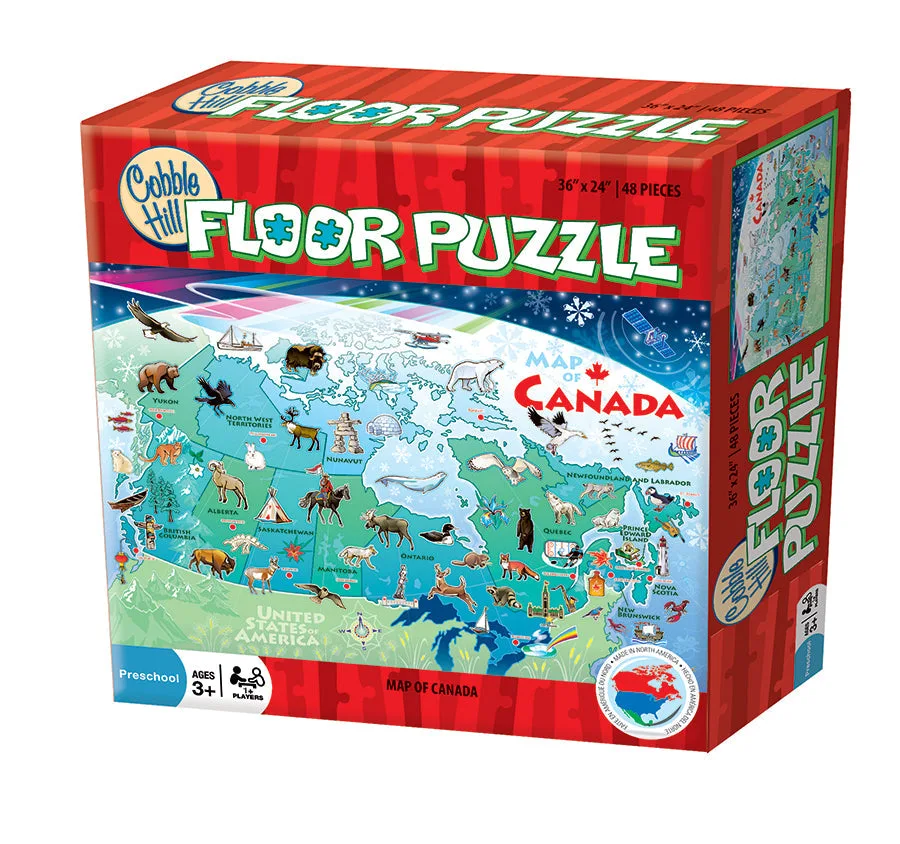
- Map of Canada (Floor 48pc): Map of Canada Floor Puzzle has lots of wildlife to explore and makes for a fun way for kids to get to know this great country known as the Great White North. There are other great symbols to be found on the map including a totem pole in British Columbia and the maple leaf on the east coast. Floor puzzles are large puzzle pieces that can be assembled while on the floor. It makes for a fun tactile experience. The large floor pieces and educational map theme make this a great choice for kids who enjoy learning about geography and animals while building a puzzle on the floor.
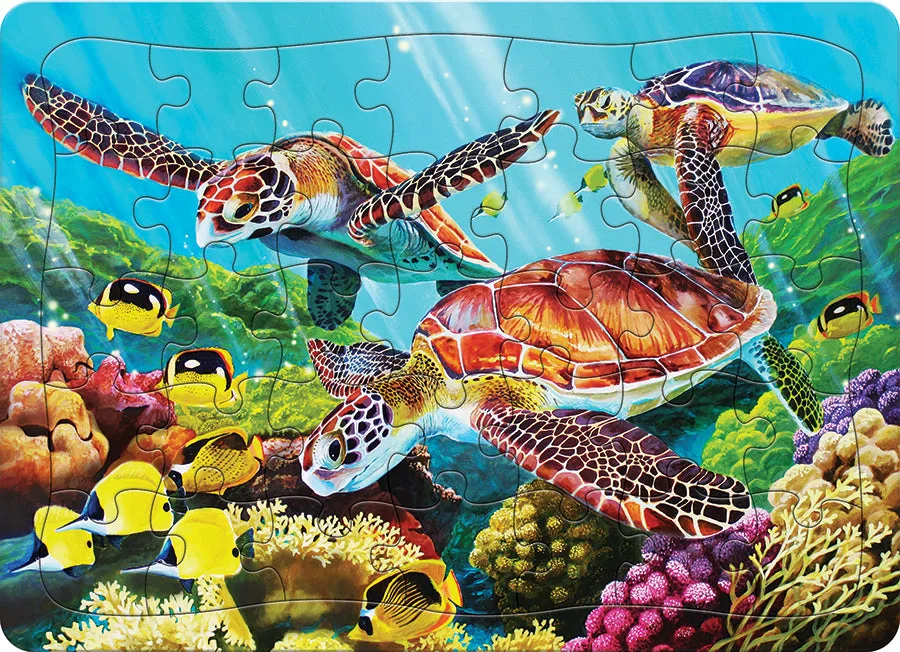
- Molokini Sea (tray) | 35 Piece Tray: These turtles kindly share the underwater world with their fish friends, while we enjoy the tranquility of the deep blue Molokini Sea puzzle. A tray puzzle is durable inlaid pieces in a tray with definitive outlines underneath to help identify where each piece goes. The large pieces make it easy for hands to grasp and allows for those needing more visual cues to see a greater portion of the image. The tray and outline guides reduce guesswork, making this puzzle ideal for younger children or those who benefit from clear visual boundaries and a contained workspace.
Which puzzle fits your child?
Best for
- Children ages 4–6 who have completed simpler puzzles and want a longer, more challenging activity on the floor
- Kids who enjoy learning about geography, animals, or cultural symbols while they play
Not for
- Younger children (ages 2–3) who still need piece outlines and a contained workspace
- Families who need a portable puzzle that can be used on a table or in a car