Quick answer
For toddlers and preschoolers, self-correcting puzzles like the 5 Set Matching Self Correcting Games for Kids offer frustration-free learning, but not all sets suit every age or skill level.
Why self-correcting puzzles work for early learning
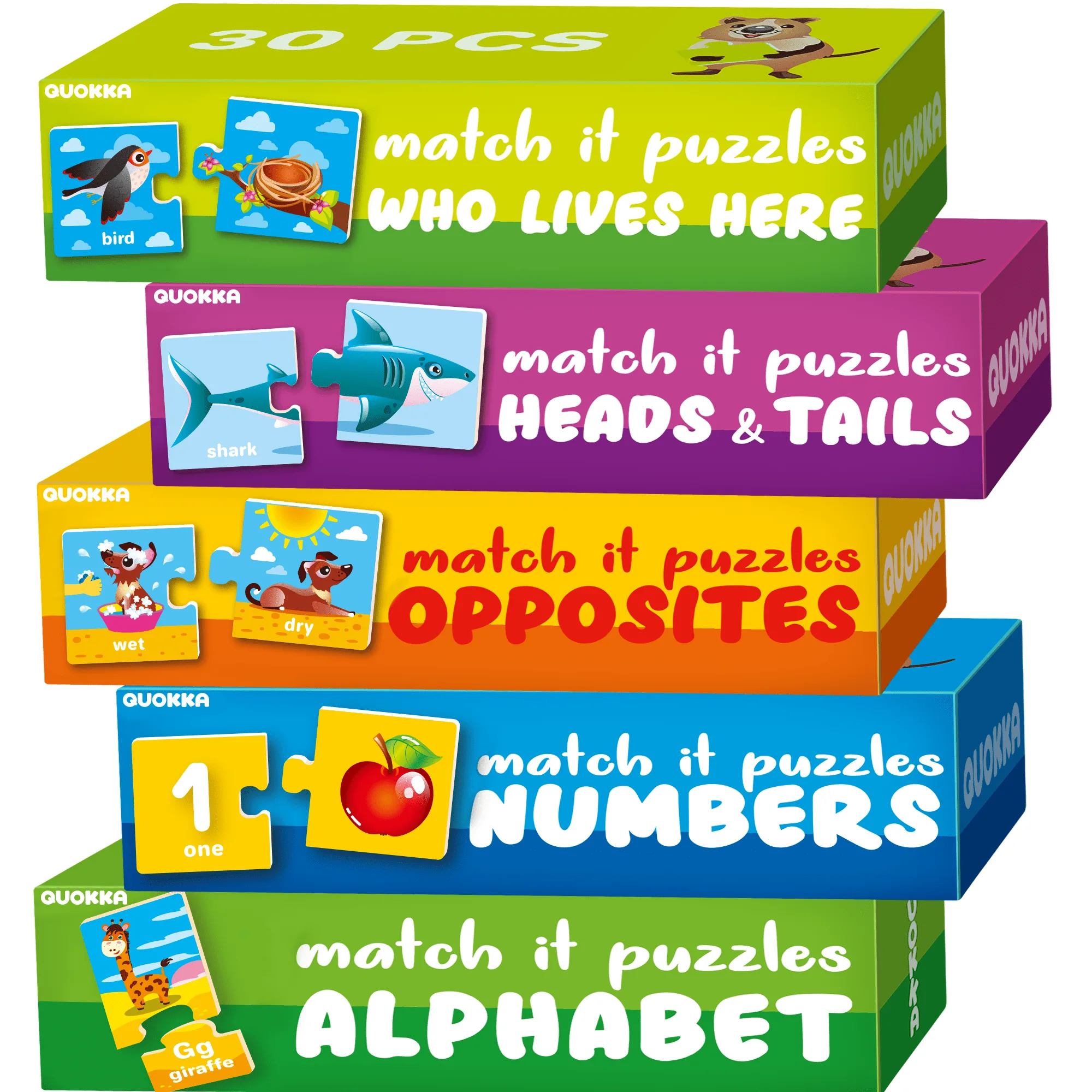
Self-correcting puzzles have pieces that only fit together one way, so kids immediately know when they've made a match. This builds confidence and reduces the need for adult help during independent play. The 5 Set Matching Self Correcting Games for Kids includes themes like 'Heads & Tails' and 'Who Lives Here' that teach vocabulary and categorization.
Because each puzzle piece has a unique shape, children practice visual discrimination and fine motor skills without the frustration of pieces that almost fit. This design is especially helpful for toddlers who are still developing patience.
Trade-offs to consider
While self-correcting puzzles are great for independent play, they offer less room for creative or open-ended exploration compared to building blocks or shape sorters. If your child enjoys free-form construction, you may want to mix puzzle time with other activities.
Also, the 5-set bundle covers multiple themes, but some children may prefer to focus on one theme at a time. You might need to rotate the sets to keep interest fresh.
Decision rules for choosing self-correcting puzzles
- Age range: Choose puzzles with 2-piece matches for toddlers aged 18 months to 3 years. For older preschoolers, look for sets with more pieces per puzzle or multiple matching steps. The 5 Set Matching Self Correcting Games for Kids is designed for toddlers and early preschoolers.
- Theme variety: Select a set that covers multiple categories (animals, habitats, everyday objects) to build vocabulary across different contexts. Single-theme sets may bore quickly.
- Piece durability: Cardboard puzzles should be thick enough to withstand repeated assembly. Thinner cardboard may bend or tear with rough toddler handling. Check the material thickness before buying; the supplied catalog does not specify thickness, so consider this a limitation.
- Self-correcting mechanism: Ensure each puzzle piece has a unique shape so only the correct match fits. Avoid puzzles where multiple pieces could be forced together, as that defeats the self-correcting purpose.
Product spotlight
-
5 Set Matching Self Correcting Games for Kids: Each 2-piece puzzle has a full-color matching picture with words to learn, and pieces have individual shapes making a perfect self-correcting game for toddlers. This means children can practice matching and vocabulary without needing an adult to check their work, which supports independent play.
5 Set Matching Self Correcting Games for Kids
Who should buy this?
Best for
- Parents of toddlers (18 months to 3 years) looking for independent, frustration-free learning activities
- Caregivers who want to build early vocabulary and matching skills without constant supervision
Not for
- Children over 4 who need more complex puzzles (e.g., 10+ pieces per puzzle)
- Families seeking open-ended or creative construction toys