Quick Answer
Watch for five clear signs—sitting with minimal support, showing interest in your food, losing the tongue-thrust reflex, reaching for utensils, and chewing motions—to know your baby is ready for the next feeding stage. Transition gradually, introduce one new texture at a time, and choose products designed for your baby's current motor skills.
Every baby develops at their own pace, but there are common signs that signal readiness for the next feeding stage. Recognizing these cues helps you introduce new textures and self-feeding skills at the right time, reducing frustration for both of you.
In this guide, we'll walk through five reliable signs your baby is ready to advance, and offer practical advice for making the transition smooth—from choosing the right utensils to adjusting your mealtime routine.
1. Sitting Up with Minimal Support
One of the first physical milestones for feeding is the ability to sit upright with minimal support. This ensures your baby can swallow safely and reduces the risk of choking. Typically, this happens around 6 months, but it's more about your baby's individual development than the calendar.
If your baby can sit in a high chair with little to no help and hold their head steady, they're likely ready to try more advanced foods and self-feeding. Until then, continue with purees and pre-feeding activities that don't require upright posture.
- Try a few minutes of supported sitting during meals to build strength.
2. Showing Interest in Your Food
When your baby watches you eat, reaches for your plate, or opens their mouth as you bring food to your own mouth, they're showing curiosity about solid foods. This interest is a strong indicator that they're ready to move beyond milk or formula.
You can encourage this by letting your baby sit at the table during family meals and offering small, safe tastes of what you're eating (if appropriate). This social modeling is a key part of the feeding journey.
- Let your baby handle a spoon or a soft food strip to build familiarity.
3. Losing the Tongue-Thrust Reflex
The tongue-thrust reflex causes babies to push food out of their mouths with their tongues. When this reflex fades, usually around 4-6 months, your baby can move food to the back of their mouth and swallow more effectively.
To test, offer a small spoonful of puree. If your baby keeps most of it in their mouth and swallows, they're ready for thicker textures. If they push it out consistently, wait a week or two and try again.
- Don't force the spoon; let your baby show readiness.
4. Reaching for Utensils and Food
When your baby starts grabbing at spoons, reaching for food on your plate, or trying to take the spoon from your hand, they're signaling a desire to self-feed. This is a great time to introduce baby-led weaning tools that support their grasp.
Start with soft food strips that are easy to hold, and offer a pre-loaded spoon for them to practice bringing to their mouth. Expect mess—it's part of learning.
- Offer a spoon with a thick handle for easier gripping.
5. Chewing Motions and Drooling Less
Even before teeth appear, babies can chew with their gums. If you notice your baby making up-and-down chewing motions or moving food to the side of their mouth, they're developing the skills needed for more textured foods.
Also, as babies gain better mouth control, they drool less. These signs indicate that your baby is ready to move from purees to mashed, chopped, or finger foods. Always supervise closely and cut food into appropriate sizes.
- Offer soft, dissolvable foods to practice chewing safely.
Decision Rules for Transitioning
- If your baby sits with minimal support: They may be ready for thicker purees or mashed foods. Offer a pre-loaded spoon and let them practice bringing it to their mouth. Checkpoint: Can they hold their head steady for the whole meal?
- If your baby shows interest in your food: Start offering small tastes of soft, safe foods. Use a food cutter to create strips that are easy for them to hold. Checkpoint: Do they open their mouth when food is near?
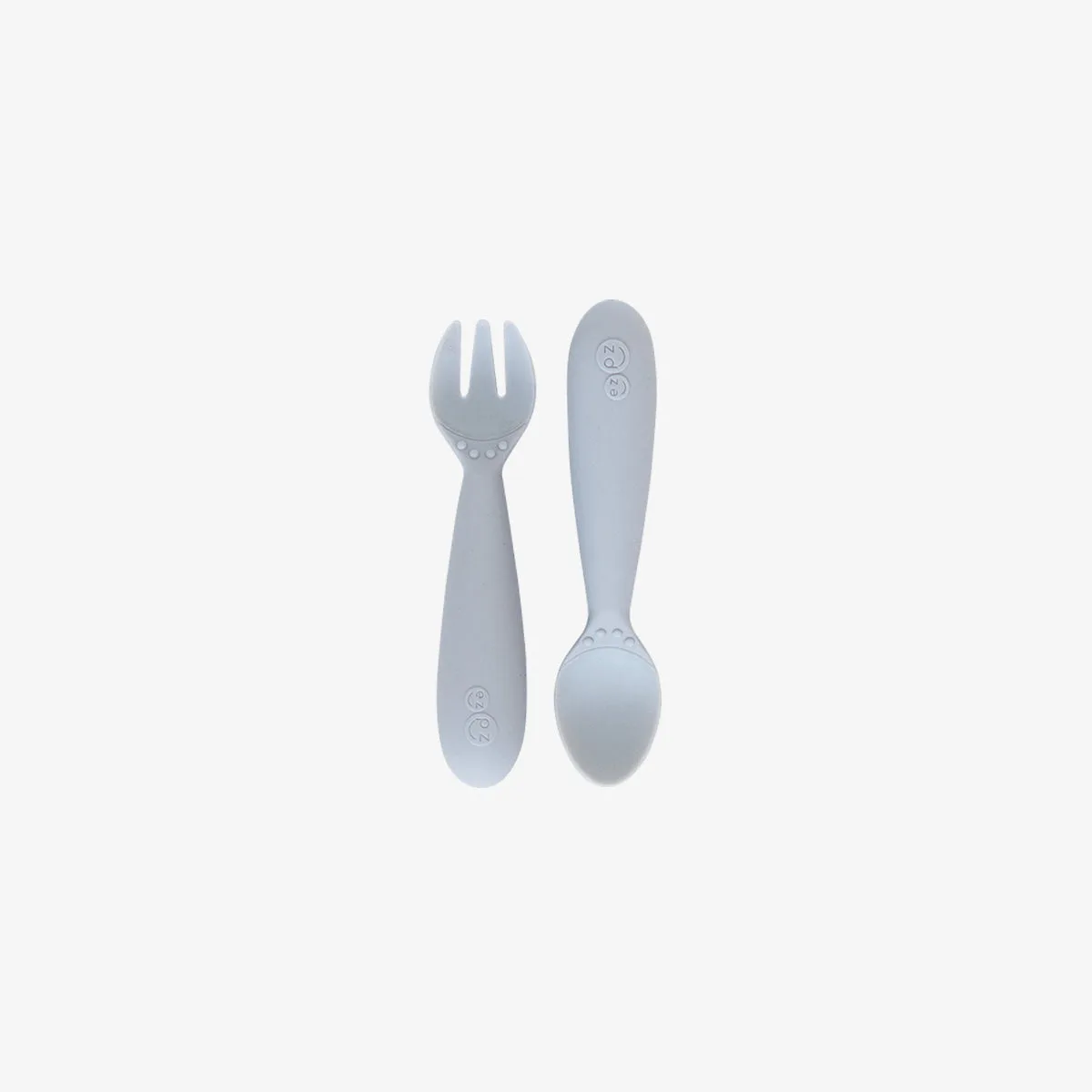
- If your baby reaches for utensils: Introduce toddler-sized utensils like the Mini Utensils. Let them hold a spoon even if they don't use it correctly yet. Checkpoint: Are they able to bring the spoon to their mouth with help?
Products That Support the Transition
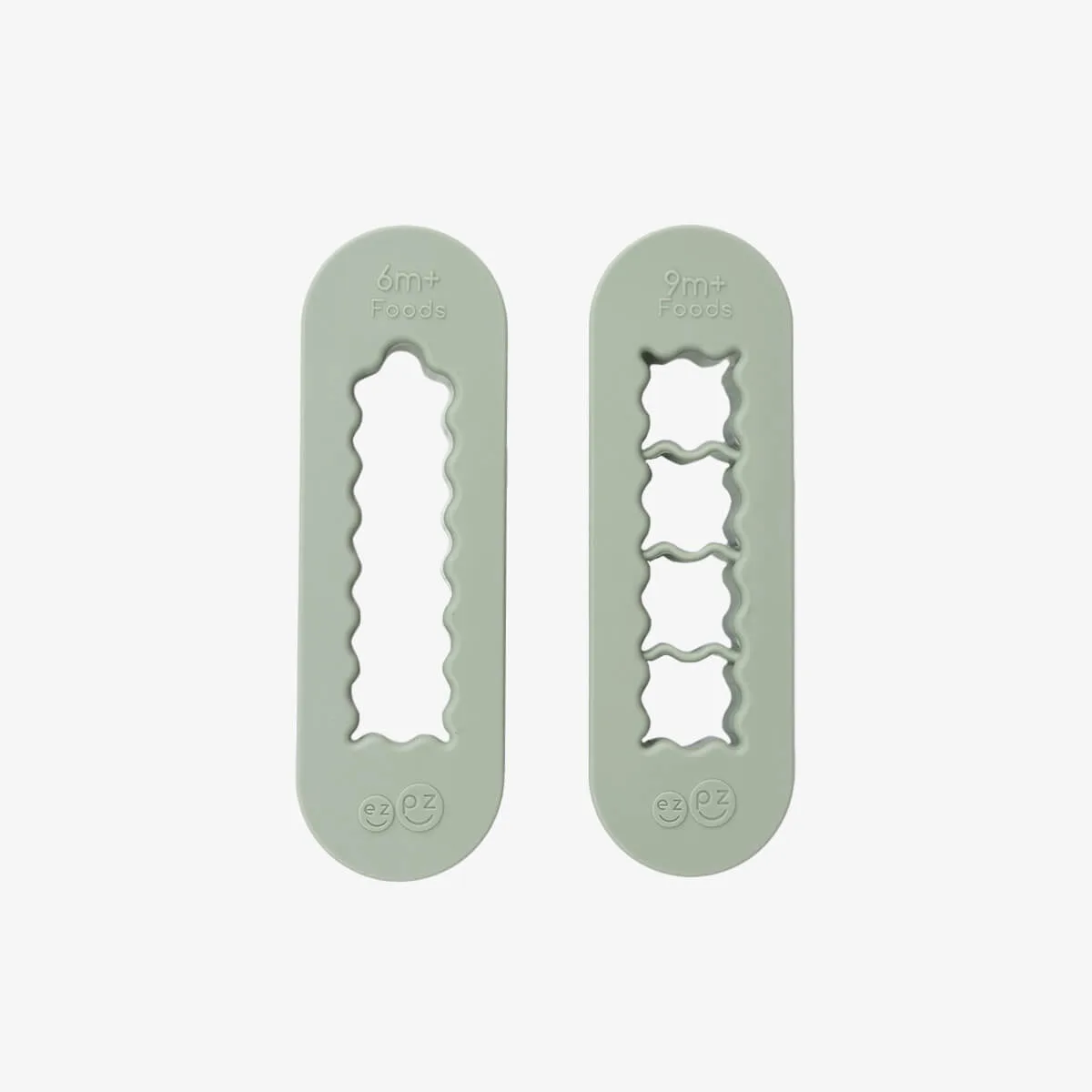
- Baby-Led Weaning Food Cutters: The ezpz food cutters make baby-led weaning food prep ezpz! Start with the food cutter for food strips (6m+) to promote the palmar grasp. At 9m+ layer in the cubed food cutter to promote the pincer grasp. These cutters help you prepare foods in the right shapes for your baby's developing grasp, making self-feeding safer and more successful.
- Mini Utensils: The Mini Utensils are designed to help toddlers learn how to eat with a spoon (scooping) and fork (piercing). The Mini Spoon and Fork are the most functional, developmentally appropriate toddler utensils on the market. When your baby shows readiness for utensils, these mini tools are sized for small hands and help build confidence in self-feeding.
- Baby-Led Weaning Travel Box: The travel box is an all-in-one feeding + storage system that helps families pack, transport, and serve baby’s meals when away from home. With designated spots for food strips, cubes, and purees, it supports self-feeding routines wherever baby goes (including daycare, restaurants, and more). Once you start transitioning to more textures, this box keeps your prepared foods organized and portable, so you can maintain routines on the go.
Is Your Baby Ready?
Best for
- Babies who show at least 3 of the 5 signs and are at least 6 months old
- Parents who want to encourage self-feeding and follow baby-led weaning principles
Not for
- Babies who are under 4 months or who have not yet lost the tongue-thrust reflex
- Parents who prefer to stick with spoon-fed purees for a longer period
Transitioning to the next feeding stage is an exciting milestone. By watching for these five signs and choosing the right tools, you can support your baby's development and make mealtimes enjoyable for the whole family.