Quick answer
Sort your partial spools by color family, then match each one to a job that suits its remaining yardage: scrappy piecing, bobbin filling, machine quilting, binding, or small quilted gifts. The key is assigning thread before you sit down to sew, so short spools go to short tasks instead of stalling a big project halfway through.
Every quilter ends up with a drawer of half-empty spools, bobbins wound in odd colors, and cones too short to quilt a bed-size project but too useful to toss. Leftover quilting thread is not clutter if you give it a job.
The trick is matching thread to task. A spool with 100 yards left can bind a wall hanging; a bobbin with a few yards can handle a test square. Work through these five steps in order, and you will use up thread spools while finishing projects you actually want.
Step 1: Sort and Measure What You Actually Have
Pull every partial spool, cone, and wound bobbin out of your drawer and sort by color family: neutrals, warm tones, cool tones, and brights. Then judge remaining yardage by feel and spool weight. A spool that is more than half full can handle piecing or quilting; a spool with a thin layer left is best saved for bobbins, binding, or small quilting projects.
Write the color name or number on a strip of masking tape and stick it to each spool. This matters because partial spools lose their labels fast, and matching a mystery thread later is guesswork. Once sorted, you can plan projects around the thread you own instead of buying more.
- Keep a small bin for bobbins only, so loose winds do not tangle with spools.
- If you cannot identify a thread weight, treat it as a bobbin or piecing thread rather than a top thread for quilting.
Step 2: Match Thread Weight to the Job
Thread weight tells you what a leftover spool can realistically do. A 50 wt. 3-ply polyester like So Fine! #50 is lint free, smooth, and blends well, which makes it a natural fit for piecing, quilting, serger use, and bobbin thread. A 60 wt. 2-ply like The Bottom Line is even finer, so it disappears into seams and works well for binding, embroidery, and bobbin use.
Here is the practical rule: use lighter weights for fine detail and heavier weights for structure. If a partial spool is 50 wt., it can carry a small quilting project or a piecing session. If it is 60 wt., save it for bobbin filling, stitch-in-the-ditch, or binding where a thin thread is an advantage.
- Label the weight on your tape so you do not have to guess later.
- When in doubt, test on a scrap quilt sandwich before committing the thread to a whole project.
Step 3: Fill Bobbins Before You Start Piecing
Bobbins are the fastest way to use up thread spools, especially short ones. Wind two or three bobbins from each partial spool before you begin a piecing session. That way, when a bobbin runs out mid-seam, you already have a replacement wound and ready, and you are not stopping to hunt through the drawer.
This step also solves the odd-color problem. A bobbin wound in a color that does not match your current project can still be used for piecing, since bobbin thread is hidden inside the seam. Save your best-matched bobbins for quilting and binding, where the thread may show.
- Wind bobbins at a steady speed; rushing causes uneven tension and loose winds.
- Store filled bobbins in a small case by color family so you can grab one without unwinding it.
Step 4: Build Scrappy Projects Around Leftover Colors
Scrap thread projects work best when the thread color is part of the design. Use leftover spools to piece scrappy blocks, stitch a color-blocked tote, or quilt a small wall hanging where a slightly different thread shade reads as intentional texture. Small quilting projects like mug rugs, potholders, and doll quilts are ideal because they use short yardage and finish fast.
If you have several partial spools in one color family, use them together in a single project. Alternating similar shades across a scrappy quilt top creates depth that a single spool cannot match. This is also a good place to use up thread scraps ideas you have saved, like piecing a quilt-as-you-go panel or adding decorative stitching to a pouch.
- Choose a simple block pattern so the thread color, not the piecing, is the star.
- Keep a dedicated scrap project on your table so you always have a place to use a short spool.
Step 5: Quilt and Bind Small Projects to Finish the Spool
The final step is to spend the last yards on quilting and binding. A partial spool of 50 wt. thread can quilt a baby quilt or a set of placemats. A finer 60 wt. thread is excellent for binding, because it sits flat and does not bulk up the folded edge. Match the thread to the smallest project you have waiting, and quilt it before the spool gets too short to be useful.
If a spool has only a few yards left, use it for hand stitching, applique, or attaching labels. When the spool is truly empty, recycle the plastic and start the next one. The goal is not to save thread forever; it is to use leftover quilting thread on real projects instead of letting it pile up.
- Quilt from the center outward so you can stop cleanly if the bobbin runs out.
- Keep a needle threaded with the last yard for hand-sewing labels or closing bindings.
Your five-step leftover thread routine
- Sort and label every partial spool: Group by color family and mark weight and color number on tape so you can match thread to project without guessing. Checkpoint: if you cannot identify the weight, set it aside for bobbin or piecing use.
- Match thread weight to the task: Use 50 wt. for piecing, quilting, and serger work; use 60 wt. for binding, bobbin filling, and fine detail. Checkpoint: test on a scrap sandwich before committing to a full project.
- Wind bobbins before you sew: Fill two or three bobbins from each short spool so you never stop mid-seam to hunt for a match. Checkpoint: store filled bobbins by color family so they stay untangled.
- Start a scrappy project: Use leftover colors in a small quilting project like a mug rug, tote, or wall hanging where mixed shades look intentional. Checkpoint: keep one scrap project on your table as a home for short spools.
- Quilt and bind to the last yard: Spend remaining yardage on quilting a small project, then use the final yards for binding, labels, or hand stitching. Next step: when the spool is empty, recycle it and move to the next partial spool.
Thread facts that guide leftover use
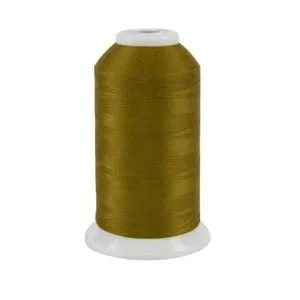
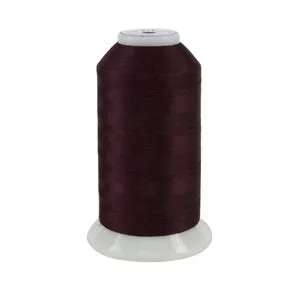
- https://piecenquiltcr.com/products/so-fine-thread-415-cherrywood-spool-df1608dded49169451cf8a11-1385465So Fine! Thread #415 Cherrywood - Spool: So Fine! #50 is a #50/3 lint-free and extra smooth all purpose polyester thread, with 550 yards per spool, recommended for quilting and sewing and usable as bobbin thread. A 550-yard spool is a good candidate for piecing, quilting, or bobbin filling, so a partial spool still has enough yardage for a small quilting project.
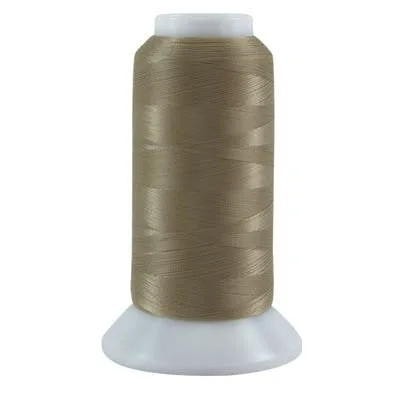
- The Bottom Line #653 Beach: The Bottom Line is a lint-free polyester quilting, embroidery, sewing, binding, and bobbin thread in 60 wt. 2-ply, with 3,000 yards per cone. Because it is fine and lint free, a leftover cone works well for binding and bobbin use, where a thin thread disappears into the seam.
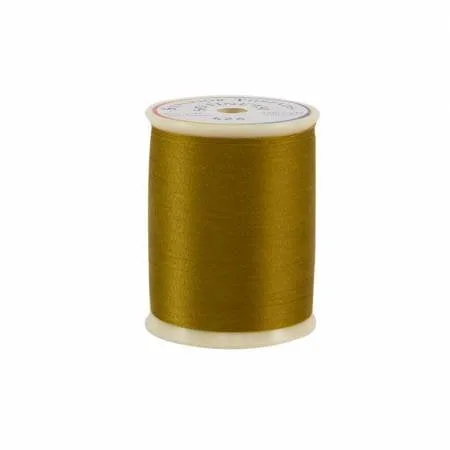
- https://piecenquiltcr.com/products/so-fine-thread-426-ginger-spool-3d918de9dcd2b3b8ed0c39b9-1385444So Fine! Thread #426 Ginger - Spool: So Fine! #50 is a #50/3 lint-free and extra smooth all purpose polyester thread, with 550 yards per spool, and may also be used as bobbin thread. A warm-toned partial spool like Ginger can be paired with scrappy projects where a slightly different shade adds visual texture.
Leftover quilting thread does not need a special storage solution; it needs a plan. Sort, match weight to task, wind bobbins, build scrappy projects, and quilt small pieces to the last yard. Do that, and your partial spools become finished quilts instead of drawer clutter.