A 184-page guide is a reference, not a weekend read
A big training book invites the same mistake every time: you open it, read forty pages, feel motivated, and change nothing about your dog's actual behavior. The 50 Dog Training Tips eBook is built around 50 separate problems, which makes it far more useful as a lookup tool than as something to read cover to cover.
The workable approach is to treat it like a manual for one problem at a time. Choose the behavior bothering you most this week, find that section, and run it long enough to see whether it moves. Everything else in the book can wait until you need it.
Turn one chapter into a two-week plan
Use this sequence each time you start a new problem from the guide. It keeps you from sampling ten techniques and finishing none of them.
- Name the behavior in plain words: Write down what your dog actually does, not a label. "Jumps on guests at the door" is trainable; "bad manners" is not.
- Find the matching section and read it twice: Read once for the overall approach, then again with a notepad so you can pull out the specific actions the guide recommends for that problem.
- Pick one action and one daily slot: Choose the single exercise you can repeat at the same time each day. A short, consistent session beats an ambitious plan you skip.
- Run it for two weeks before judging: Keep the same exercise in place long enough to see a pattern. Changing methods every two days tells you nothing about any of them.
- Record what happened in one line a day: A dated note like "calmer at the door, still jumped once" gives you evidence for whether to continue, adjust, or move to another section.
What the guide actually contains
-
50 Dog Training Tips eBook: The 50 Dog Training Tips eBook is a 184-page downloadable digital guide covering 50 common dog training problems. Knowing the scope up front tells you this is a problem-by-problem reference, so you can plan around single issues instead of reading linearly.
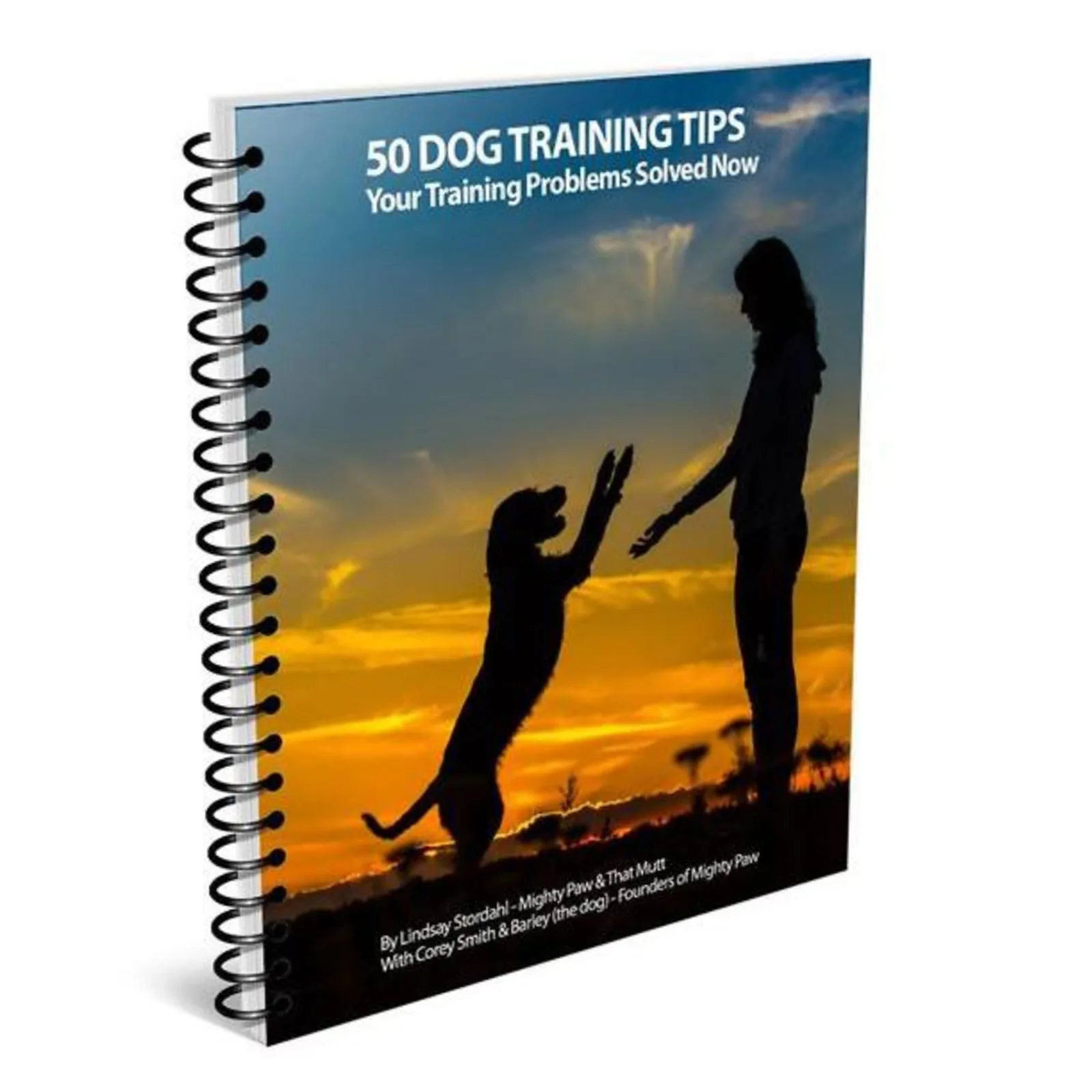
50 Dog Training Tips eBook
-
50 Dog Training Tips eBook: The covered problems include jumping, barking, potty training, and separation anxiety. If your current issue is on that list, you can start there today rather than reading the whole book first.
-
50 Dog Training Tips eBook: The guide also addresses food guarding and potty accidents, and covers topics from basic commands to advanced techniques. That range means the same book can serve a puppy household and an older dog with established habits.
Where to start with a puppy versus an adult dog
With a puppy, the highest-value sections are usually the household basics: potty training, jumping, and barking. Those are the behaviors that shape how the next year goes, and they are also the ones most likely to be actively happening right now. Read those sections before your puppy's habits harden, then keep the rest of the guide on hand as new issues appear.
With an adult dog, start with whatever prompted you to buy a training guide. If that is food guarding or separation anxiety, go straight to those sections and give them your full attention. Established behaviors usually need more repetitions than new ones, so plan on a longer runway before you decide a method is or is not working.
If more than one problem is urgent, pick the one with the clearest safety or daily-life cost and work only that one for two weeks. Splitting your attention across three behaviors at once makes it impossible to tell which change produced the result.
Build a simple training plan from the book
The guide's own description mentions developing a smart training plan tailored to your dog. Here is how to make that concrete without overcomplicating it.
- One active problem at a time: Keep a single behavior in progress. Everything else goes on a waiting list you can see.
- A fixed daily slot: Same time, same place, short session. Consistency is what makes a plan a plan rather than an intention.
- A written baseline: Note how often the behavior happens now, so you have something to compare against in two weeks.
- A weekly review: Once a week, reread your one-line notes and decide: continue, adjust the exercise, or move to the next section.
Getting the most from a digital format
Because the eBook is a downloadable digital guide, it works best when it is easy to reach at the moment you need it. Keep the file on the phone or tablet you already carry, so a question at the front door or on a walk can be answered in a minute rather than remembered for later.
Searching the PDF for a specific behavior, such as barking or jumping, is faster than scrolling through 184 pages. If you prefer paper, print only the sections you are actively working on and keep them somewhere visible, like the fridge or the leash hook.
The guide also describes a community of dog lovers for ongoing support and feedback. Treat that as a supplement to your own notes, not a replacement for them. Other people's suggestions are most useful once you can describe exactly what your dog did and when.
What the guide cannot decide for you
The supplied product information does not specify session lengths, repetition counts, or a day-by-day schedule, so do not expect the book to hand you a stopwatch plan. It gives approaches to 50 problems; the pacing still depends on your dog, your household, and how much time you can realistically commit.
It is also not a substitute for professional help. If a behavior involves injury risk, escalating aggression, or a sudden change in an adult dog, involve a veterinarian or qualified behavior professional rather than working through a chapter alone. The same applies if two weeks of consistent effort produces no change at all.
For everything else, the honest trade-off is simple: a 184-page reference is only worth the price if you actually use it on one problem at a time. Pick the behavior, set the daily slot, keep the notes, and let the rest of the book wait until you need it.