Quick answer
A leash that slips off a small dog is almost always a fit or hardware problem, not a training failure. Check collar tightness, clip weight, and whether the leash pulls sideways; then switch to a properly fitted harness or a suction-anchored leash for grooming and bath time. If your dog still backs out after two adjustments, stop using that setup and choose a different style.
Why small dogs slip leashes more often
Small dogs have narrow heads and necks relative to their body strength. A standard collar sized for a medium dog can slide right over a Chihuahua or Yorkie's head when they pull backward. The issue is not that they are escape artists; it is that the collar's circumference is larger than the widest part of their skull. Even a snug collar can pop off if the clip is heavy and pulls the strap downward at an angle.
The same physics applies to walking harnesses. A harness that fits loosely around the chest gives a small dog room to twist and back out. Look for a harness with at least two adjustment points and a strap that sits behind the shoulder blades, not across the throat.
Check the clip and leash weight first
A heavy metal snap clip can drag a lightweight leash sideways, especially on a 5-pound dog. That sideways pull creates slack, and slack is what lets a dog slip free. If you can hear the clip clinking against the collar, it is probably too heavy for your dog's size. Switch to a lighter clip or a leash with a smaller snap.
Also check for wear. A clip that no longer springs closed fully is a failure point. Test it by pressing the trigger and releasing it several times; if it sticks or feels loose, replace the leash before your next walk.
When the problem is grooming, not walking
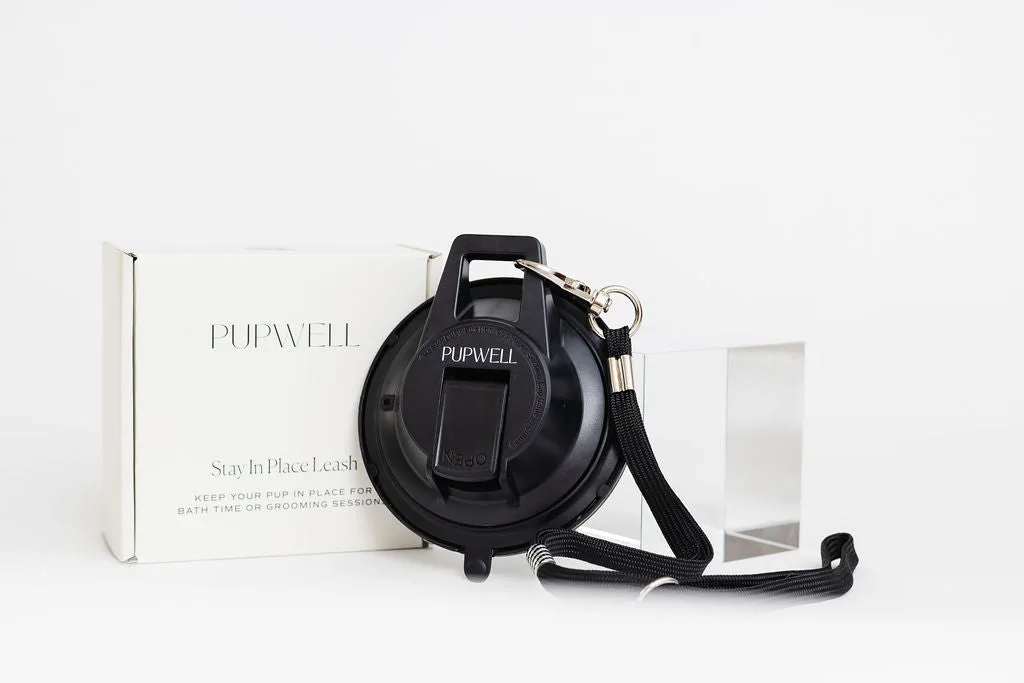
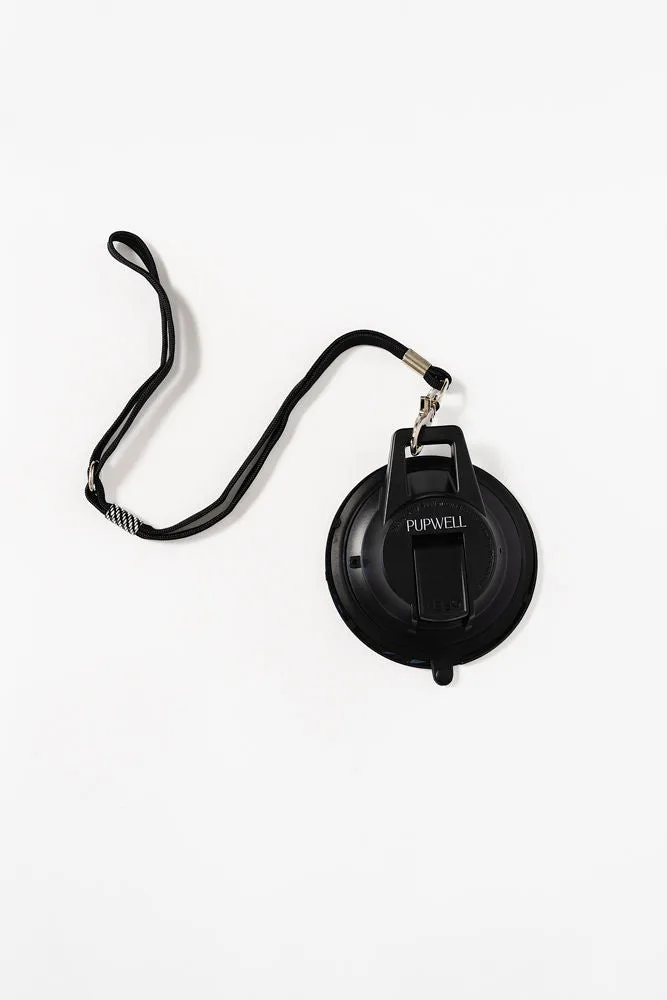
Some slip-offs happen during bath time or brushing, not on walks. A wet dog in a tub can twist out of a collar in seconds. For those sessions, a suction-anchored leash solves a different problem: it holds your dog in place without you needing a free hand. This is not a walking leash and should never be used for walks, but it removes the slip risk during grooming.
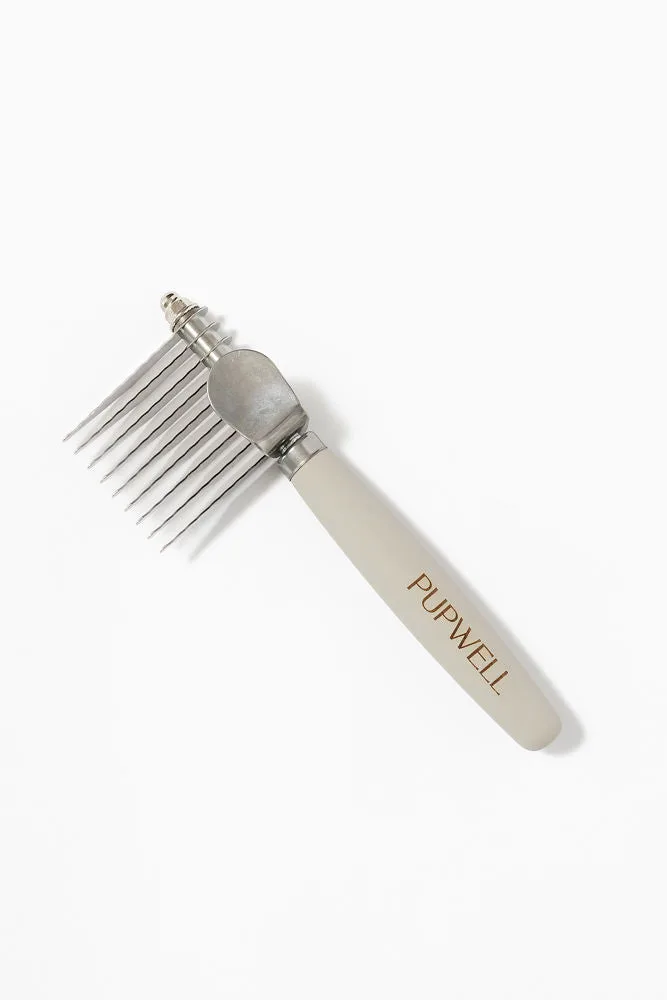
If you groom at home, pair a stay-put anchor with tools that reduce handling time. A detangler comb and safety scissors for the face let you work faster, which means fewer opportunities for your dog to wriggle free.
Diagnose the slip-off: symptom, cause, action, stop point
- Symptom: Dog backs out of collar on walks: The collar slides over the head when your dog pulls backward or plants their feet. Cause: collar circumference is larger than the widest part of the head. Action: switch to a properly fitted harness with two adjustment points. Stop if the harness still twists after tightening; choose a different harness style.
- Symptom: Leash clip drags or pops open: The clip feels heavy and hangs at an angle, or the spring no longer closes fully. Cause: hardware too heavy for a small dog or worn out. Action: replace with a lighter clip and test the spring before each walk. Stop if the clip fails the press-and-release test; do not use that leash.
- Symptom: Dog slips free during bath or brushing: Your dog twists out while you are holding a collar or leash by hand. Cause: you need both hands for grooming, leaving no secure hold. Action: use a suction-anchored leash on a smooth tub or table. Stop if the surface is textured or curved; the suction cup needs flat and smooth to hold.
Products that address slip-off during grooming
- Stay In Place Leash (wholesale): Stay In Place Leash uses a heavy-duty suction cup that adheres to flat, smooth surfaces with an attached loop leash to keep your pup in place for bath time or grooming. Removes the need to hold a collar or leash by hand during grooming, which is when many small dogs twist free.
Stay In Place Leash
- The Detangler: The Detangler is a stainless steel comb designed to break through knots and prevent mats on long-coated breeds. Faster detangling means less time restraining your dog, reducing the chance they slip out of a grooming hold.