Quick answer
For most piecing and fine machine quilting, choose 50wt cotton thread like Aurifil 50wt. It blends into seams, presses flat, and handles delicate work. For bold decorative stitches or when you want thread to stand out, choose 30wt polyester. It is thicker and stronger, making it ideal for topstitching and embellishment. The best choice depends on whether you want your thread to disappear or be the star.
Thread weight and fiber change how your quilt looks, feels, and wears. A 50wt cotton and a 30wt polyester thread behave very differently under the needle, and picking the wrong one can lead to tension headaches or a look you did not intend. This comparison breaks down the trade-offs so you can match thread to task.
We will look at two common options: 50wt cotton, represented by Aurifil 50wt, and 30wt polyester. You will learn where each excels, where each falls short, and how to decide based on your project, your machine, and the effect you want.
What thread weight and fiber actually mean
Thread weight is a measure of thickness: the higher the number, the finer the thread. A 50wt thread is thin and smooth, which makes it ideal for piecing because it takes up little space in the seam. A 30wt thread is thicker, so it covers more surface area and shows up clearly in decorative stitching. Fiber matters too: cotton is natural, breathable, and has a matte finish; polyester is synthetic, strong, and often has a slight sheen.
Neither weight nor fiber is inherently better. The right choice depends on whether you want the thread to recede into the fabric or become a design element. Understanding these basics helps you predict how a spool will perform before you sit down at the machine.
- Higher weight number = finer thread (50wt is finer than 30wt).
- Cotton blends into natural fabrics; polyester adds strength and sheen.
50wt cotton thread: the fine-detail specialist
A 50wt cotton thread like Aurifil 50wt is a workhorse for piecing and fine quilting. Because it is thin, it creates flat seams that press well and reduce bulk, which is especially helpful in intricate blocks. Cotton also has a matte finish that disappears into cotton fabric, so your piecing lines stay subtle. Many quilters find that 50wt cotton runs smoothly at high speeds with minimal tension adjustments.
However, 50wt cotton is not the best choice when you want the thread to be visible. Its fine gauge means decorative stitches can look weak or get lost. Cotton also has less abrasion resistance than polyester, so it may not hold up as well in high-wear areas like quilt edges or children's items. For those cases, a thicker or stronger thread is a better fit.
- Best for: piecing, fine machine quilting, and projects where thread should blend in.
- Trade-off: less visible for decorative work and less durable under heavy abrasion.
30wt polyester thread: bold and tough
A 30wt polyester thread is thicker and stronger than 50wt cotton. That makes it a great choice for decorative stitching, topstitching, and quilting designs where you want the thread to stand out. Polyester also resists abrasion and fading, so it holds up well on utility quilts, bags, and items that get frequent washing. Its slight sheen can add a subtle highlight to your stitches.
The trade-off is that 30wt polyester can create bulk in seams and may be too heavy for fine piecing. It also may not press as flat as cotton, and its synthetic nature can feel different against the skin. If you are piecing a quilt that will be judged or handled frequently, a finer cotton is usually the better choice. Use 30wt polyester when strength and visibility matter more than a delicate look.
- Best for: decorative stitches, topstitching, utility quilts, and high-wear projects.
- Trade-off: can add bulk in seams and may be too thick for intricate piecing.
How to choose for your next project
Start by asking what role the thread plays. If it is structural—holding pieces together—choose 50wt cotton for a flat, unobtrusive seam. If it is decorative—adding a design element—choose 30wt polyester for visibility and strength. You can also mix them: use 50wt cotton in the bobbin and 30wt polyester on top for decorative quilting, but always test tension on a scrap first.
Consider the fabric too. Cotton thread blends best with cotton and other natural fibers. Polyester thread pairs well with synthetic fabrics or when you need extra durability. There is no rule that says you must use one or the other exclusively; many quilters keep both on hand and switch based on the task.
- Test on a scrap sandwich before starting your quilt.
- Match thread fiber to fabric fiber when possible for best blending.
Trade-offs at a glance
- Visibility: 50wt cotton disappears into seams; 30wt polyester stands out. Choose based on whether you want thread to blend or be seen.
- Bulk: 50wt cotton adds minimal bulk; 30wt polyester can create thicker seams. For intricate piecing, finer cotton is usually easier to press flat.
- Durability: Polyester resists abrasion and fading better than cotton. For high-wear quilts, 30wt polyester may last longer.
- Hand and drape: Cotton gives a natural matte finish; polyester adds slight sheen and strength. Consider the final feel and look you want for your quilt.
Product facts
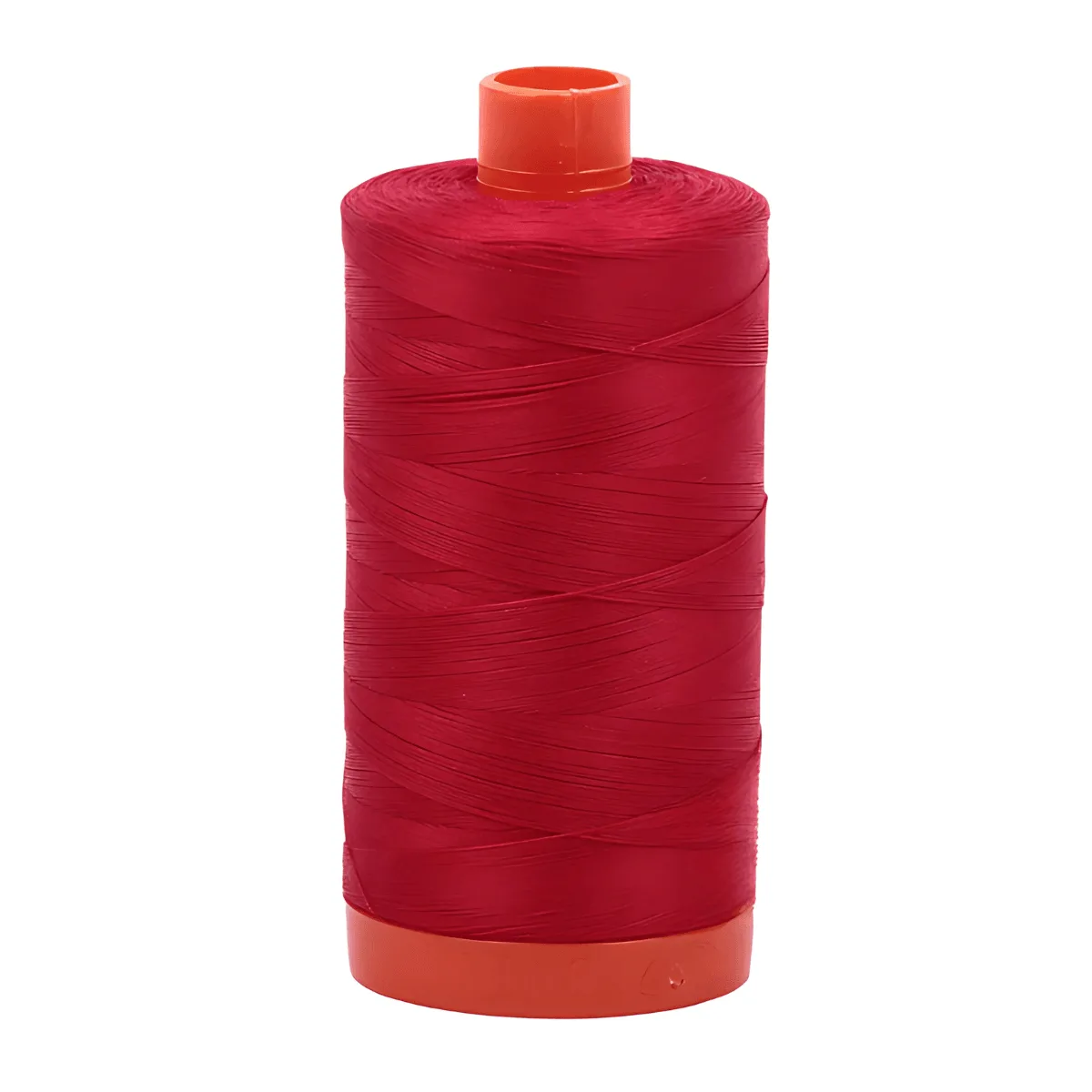
- 50wt Aurifil 1422yd Red 2250 - 100% Cotton Thread: 100% cotton, 50wt, 1422 yd spool. This fine, all-cotton thread is ideal for piecing and detailed quilting where you want stitches to blend into the fabric. The large spool means fewer changes on big projects.
- 60" x 60" Mid Loft 70% Cotton & 30% Poly Batting for Machines Quilter’s Dream: 70% cotton, 30% polyester with ultra-light scrim base, mid-loft, 60" x 60". This batting is designed for machine quilting and offers a soft yet supportive structure. It works well with both cotton and polyester threads, giving you flexibility in thread choice.
Which should you choose?
Best for
- Quilters piecing intricate blocks who want flat, unobtrusive seams.
- Projects where thread should blend into cotton fabric for a traditional look.
- Fine machine quilting and detailed stitch-in-the-ditch work.
Not for
- Decorative stitching where you want the thread to be a focal point.
- High-wear utility quilts that need maximum abrasion resistance.
- Projects using synthetic fabrics where a cotton thread may not blend as well.
There is no single winner—50wt cotton and 30wt polyester serve different purposes. Keep both in your thread stash: fine cotton for piecing and blending, thicker polyester for bold accents and durability. Test on a scrap, trust your project's needs, and you will make the right call every time.