Quick Answer
Use your 5oz silicone coated glass bottle with a wide neck nipple that matches your baby's feeding pace, and clean it promptly after each use to keep the silicone coating intact and the glass hygienic.
Why the 5oz Size Works for Daily Feeding
A 5oz bottle holds about 148 ml, which suits newborns and younger infants who take smaller, more frequent feeds. As your baby grows, you may need a larger bottle, but for the first few months the 5oz size is practical for daytime and nighttime feeds without waste.
The wide neck design makes filling and cleaning easier than narrow bottles, and the silicone coating provides a soft, grippy surface that helps prevent slips. The glass body keeps milk free from plastic taste, though it is heavier than plastic alternatives.
Trade-offs of the Silicone Coating
The silicone coating protects the glass and improves grip, but it can wear over time if you use abrasive brushes or harsh sterilizing methods. Avoid steel wool or scouring pads, and do not use the bottle in a microwave with the silicone sleeve on unless the manufacturer explicitly allows it.
Also, the coating may make the bottle slightly thicker, so check that your bottle warmer or sterilizer accommodates the extra width. If you are unsure, hand washing with mild soap is always safe.
Daily Use Steps for the 5oz Silicone Coated Glass Bottle
- 1. Sterilize before first use: Boil the bottle parts (glass, nipple, cap) in water for 5 minutes. Remove with tongs and let them air dry on a clean towel. Do not overboil, as this can damage the silicone coating. Check that the silicone coating is intact after sterilizing.
- 2. Assemble the bottle correctly: Place the nipple on the bottle ring and screw the ring onto the bottle. Ensure the nipple is centered and the ring is snug but not over-tightened to avoid leaks. Test for leaks by turning the bottle upside down before feeding.
- 3. Prepare milk at the right temperature: Warm breast milk or formula in a bottle warmer or by placing the bottle in warm water. Test a few drops on your wrist—should feel lukewarm, not hot. Never microwave the bottle, as it can cause hot spots and damage the silicone. Always shake the bottle after warming to distribute heat evenly.
- 4. Feed with proper positioning: Hold your baby in a semi-upright position and tilt the bottle so the nipple is full of milk. This reduces air swallowing and ear infections. Do not prop the bottle, as it increases choking risk. Pause every few minutes to burp your baby.
- 5. Clean the bottle immediately after use: Rinse the bottle and nipple with cool water, then wash with warm soapy water using a soft brush. Pay attention to the nipple holes and the threads. Rinse thoroughly to remove soap residue. Do not use abrasive scrubbers that can scratch the silicone coating.
- 6. Sterilize regularly: Sterilize the bottle daily for babies under 3 months, and at least weekly for older babies. You can use a steam sterilizer, boiling water, or a cold-water sterilizing solution. Follow the manufacturer's instructions for each method. Let all parts dry completely before storage to prevent mold.
- 7. Inspect the bottle and nipples: Check the silicone coating for peeling or cracks, and the nipple for tears or stickiness. Replace the nipple every 2-3 months or at the first sign of wear. If the glass chips or cracks, discard the bottle immediately. Keep spare nipples on hand so you are never caught without a working bottle.
Product Facts
-
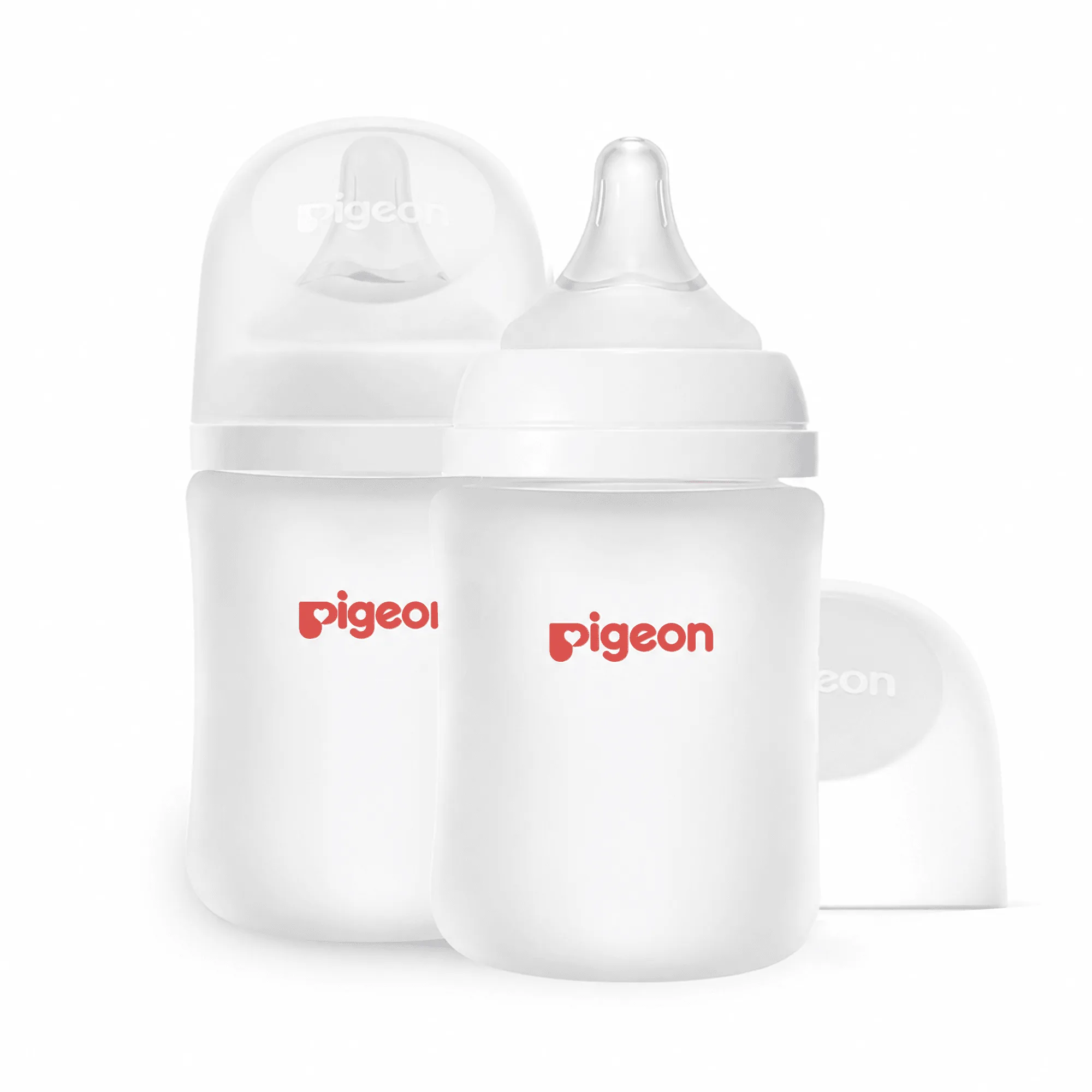
5oz-Silicone Coated Glass-Baby Bottle-Wide Neck-Pack of 2: The Pigeon 5oz Silicone Coated Glass Baby Bottle features a wide neck and natural-feel SS nipples to support a smooth transition between breastfeeding and bottle feeding. The wide neck and soft nipple help your baby latch comfortably, making the bottle a good choice for mixed feeding routines.
5oz-Silicone Coated Glass-Baby Bottle-Wide Neck-Pack of 2