Quick answer
For a typical home office with a laptop, monitor, desk lamp, and phone charger, a 6-outlet surge protector is usually enough. But the real question isn't just outlet count—it's joule rating and whether you need USB ports. If you have more than six devices or want direct USB-C charging, consider a model with integrated USB ports.
What a 6-outlet surge protector can handle
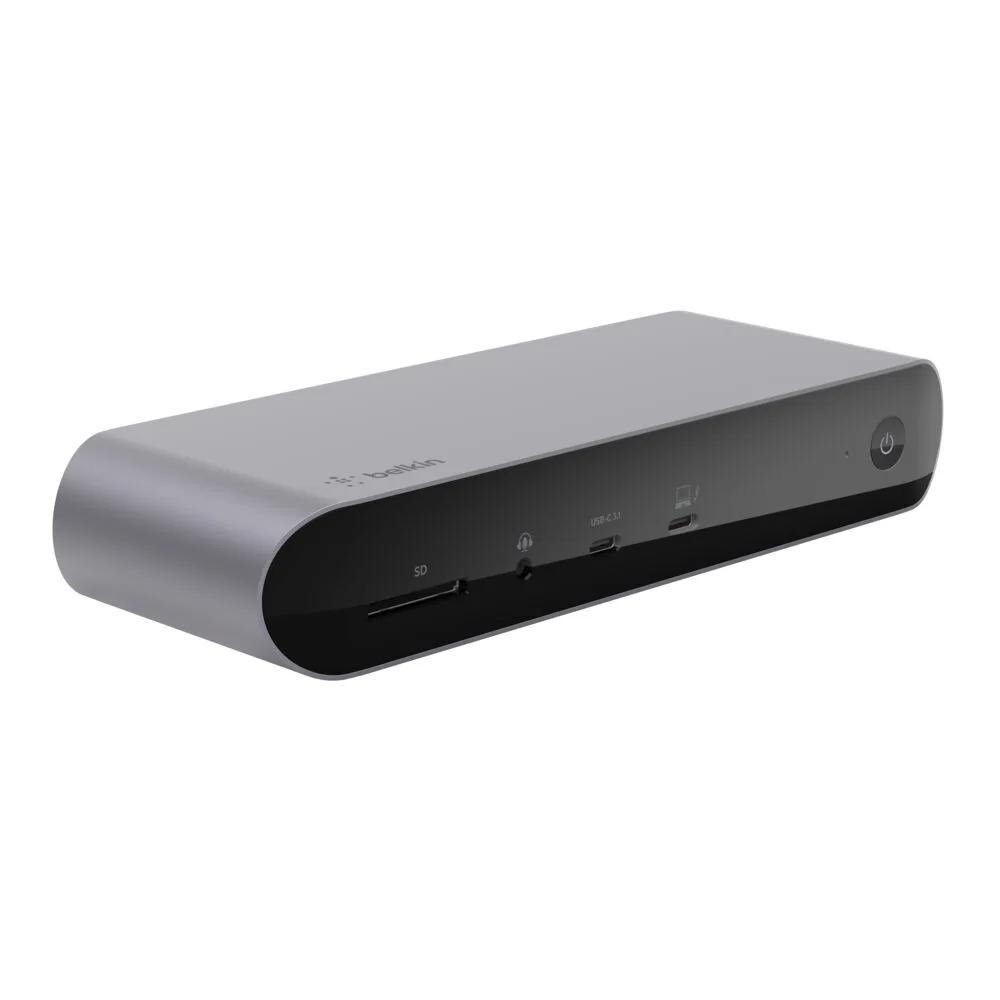
A standard home office setup—laptop, one external monitor, desk lamp, printer, phone charger, and a small fan—fits comfortably on six outlets. The key is to count every device that plugs into AC power, not just the obvious ones. If you use a docking station, that counts as one device, but its connected peripherals usually draw power through the dock. A 6-outlet strip leaves you one or two spare outlets for occasional devices like a tablet charger or a second monitor.
When six outlets aren't enough
If you run multiple monitors, a desktop tower, speakers, a document scanner, and a dedicated webcam light, you'll likely exceed six outlets quickly. In that case, an 8-outlet surge protector or a power strip with spaced outlets for bulky adapters is a better fit. Also consider that some power adapters (like those for gaming laptops or monitors) are physically large and can block adjacent outlets, reducing your usable count.
Why joule rating matters more than you think
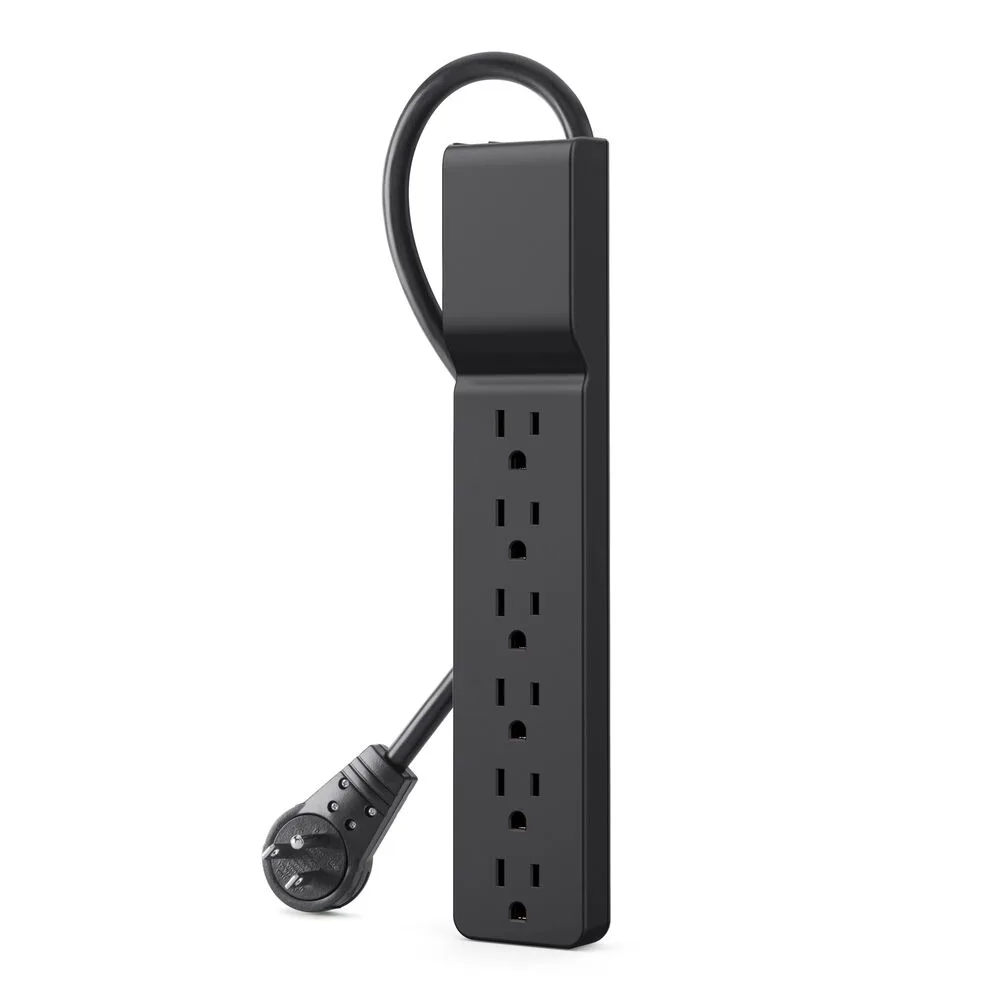
The joule rating tells you how much energy the surge protector can absorb before it fails. A 360-joule rating, like on the Belkin 6-Outlet Surge Protector, is adequate for light office equipment—laptops, monitors, phones. If you have a high-end desktop PC, a laser printer, or audio gear, look for at least 1000 joules. Lower joule ratings mean the protection can wear out faster after multiple small surges. No surge protector lasts forever, but a higher rating gives you more headroom.
USB ports add convenience but have limits
A 6-outlet surge protector with USB ports, like the Belkin Surge Protector with USB-C and USB-A, lets you charge phones, tablets, and wireless earbuds without using up AC outlets. The 18W USB-C port is fine for most phones and small tablets, but it won't fast-charge a laptop. If you need to charge a laptop via USB-C, you'll still need a dedicated wall charger. The trade-off is that USB ports are convenient for desk clutter, but they don't replace a high-wattage charger for power-hungry devices.
Decision rules for choosing a 6-outlet surge protector
- Count your AC devices first: List everything that plugs into a wall outlet. If you have 5 or fewer, a 6-outlet strip gives you a spare. If you have 6 or more, you'll need an 8-outlet model or a second strip. Check: Do you have 6 or more AC devices?
- Match joule rating to your gear: For laptops, monitors, and phones, 360 joules is sufficient. For desktop PCs, laser printers, or audio equipment, aim for 1000+ joules. Higher joules = longer protection life. Check: Is your most expensive device a desktop PC?
- Decide if USB ports replace a charger: USB ports on a surge protector are great for phones and small tablets, but they won't fast-charge a laptop. If you need laptop charging, keep a dedicated USB-C wall charger. Check: Do you need to charge a laptop via USB-C?
Surge protectors that fit your desk
- 6-Outlet Surge Protector with 6 ft cord: Six outlets, 6 ft cord, 360-joule rating, $15,000 connected equipment warranty. The 6 ft cord gives you flexibility to position the strip behind a desk or under a table. The 360-joule rating is fine for typical office electronics, and the warranty provides peace of mind for connected devices.
- Surge Protector with USB-C and USB-A Ports (6 Outlet with 1 USB-C & 1 USB-A): Six AC outlets plus 1 USB-C (18W) and 1 USB-A port, 360-joule rating. The built-in USB ports free up AC outlets for larger devices. The 18W USB-C is fast enough for phones and tablets, but not for laptops. This model is ideal if you want to reduce the number of wall warts on your power strip.
Who should buy a 6-outlet surge protector?
Best for
- Home office setups with 4-5 AC devices (laptop, monitor, lamp, phone charger)
- Users who want basic surge protection without spending extra on high-joule ratings
Not ideal for
- Desks with 6+ AC devices or bulky power adapters that block outlets
- Users who need high-joule protection for expensive desktop PCs or audio gear