Quick Answer
For most kids ages 3 and up, a 7-inch playground ball is a versatile all-around choice, but a 5-inch ball is easier for toddlers and young children to grip and control when learning to throw and catch.
Why Size Matters for Young Players
The right ball size can make or break a child's confidence in active play. A ball that's too big feels heavy and hard to control, while one that's too small can be tricky to catch. Both sizes from Crocodile Creek are made from natural and synthetic rubber, are PVC and BPA free, and feature textured surfaces that help little hands get a grip.
Age is the biggest factor, but skill level matters too. A 5-inch ball is often a better starting point for toddlers who are just learning to throw and catch, while a 7-inch ball suits slightly older kids who want to play kickball, dodgeball, or foursquare with friends.
The Trade-Off: Control vs. Versatility
The 5-inch ball wins on control. Its smaller size fits a young child's hands better, making it easier to hold, throw, and catch. That's why it's often recommended for kids who are still developing these basic motor skills.
The 7-inch ball, on the other hand, is more versatile for group games and outdoor activities. It's closer to the size used in classic playground games, so it transitions well from casual play to more structured games like kickball or dodgeball.
The trade-off is simple: pick the 5-inch for individual skill-building and younger kids, or the 7-inch for group play and older children who can handle a bigger ball.
How to Choose the Right Size
- For Ages 3-4 or Beginners: Choose the 5-inch ball. It's easier to grip and control, so your child can focus on learning to throw and catch without frustration.
- For Ages 5+ or Group Play: Choose the 7-inch ball. It's better suited for kickball, dodgeball, and foursquare, and it still works for individual play.
- If You're Unsure: Consider buying both sizes. The 5-inch ball is great for skill-building at home, while the 7-inch ball is ready for playground games with friends. Having both sizes lets your child progress naturally from learning to playing.
Product Facts
-
7" Playground Ball - City Vehicles: This 7-inch playground ball is made from natural and synthetic rubber, is PVC and BPA free, and is designed for indoor and outdoor play including kickball, dodgeball, and foursquare. Its larger size and durable construction make it a great fit for classic playground games and group activities with kids ages 3 and up.
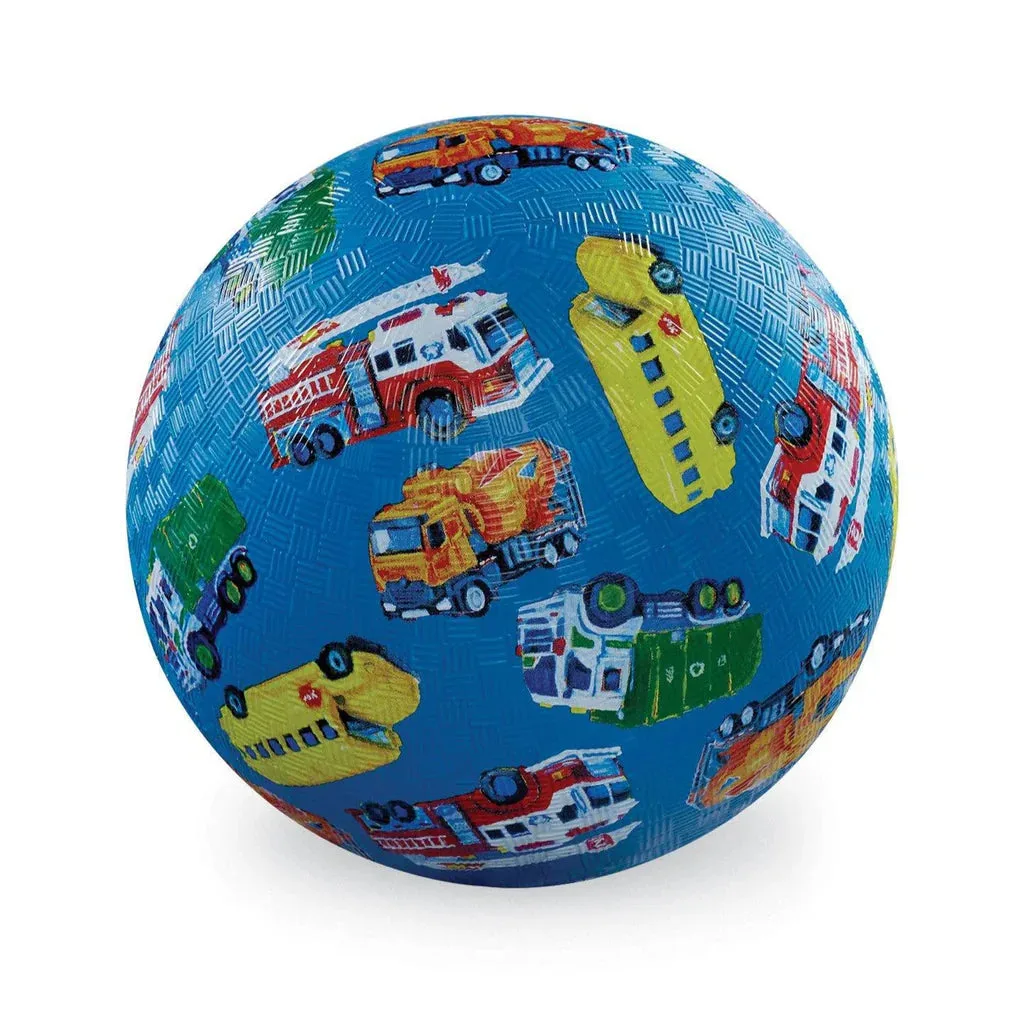
7" Playground Ball - City Vehicles
-
5" Playground Ball - Fish: This 5-inch ball is smaller, inflatable, and textured, and is described as particularly great for little ones learning throwing, catching, and kicking skills. The smaller size gives toddlers and young children better control, helping them build confidence and coordination during early play.
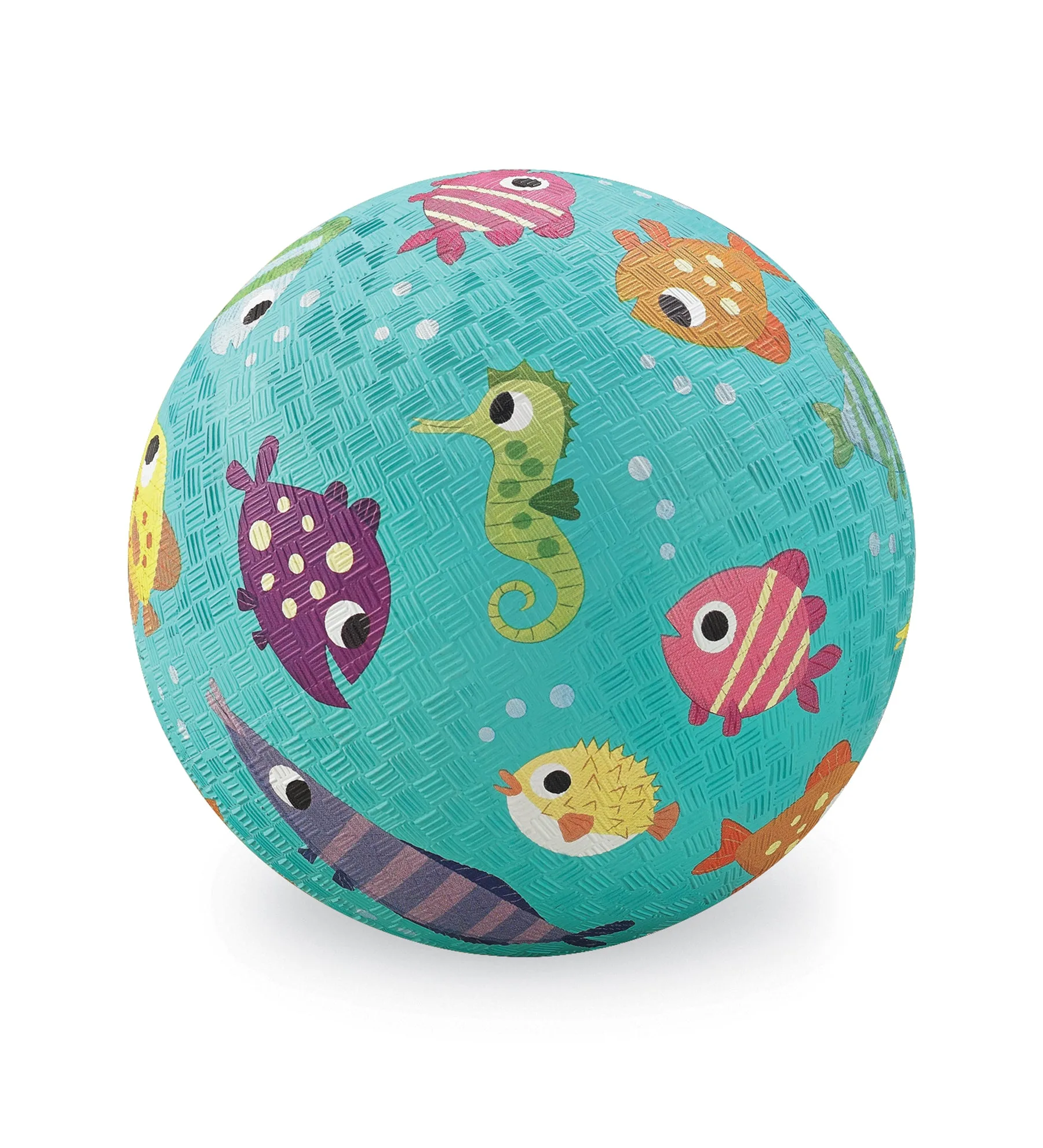
5" Playground Ball - Fish
Which Ball Fits Your Child?
Best For
- Toddlers and young kids (ages 3-4) who are still learning to throw and catch
- Individual play and skill-building activities like tossing and kicking
Not For
- Older kids (ages 5+) who want to play group games like kickball or dodgeball—they'll likely outgrow the 5-inch size quickly