Quick answer
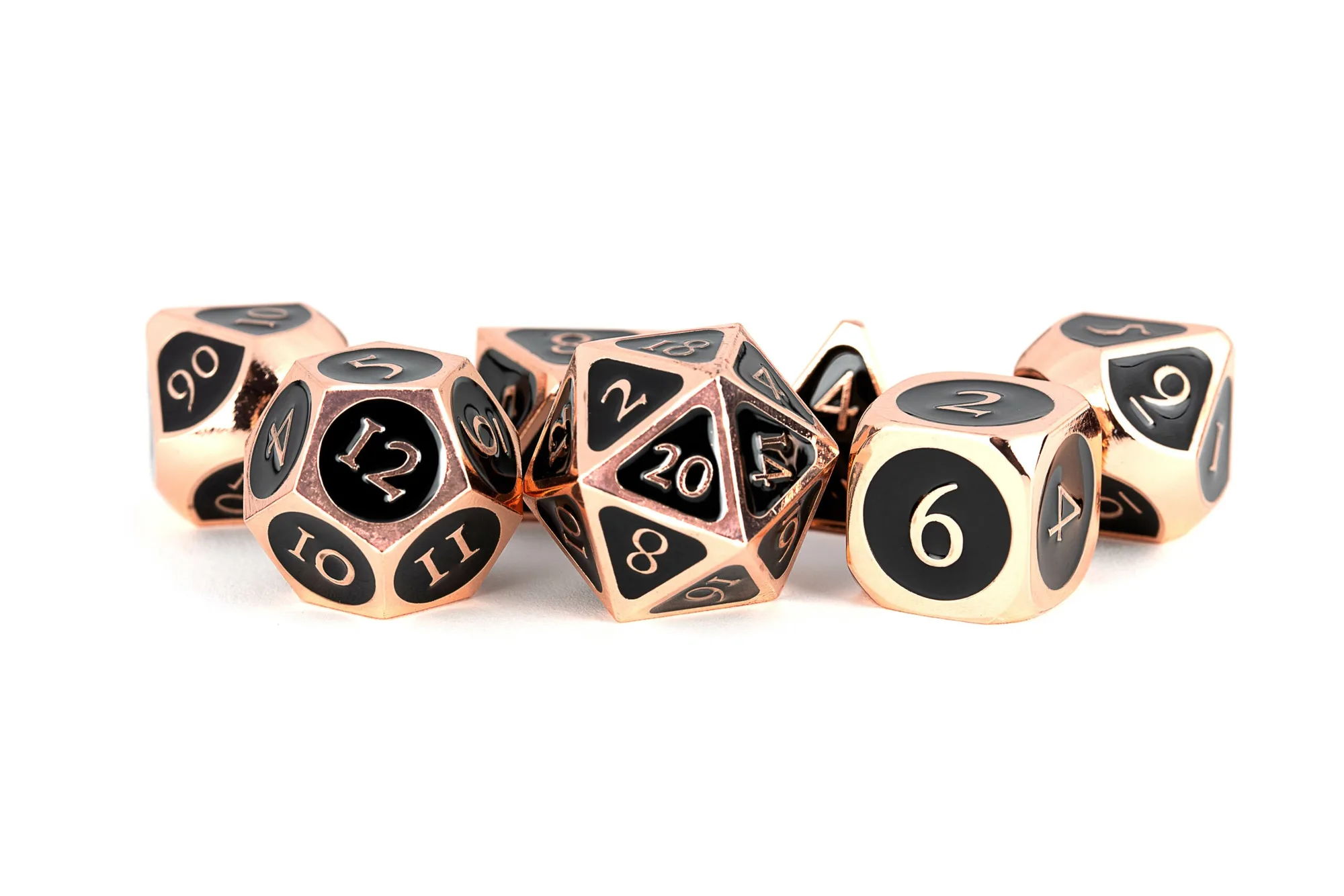
A 7-piece set gives you one each of the D4, D6, D8, D10, D%, D12, and D20 — every die a standard DnD character sheet asks for. A 4-piece set gives you four D6s, which is all many board games and dice-pool systems need. Buy the 7-piece if you play DnD or any d20 system; buy the 4-piece if your games only ever call for six-siders.
The difference between a 7-piece and a 4-piece dice set isn't quality or price tier — it's which rolls the set can actually cover. A 7-piece polyhedral set exists because a d20 game asks you to roll seven different die shapes. A 4-piece D6 set exists because plenty of games only ever ask for six-siders, and buying seven dice you'll never pick up is wasted money.
This comparison uses real sets from our catalog to show where each format earns its place, what you give up by choosing one over the other, and how to tell which one your table actually needs before you spend anything.
What's actually in each set
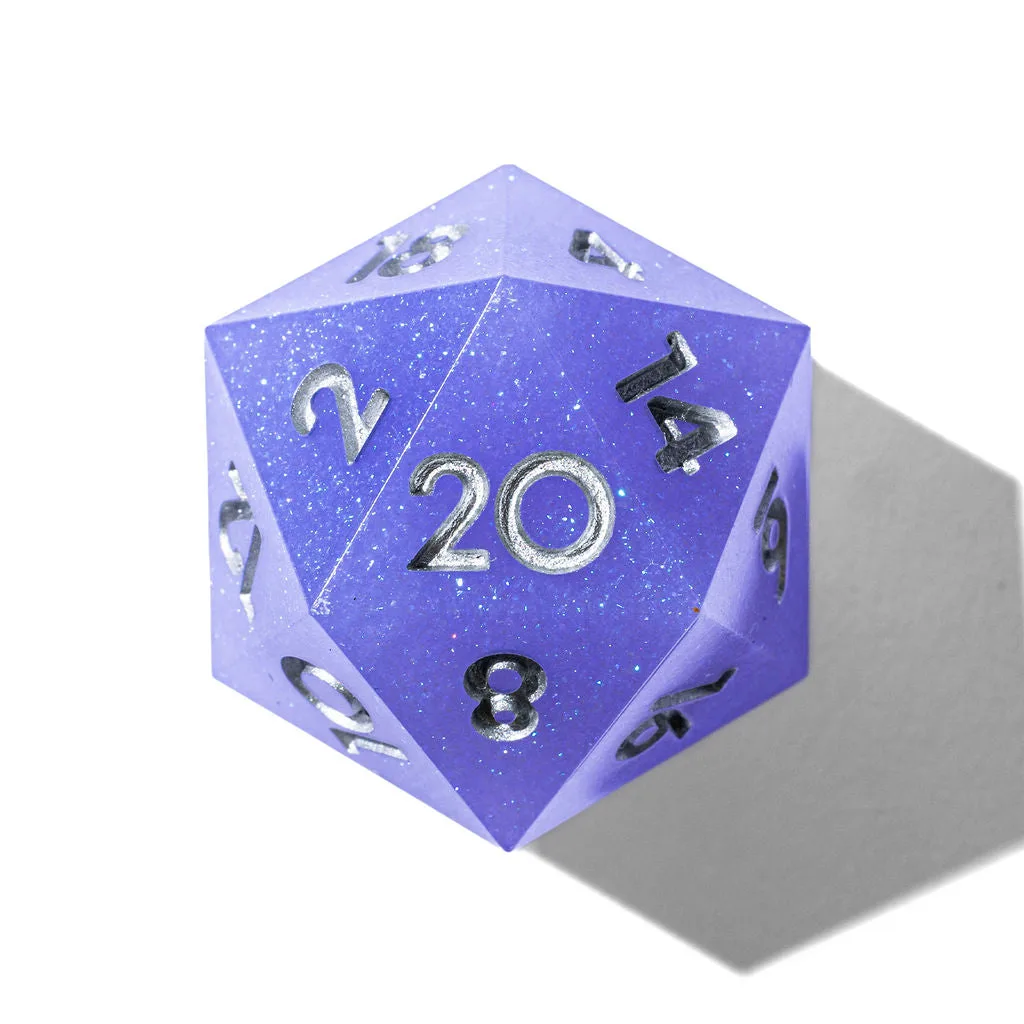
A 7-piece set includes one D4, D6, D8, D10, D%, D12, and D20. That's the full spread a DnD character sheet references: the d20 for attacks and saves, the d8 and d10 for weapon damage, the d4 for smaller effects, the d12 for the heaviest hitters, the percentile die for tables, and a d6 for the spells and abilities that call for one. You get exactly one of each, so if your turn needs two d6s of fire damage, you're rolling the same die twice.
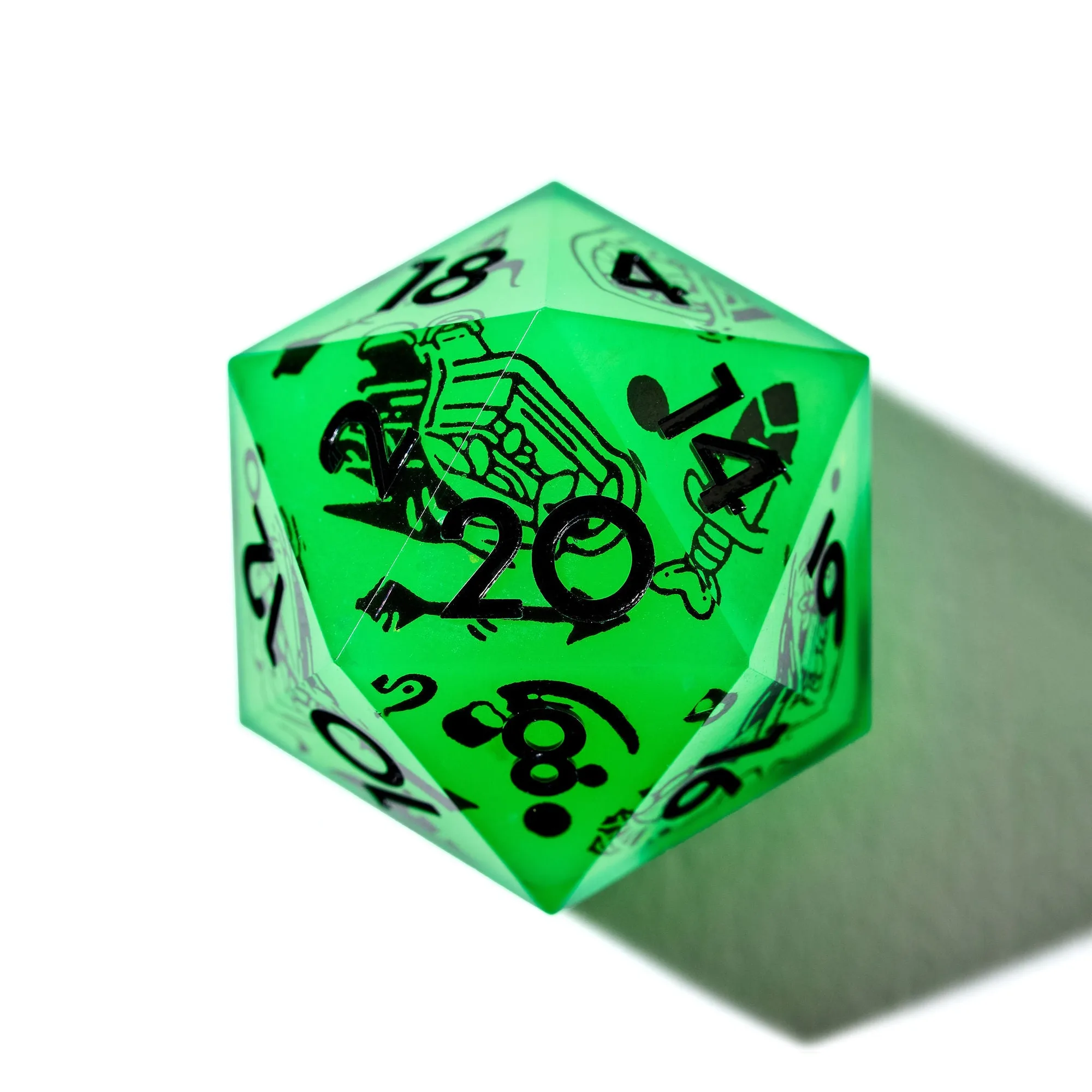
A 4-piece set includes four D6s and nothing else. In dice-pool games, that's not a limitation — it's the point. Four matching six-siders are easier to read at a glance than four mismatched ones, and sets like the Dispel x Eat the Reich "Fluorescent Flesh" 4-Piece Iconic D6 Dice Set are designed to be rolled together as a group rather than individually.
- Count the die shapes your game's rules actually mention before you shop — that list, not the price, should decide the format.
Where the two formats genuinely diverge
The trade-off is coverage versus coherence. A 7-piece set covers more systems but gives you one of each shape, so multi-die rolls mean re-rolling the same die. A 4-piece D6 set does one thing well: four identical dice that read as a pool. If your game rolls 3d6 or 4d6 constantly, four matching six-siders is faster and cleaner than grabbing four different dice out of a polyhedral set.
There's also a visual difference worth noting. Sharp-edged construction, which both formats in our catalog use, allows for more randomized rolls when compared to traditional rounded-edge RPG dice. That construction is consistent across both set sizes, so edge style isn't a reason to pick one format over the other — contents are.
- If you regularly roll more than two of the same die type, a dedicated set of that die is worth owning alongside your polyhedral set.
How to decide for your table
Start with the rules you actually play. If your group runs DnD or any d20 system, a 7-piece set is the baseline — you cannot run a character without a d20, and no 4-piece D6 set includes one. If your group plays dice-pool games, wargames that use only d6s, or party games built on six-siders, a 4-piece set is the more honest purchase.
Plenty of players end up with both, and that's a reasonable outcome rather than a failure to choose. A polyhedral set stays in the character bag; a matched D6 set lives in the game-night tote for the games that need it. The mistake is buying a 7-piece set for a table that never rolls anything but six-siders, or buying a 4-piece set and discovering your campaign needs a d20 on the first session.
- Check your character sheet or rulebook's dice notation (d4, d6, d8, d10, d12, d20) — whatever appears there is the minimum your set must include.
The trade-offs, set by set
- Shape coverage: A 7-piece set covers every die shape a d20 game references; a 4-piece set covers only the d6. If your rules mention a d20, the 4-piece set alone cannot run your game.
- Multiple dice of one type: A 4-piece D6 set gives you four matching six-siders; a 7-piece set gives you one d6, so multi-d6 rolls mean re-rolling. Heavy d6 users get more practical value from the 4-piece format.
- Buying twice: Choosing the wrong format usually means buying the other one later rather than making do. Match the format to your rulebook before you buy, not after the first session.
Catalog examples of each format
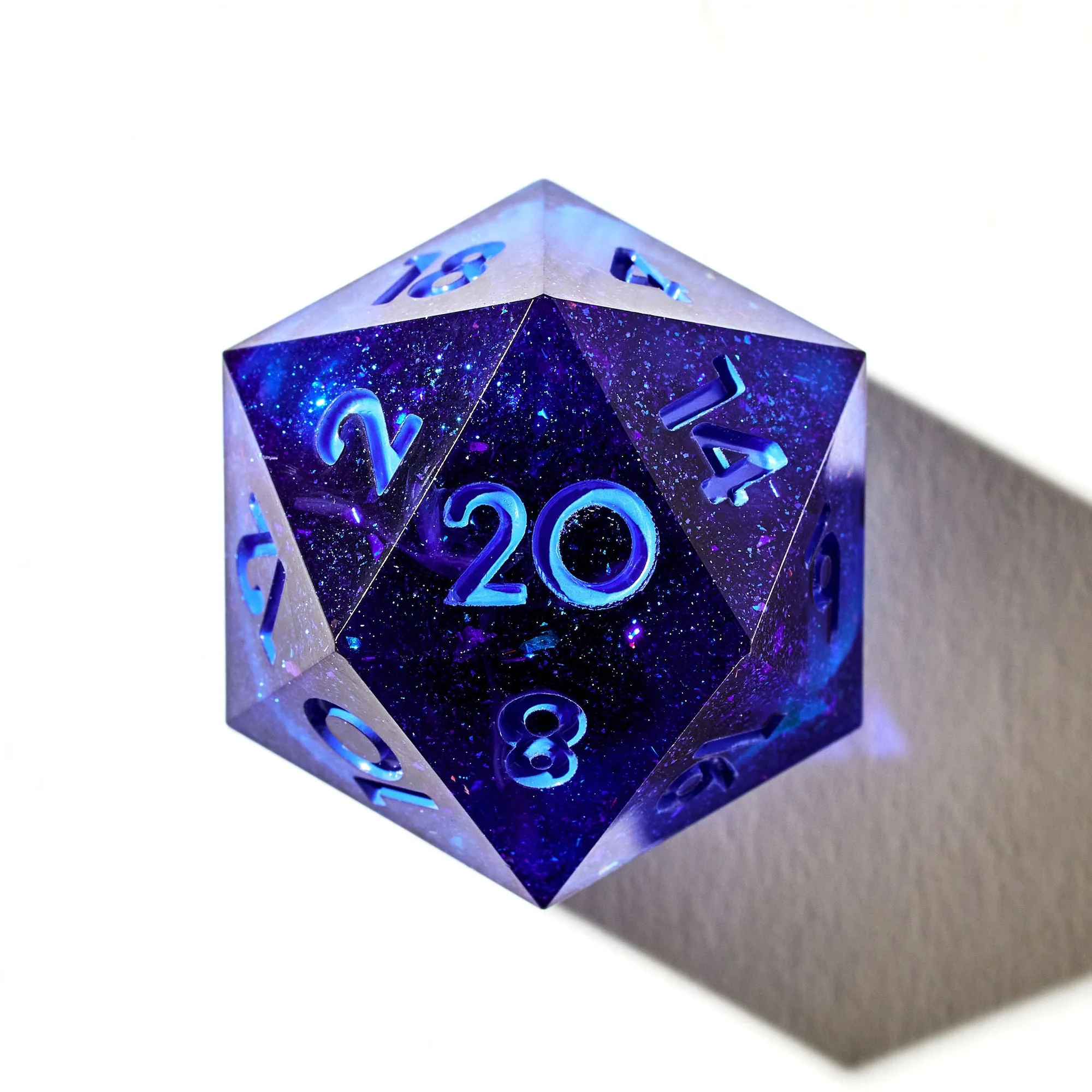
- Deep Blue Sea 7-Piece Polyhedral Set: Each 7-piece set includes one D4, D6, D8, D10, D%, D12, and D20, with sharp-edged construction that allows for more randomized rolls when compared to traditional rounded-edge RPG dice. This is the full shape coverage a d20 system requires, so it works as a single-set solution for DnD without buying anything else.
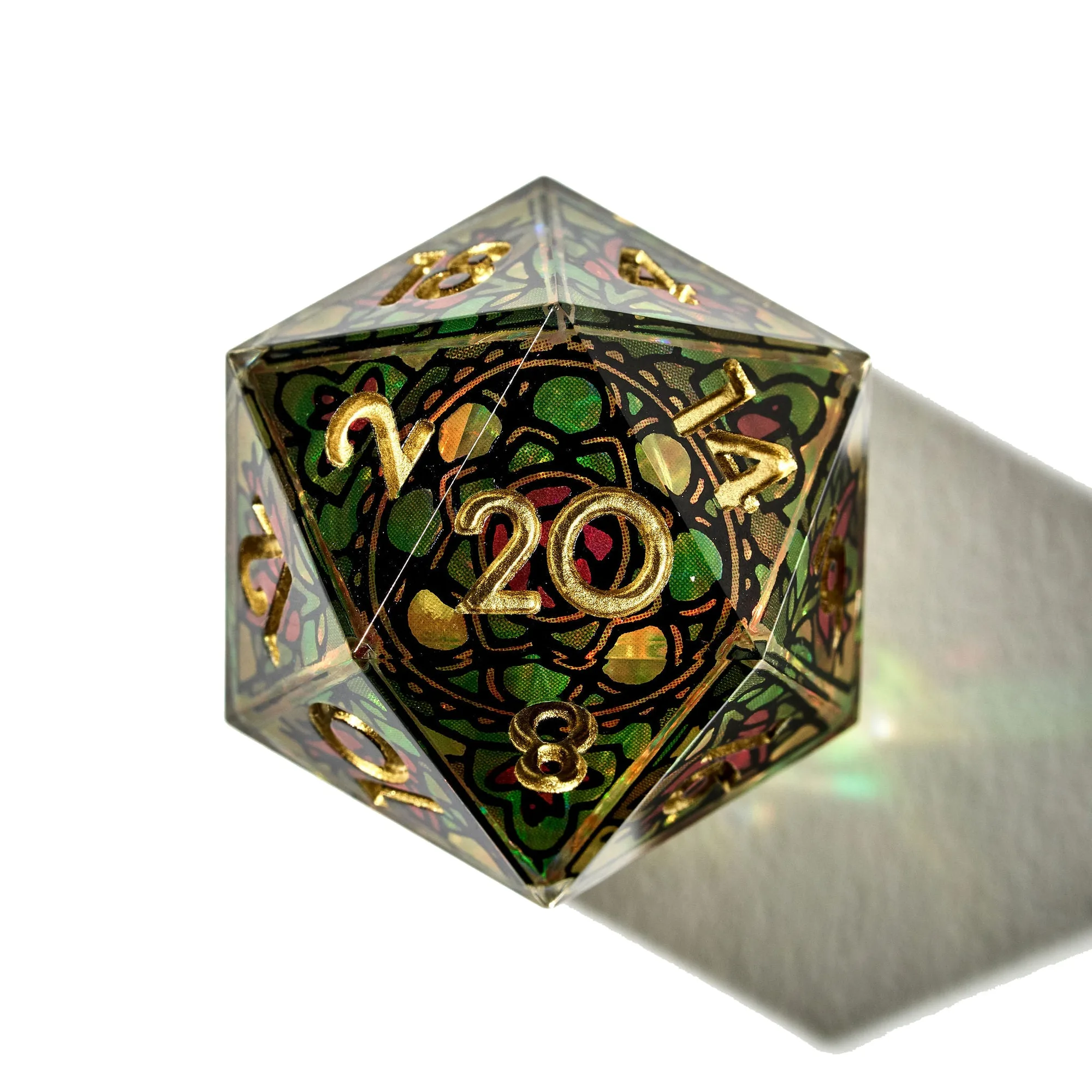
- Celestia 7-Piece Polyhedral Dice Set: Each 7-piece set of gaming dice includes one D4, D6, D8, D10, D%, D12, and D20, with sharp-edged construction. Confirms the 7-piece format is consistent across our polyhedral range — the choice between sets is aesthetic, not functional.
- Dispel x Eat the Reich "Fluorescent Flesh" 4-Piece Iconic D6 Dice Set: Each set contains 4 D6 dice with sharp-edged construction. A focused pool of four matching six-siders for dice-pool games, with no shapes you won't roll.
Which set fits your table
Choose this if
- You play DnD or any d20 system and need every die shape on one character sheet
- You want one set that covers attacks, saves, damage, and percentile tables without adding anything
- You're buying a first set for a new player who doesn't yet know which dice their class uses
Skip this if
- Your games only ever call for six-siders, in which case a 4-piece D6 set is the better buy
- You regularly roll three or four of the same die at once and want matched dice for that pool
- You already own a full polyhedral set and only need more d6s for a specific game
Pick by the dice notation in your rulebook, not by which set looks more complete. A 7-piece set is the right answer for d20 games; a 4-piece D6 set is the right answer for games that never leave the six-sider. If you play both kinds of games, owning one of each is a practical choice rather than an indulgence.