Quick answer
A bag is enough if your dice travel with you and you accept some surface wear. A box is the better home base if you own sharp-edged resin sets, because loose dice knocking together is what causes scratches and chipped corners. Most players end up using both: a box for storage, a bag for game night.
Dice storage questions come up constantly, and the honest answer depends less on budget and more on what your dice are made of and how often they leave the house. A soft bag and a rigid box solve two different problems, and neither one is a waste of money.
This guide answers the questions players actually ask: whether a box is necessary, what a bag can and cannot do, and how to store polyhedral sets so the faces and edges stay readable for years.
Do dice need a box at all?
No, not strictly. Dice are solid resin or metal and will survive in a bag. What a box changes is how much wear they accumulate. In a bag, dice rub against each other every time you move it, and over months that dulls polished faces and softens sharp edges.
If your set cost real money or has a decorative core you want to keep visible, a box is the cheaper long-term decision. If your dice are a casual beat-up set for pickup games, a bag is genuinely fine.
- Choose a box when the set is sharp-edged, decorative, or hard to replace.
- Choose a bag when portability matters more than mint condition.
What does a bag do well that a box cannot?
A bag is soft, light, and squeezes into a backpack pocket next to a rulebook. It also absorbs shock better than a hard shell if you drop your bag on the way to a session. For a single set you carry weekly, that flexibility is hard to beat.
The tradeoff is that fabric offers no separation. Seven polyhedral dice in one pouch will contact each other constantly, and the D20's points are usually the first casualty.
- Look for a lined or padded bag rather than thin cotton.
- If you use one bag for multiple sets, expect contact wear between sets.
How should I store polyhedral sets at home?
The best way to store dice at home is to keep each set separated, out of direct sun, and away from heat. Separation is the part most players skip. A divided box, individual slots, or even one small pouch per set solves it without much cost.
Sunlight and heat matter more than most people expect for resin dice. A shelf away from a window is a better display spot than a sunny windowsill, especially for transparent shells.
- One set per compartment prevents the scratches that come from dice rubbing together.
- Keep resin sets out of hot cars and direct sun.
Does a tray count as storage?
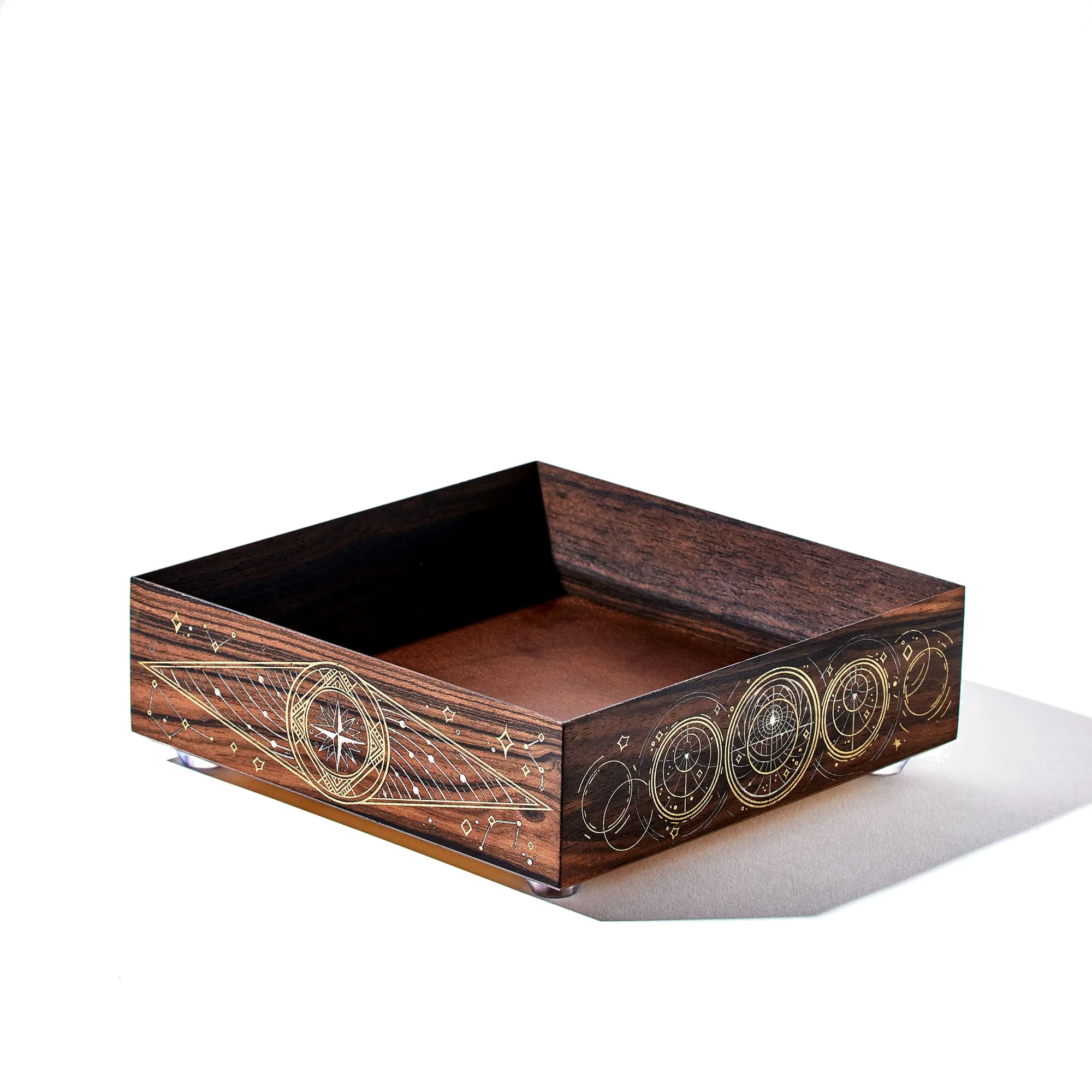
A dice tray is a rolling surface, not a storage solution. It keeps dice from scattering across the table and gives them a soft landing, but most trays are open and offer no protection between sessions. Leaving dice in a tray on a shelf invites dust and the occasional lost D4.
That said, a tray plus a bag or box is the practical combination. Roll in the tray, pack in the box, carry in the bag.
- Use the tray for rolling, not for long-term storage.
- A lined tray also cuts down on noise and table scuffs.
What actually causes scratches on dice?
Dice scratch each other. Two resin dice in the same pocket, shaken around in a bag, act like fine sandpaper on each other's faces. Sharp-edged dice are more vulnerable because their corners take the impact first, and those corners are exactly what makes them roll more randomly.
Protecting dice from scratches is mostly about eliminating movement and contact. Foam, felt, fabric dividers, or individual slots all do the same job: they stop dice from grinding against one another.
- Metal dice are the worst offenders, so never store them loose with resin.
- A cheap felt-lined box outperforms an expensive bag for protection.
Dice storage questions, answered short
Is a bag enough for one set?
Yes, if you carry it often and accept light surface wear. Pick a lined bag and keep only that set inside. One set, one bag, no mixing.
When is a box worth it?
When your dice are sharp-edged, decorative, metal, or expensive to replace. Rigid sides plus dividers stop the contact that causes scratches. Box for home, bag for travel.
Can I store dice in a tray?
A tray is for rolling. It is usually open, so it collects dust and lets dice wander between sessions. Tray for play, box for storage.
Do I need to separate sets?
Yes. Dice rubbing together is the main cause of dulled faces and chipped corners. One compartment or pouch per set is enough. Separation beats padding.
Products that show the storage tradeoff
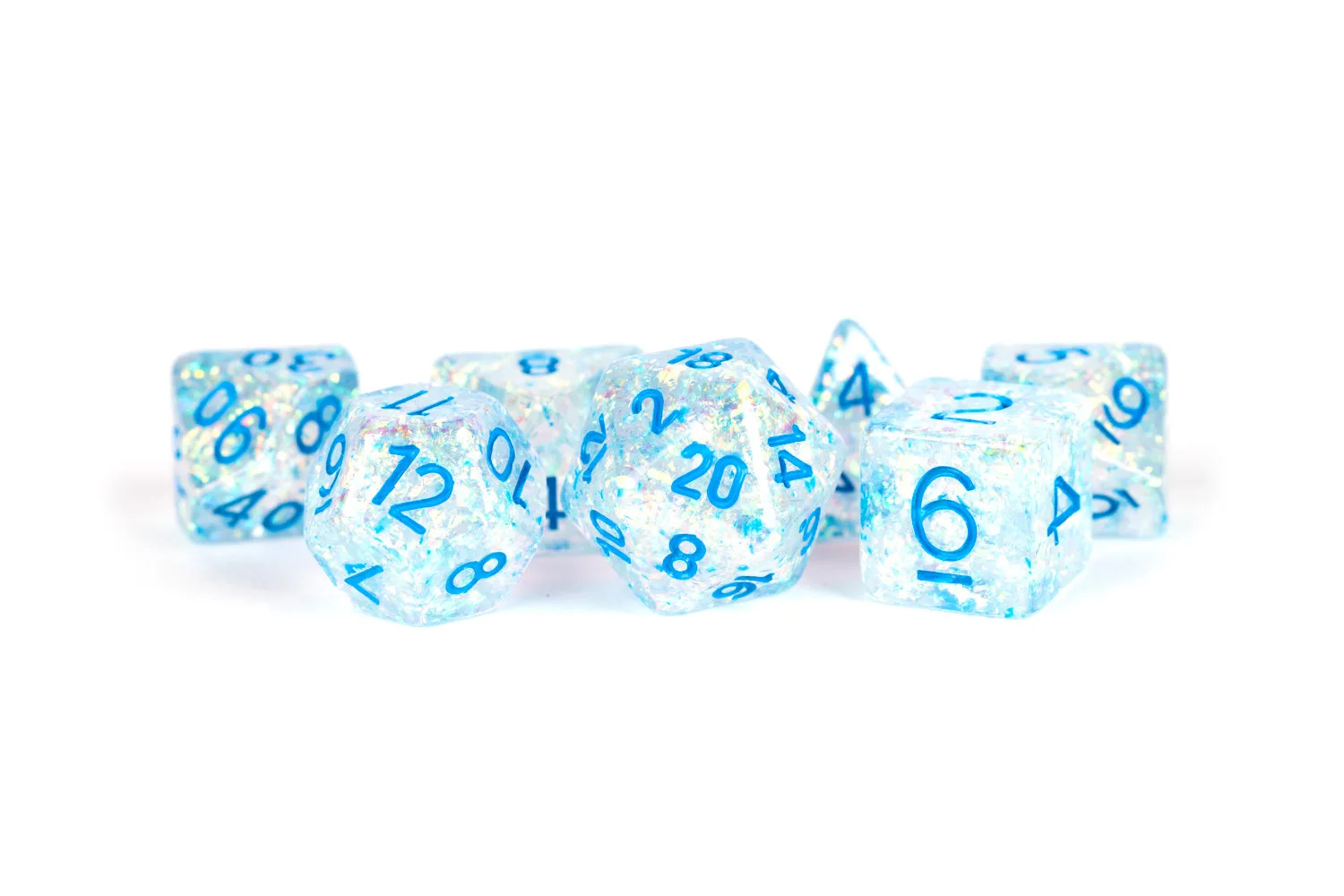
- Aurora Borealis 7-Piece Iridescent Dice Set: A transparent, iridescent shell with warm mylar inside, part of the Iridescence Collection. A clear decorative shell is exactly the kind of set where surface scuffs show, so separate storage pays off.
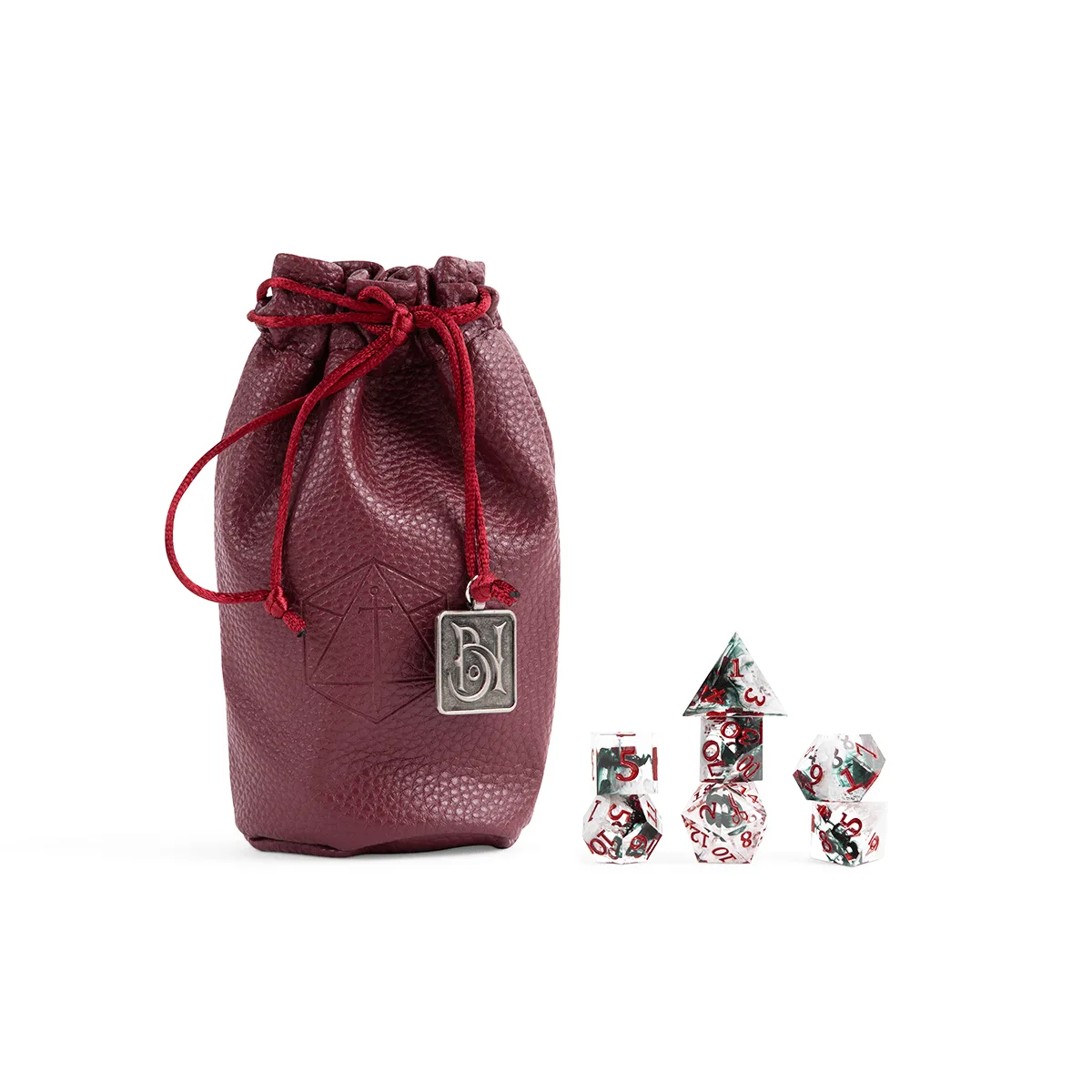
- Alien Worlds 7-Piece Terraform Dice Set: A clear resin shell encasing a white landscape, with black resin accents and black-inked numbers; the set includes D4, D6, D8, D10, D%, D12, and D20. A full seven-piece polyhedral set is the case where a divided box or one pouch per set prevents the most contact wear.
- Dispel Dice x LaserOx Endless Horizons Tray: Handcrafted in Ziricote wood with an opalescent and gold effect resin inlay and a premium leather inlay, made to order. It is a rolling surface with a soft landing, not a closed container, so it complements a box or bag rather than replacing one.
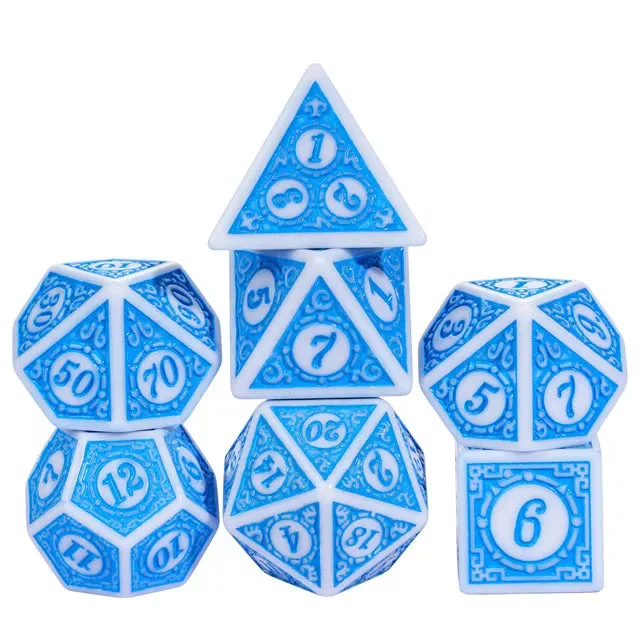
- Rosewindow 7-Piece Iconic Dice Set: Named after gothic cathedral rose windows, with sharp-edged construction across a D4, D6, D8, D10, D%, D12, and D20. Sharp edges are the first thing to chip when dice knock together, which is the strongest argument for a box over a loose bag.
Start with the dice you actually own. If they are sharp-edged resin sets you want to keep looking new, get a divided box and use a bag only for transport. If they are casual dice that live in your backpack, a decent lined bag is all you need.