Start with the right discs and a clean setup
Jacques Torres 70% Dark Chocolate Discs are Belgian dark chocolate discs sold in a 1-pound net weight bag. The product description says they are great for baking favorite Jacques Torres recipes, eating by the handful, or melting to make rich high cocoa content chocolate-covered fruits. That makes them a practical choice for dipping and coating projects, not just baking.
Before you melt anything, set up a dry, clean workspace. Chocolate is sensitive to moisture, so make sure bowls, spatulas, and any fruit you plan to dip are completely dry. The supplied product information does not include specific melting temperatures or tempering curves, so the guidance below focuses on technique and checkpoints rather than exact numbers you should verify with a reliable chocolate reference.
How to melt dark chocolate discs gently
The goal is to melt the discs evenly without scorching them. Use a gentle heat source and stir often.
- Set up a double boiler or a heatproof bowl over barely simmering water: The bowl should not touch the water. Keep the water at a bare simmer, not a rolling boil.
- Add the discs and let them begin to melt: Stir occasionally with a dry spatula. The 70% discs will hold their shape until enough heat builds up, so avoid rushing with higher heat.
- Remove from heat before fully melted: Carryover heat will finish the job. Continue stirring off the heat until the discs are smooth and fluid.
- Check for seized or grainy texture: If the chocolate looks stiff or grainy, it may have overheated or picked up moisture. The supplied product information does not cover rescue techniques, so start a fresh batch if the texture does not smooth out.
What tempering does and why it matters for dipping
Tempering is a controlled melt-and-cool process that helps chocolate set with a glossy finish and a clean snap. It is especially useful when you are dipping fruit or making molded chocolates, because untempered chocolate can set soft, streaky, or tacky. The 70% dark chocolate discs are a good candidate for tempering because they are designed for melting and coating, but the supplied product record does not include a specific tempering curve or temperature chart.
If you are new to tempering, use a trusted chocolate reference for exact temperatures. The technique below gives you the sequence and the visual checkpoints, but you should confirm the numbers for your kitchen and equipment.
A simple tempering sequence for 70% discs
This is a general seeding method. It works with many dark chocolates, but the exact temperatures depend on the chocolate and your room. The supplied product facts do not provide a tempering chart, so treat these as procedural steps, not manufacturer instructions.
- Melt about two-thirds of the discs gently: Use the double-boiler method above. Melt until smooth but not hot. Remove from the heat.
- Seed with the remaining discs: Add the reserved discs a little at a time, stirring constantly. They will melt and help bring the temperature down while forming stable crystals.
- Stir until the seeded discs are fully melted and the chocolate is fluid: The mixture should be smooth and slightly thickened. If any unmelted bits remain, keep stirring off the heat.
- Test the set: Dip the tip of a knife or a small piece of fruit into the chocolate and let it sit at room temperature. Tempered chocolate should set within a few minutes with a slight sheen. If it stays wet or streaky, the temper may need adjustment. The supplied product information does not include a specific test time, so use your judgment.
Practical melting tips for dipping and baking
Keep these habits in mind whether you are coating fruit or folding melted discs into a batter.
- Keep everything dry: A single drop of water can cause melted chocolate to seize. Dry fruit thoroughly and use dry utensils.
- Work in small batches: The 1-pound bag is convenient, but melt only what you need for the project. Reheating repeatedly can affect texture and flavor.
- Use low, indirect heat: A double boiler or a bowl over simmering water gives you more control than a direct flame or a dry pan.
- Stir, don't whisk: A dry spatula is less likely to introduce air or moisture than a whisk.
- For baking, follow your recipe's melting instructions: The 70% discs are described as great for baking Jacques Torres recipes. If your recipe calls for melted chocolate, melt gently and let it cool slightly before combining with other ingredients unless the recipe says otherwise.
What the label does and does not tell you
The supplied product record for the 70% Dark Chocolate Discs includes the cocoa percentage, the 1-pound net weight, and general suggested uses: baking, eating by the handful, and melting for chocolate-covered fruit. It does not include ingredient lists, allergen statements, storage instructions, or a tempering chart. That means you should not assume the discs are free from any particular allergen or that they have a specific shelf life based on this page alone.
If you need allergen or ingredient details, check the packaging or contact the store before buying. For storage, the supplied information does not specify a temperature or humidity range, so use your best judgment and keep the discs in a cool, dry place away from strong odors.
Product facts for your melting project
-
70% Dark Chocolate Discs: 70% Belgian dark chocolate discs, net weight 1 pound. A 1-pound bag gives you enough for a batch of dipped fruit or a baking project, and the 70% cocoa content gives a deep chocolate flavor.
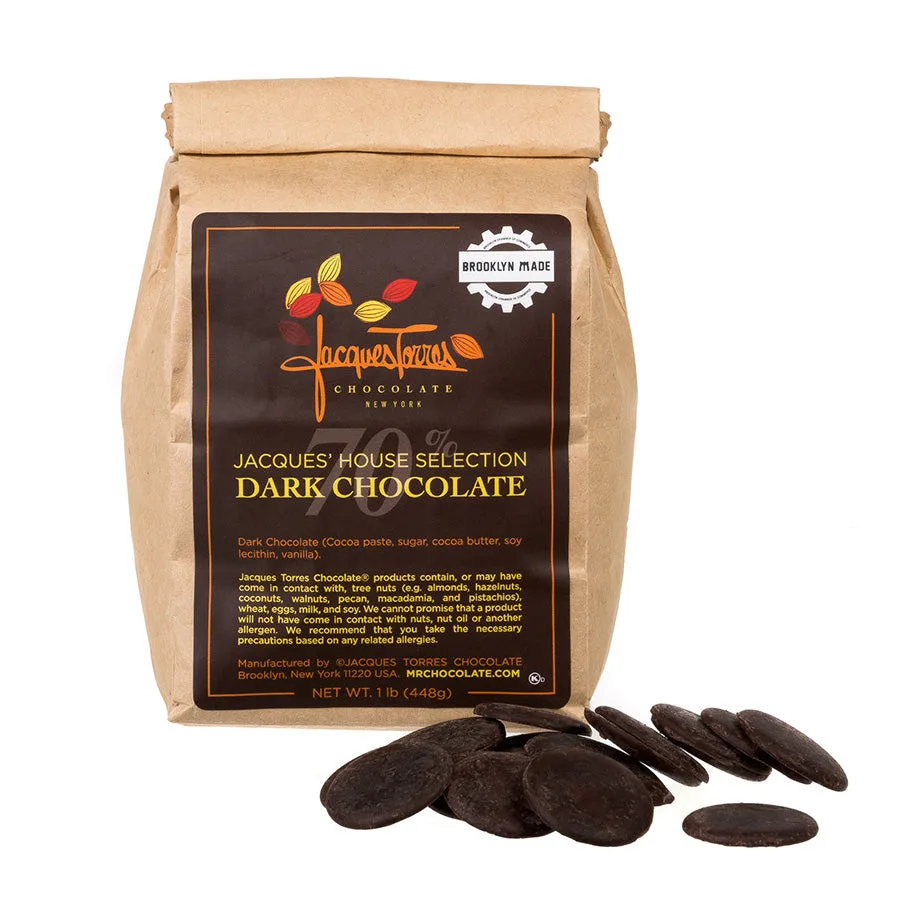
70% Dark Chocolate Discs
-
70% Dark Chocolate Discs: Suggested uses include baking Jacques Torres recipes, eating by the handful, and melting to make chocolate-covered fruit. These discs are intended for melting and coating, so they are a suitable starting point for dipping and tempering experiments.