What the supplied catalog tells you about the 861
The MOON 861 is a power amplifier with the pedigree of the distinguished MOON 888 and the wholistic design philosophy of the North Collection. That description sets the context for ownership, but it does not include operating instructions, care procedures, or ventilation requirements. The catalog record supplied for this article contains no critical care, safety, or compatibility evidence, and no specifications or preparation steps.
That absence matters for upkeep planning. You can still build a sensible routine around the amplifier's role and the physical realities of power amplification, but you should not treat general good practice as a manufacturer instruction. Where a detail is not confirmed in the supplied information, verify it with the documentation that ships with your unit or with MOON support before you act.
Catalog evidence for the 861
-
861 Power Amplifier: The MOON 861 is a power amplifier with the pedigree of the distinguished MOON 888 and the wholistic design philosophy of the North Collection. This is the supplied product description; it identifies the amplifier's lineage and design family but does not specify care, ventilation, or cleaning requirements.
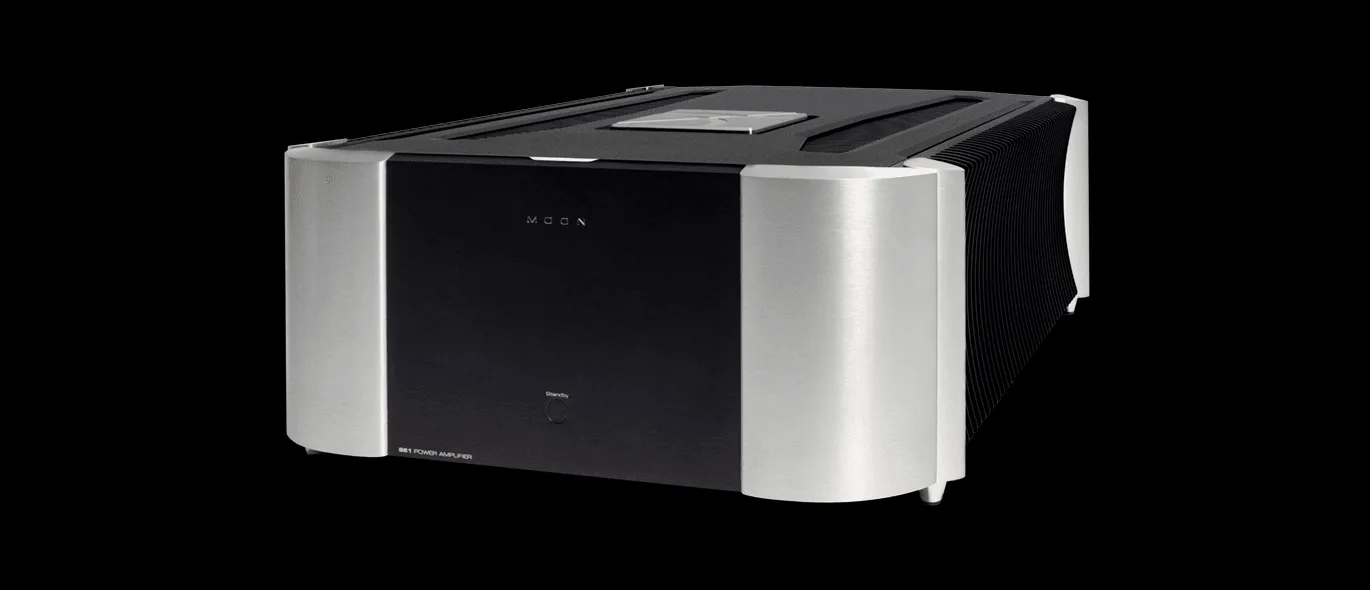
861 Power Amplifier
Plan ventilation before you plan cleaning
Power amplifiers convert electrical energy into music, and some of that energy becomes heat. The 861's supplied record does not state heat output, recommended clearance, or rack requirements, so any specific spacing figure would be a guess. Instead, treat ventilation as a placement decision you make deliberately: give the amplifier room to breathe, avoid enclosing it tightly, and keep other heat-producing equipment from crowding it.
Because the catalog does not confirm ventilation spacing, use the manufacturer's own documentation as the authority for minimum clearances. If that documentation is not available, contact MOON support before installing the 861 in a cabinet or rack. A conservative approach is to leave more space than you think you need, but that is general practice, not a confirmed specification for this model.
A supported placement and cleaning routine
- Placement check: Set the 861 on a stable surface that can support its weight. The supplied record does not list weight or dimensions, so confirm those from the product documentation before you finalize a shelf or rack.
- Ventilation check: Keep the area around the amplifier open. Do not stack other components directly on top of it. The catalog does not confirm specific clearance distances, so verify any minimums with MOON documentation.
- Dust routine: Dust the exterior with a soft, dry cloth. The supplied information does not confirm approved cleaners or polishes, so avoid spraying liquids onto the amplifier or into its openings.
- Connection check: Periodically inspect cables and connectors for looseness or strain. The catalog does not provide connection diagrams or compatibility lists for the 861, so use the supplied manual for input, output, and speaker-load guidance.
- Listening check: After any move or cleaning, listen for unusual noise or behavior. If something changes, stop using the amplifier and consult MOON support. The supplied record does not include troubleshooting steps for the 861.
What the supplied information does not confirm
The 861 record supplied for this article contains no specifications, no preparation or operating instructions, and no critical care or safety evidence. That means you should not assume a particular cleaning agent, ventilation gap, warm-up time, or maintenance interval is approved for this amplifier. It also means you should not treat any general amplifier-care advice as a MOON instruction for the 861.
This is a documentation gap in the supplied material, not a statement that the full manufacturer documentation lacks these details. Before you clean, move, or install the 861, check the manual that came with your unit or ask MOON support for the relevant guidance. If you are comparing the 861 with another MOON model, confirm each model's requirements separately rather than assuming they are identical.
Long-term upkeep habits that make sense for a power amplifier
Long-term upkeep for a high-end power amplifier is mostly about stability and observation. Keep the 861 in a location where it will not be bumped, keep the area free of dust and clutter, and check connections occasionally. Avoid moving the amplifier more than necessary, and when you do move it, disconnect power first and handle it carefully.
The catalog does not confirm a service interval or a list of user-serviceable parts for the 861. If you notice a change in performance, unusual smells, or visible damage, stop using the amplifier and seek qualified service. Do not open the case unless the manufacturer's documentation explicitly instructs you to do so.