Quick Answer
For any 8K TV, 8K gaming console, or streaming device capable of 8K output, choose an Ultra High Speed HDMI cable (HDMI 2.1). A standard HDMI 2.0 cable lacks the bandwidth for 8K at 60Hz or high refresh rates, causing screen flickering, blackouts, or a downgraded resolution.
Bandwidth: The Core Difference
The main technical difference between an 8K Ultra High Speed HDMI cable and a standard HDMI 2.0 cable is bandwidth. An Ultra High Speed cable supports up to 48 Gbps, while HDMI 2.0 maxes out at 18 Gbps. This bandwidth jump is what makes 8K at 60Hz, 4K at 120Hz, and dynamic HDR possible.
Without enough bandwidth, your source device and TV will negotiate a lower resolution or refresh rate. For example, a standard HDMI 2.0 cable can only handle 4K at 60Hz, not the full 8K signal.
Compatibility: What Works with What
An Ultra High Speed HDMI cable is backward compatible with all older HDMI devices, including HDMI 2.0, 1.4, and even older standards. You can use it with a 4K TV or a 1080p monitor without any issues. However, a standard HDMI 2.0 cable plugged into an 8K TV will not deliver 8K content.
If you plan to upgrade your TV or gaming console within the next few years, investing in an Ultra High Speed HDMI cable now is a future-proof choice. Many streaming devices and game consoles (like the PS5 Pro or Xbox Series X) already benefit from the higher bandwidth for 4K at 120Hz.
Gaming: High Refresh Rates and VRR
For gaming, the difference is significant. An Ultra High Speed HDMI cable supports Variable Refresh Rate (VRR), Quick Frame Transport (QFT), and Auto Low Latency Mode (ALLM) — features not available on HDMI 2.0 cables. These reduce screen tearing and input lag, providing a smoother gaming experience.
If you game on a 4K 120Hz or 8K 60Hz display, a standard HDMI cable will cap your refresh rate and disable these gaming features. For competitive or immersive gaming, the Ultra High Speed cable is not just better—it's required.
8K HDMI Cable vs Standard HDMI: Tradeoffs at a Glance
- Bandwidth: Ultra High Speed HDMI: 48 Gbps. Standard HDMI 2.0: 18 Gbps. 48 Gbps is essential for 8K at 60Hz; 18 Gbps maxes out at 4K 60Hz.
- Resolution & Refresh Rate: Ultra High Speed: Supports 8K@60Hz, 4K@120Hz, and 10K. Standard HDMI 2.0: Supports 4K@60Hz. If your source or TV outputs 8K or 4K above 60Hz, you need Ultra High Speed.
- Gaming Features: Ultra High Speed: Supports VRR, ALLM, QFT, eARC. Standard HDMI 2.0: No support for these features. For modern consoles or PC gaming at high frame rates, Ultra High Speed is required.
- Backward Compatibility: Ultra High Speed: Works with all older HDMI devices. Standard HDMI 2.0: Works with older devices but cannot deliver 8K. Ultra High Speed is a safe choice for any setup, old or new.
- Build Quality: Ultra High Speed cables often feature braided jackets and reinforced connectors. Standard cables vary widely in quality. A braided Ultra High Speed cable like the Satechi option offers better durability for daily use.
Product Spotlight
-
8K Ultra High Speed HDMI® Cable: The 8K Ultra High Speed HDMI Cable is a high-strength 2M braided cable designed to connect laptops, tablets, or streaming devices to an Ultra HD High-Speed HDMI setup. Its braided construction adds durability for frequent plugging and unplugging, while the 2-meter length is ideal for most home theater and desk setups without excessive slack.
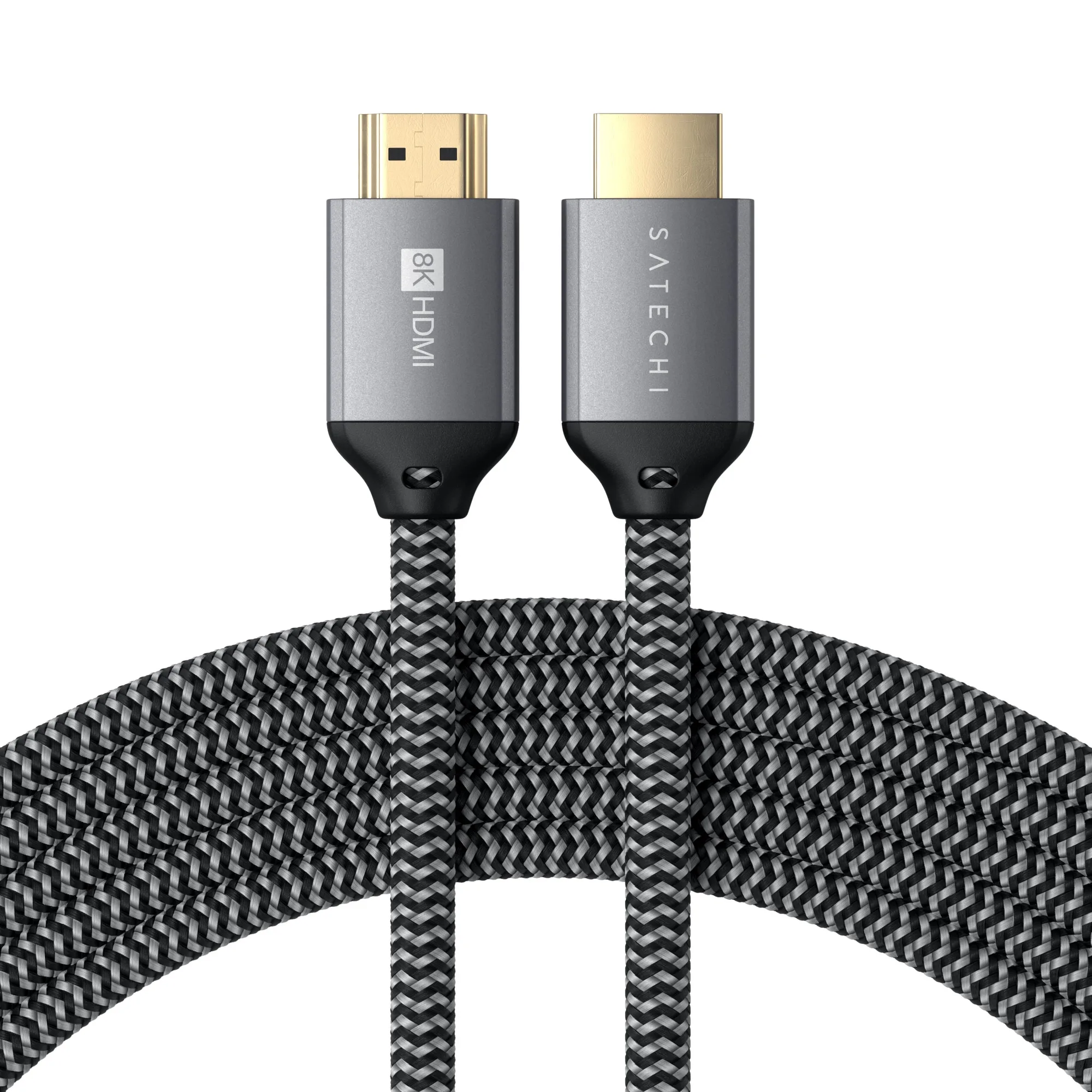
8K Ultra High Speed HDMI® Cable
Which Cable Should You Choose?
Best For
- Anyone with an 8K TV or monitor
- Gamers using PS5, Xbox Series X, or high-end PC with 4K@120Hz or 8K@60Hz
- Users who want a future-proof cable for upcoming devices
- Home theater setups requiring high bandwidth for 4K@120Hz or eARC audio
Not For
- Users with only 1080p or 4K@60Hz sources who are certain they will not upgrade for 3+ years—a standard HDMI 2.0 cable is sufficient and cheaper