Quick answer
A Place for All My Books is a puzzley book-gathering and sorting game where you arrange stacks of books in apartment rooms as personal projects, then spend renewed energy to head into the village for more. Classic tile-laying games like Carcassonne reward map-building and area control on a shared landscape. Choose A Place for All My Books if you want a calm, sorting-heavy puzzle with a book theme; choose a classic tile-layer if you want direct competition over one shared board.
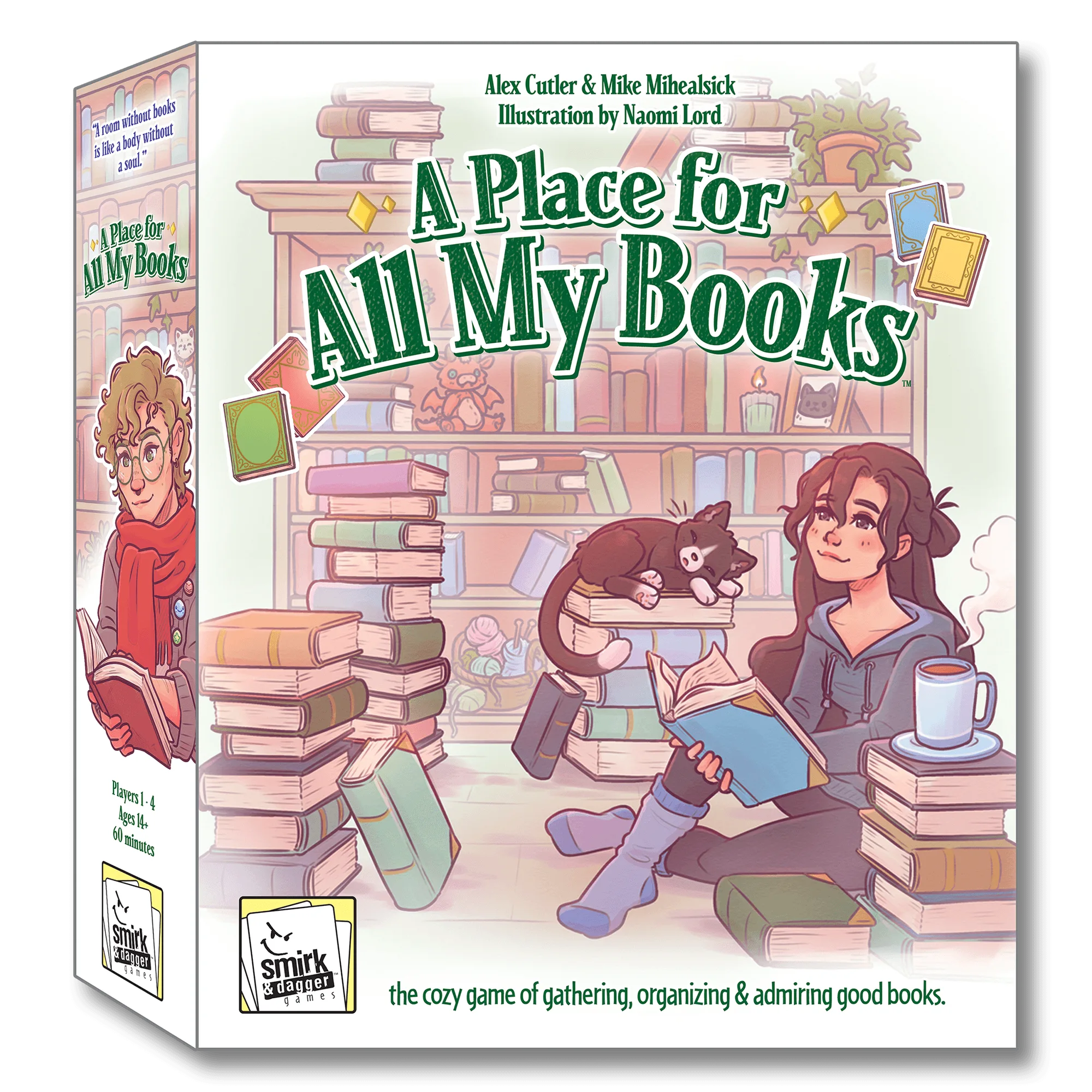
A Place for All My Books
Tile-laying games all ask you to place pieces and build something, but they do not all ask the same thing of your brain. Some are about claiming territory and blocking rivals. Others are about sorting, arranging, and completing personal projects at your own pace. A Place for All My Books sits firmly in the second camp, and that difference matters more than the tiles themselves.
This comparison looks at how A Place for All My Books differs from classic tile-laying games in setup, interaction, and solo fit. It also covers the accessory that changes the physical experience and the trade-offs you accept with either style.
How A Place for All My Books Plays Differently
In A Place for All My Books, you arrange stacks of books in different rooms of your apartment as personal projects. When a project is done, you admire your accomplishments and gain rewards, not least of which is renewed energy. That energy becomes your social battery, which you then spend to leave the house and brave the village to pick up more books. The loop is gather, sort, organize, and reward yourself.
Classic tile-laying games tend to put everyone on one shared landscape. You place tiles to extend a map, and the tension comes from racing opponents to the best spots. A Place for All My Books keeps your apartment largely your own concern. The puzzle is internal and organizational rather than territorial, which changes who will enjoy it.
- If your group argues over shared-board blocking, a personal-project puzzle removes that friction.
- If your group loves reading the table and cutting off rivals, classic tile-layers keep that tension.
Setup, Table Space, and Downtime
A Place for All My Books asks you to build stacks and manage rooms, so your play area needs room for sorted piles and your personal projects. That is a different footprint from a game where tiles spread across a central map. Neither is better, but the sorting style rewards players who like keeping their own area tidy and readable.
Downtime also differs. In a shared-map tile game, every placement changes what is available to everyone, so you watch the board between turns. In A Place for All My Books, your projects are yours, so a turn spent organizing is less about reacting to rivals. Players who dislike waiting through someone else's long turn may prefer the more parallel structure here.
- Clear a wider personal area if you plan to stack and sort books across several rooms.
- If table space is tight, measure before buying any tile game with a large central board.
Interaction and Competition
The biggest trade-off is interaction. Classic tile-laying games create competition because the map is shared and finite. A Place for All My Books is more of a personal puzzle with a village excursion layered on top. That makes it gentler for mixed-experience groups and for players who want to focus on their own arrangement rather than fight over space.
That gentleness is also the cost. If your group's fun comes from blocking, stealing, or outmaneuvering each other, the book-sorting loop may feel too peaceful. The game still gives you goals and rewards, but the pressure is organizational rather than adversarial.
- Pick A Place for All My Books for a low-conflict game night or a wind-down session.
- Pick a classic tile-layer when the group wants direct competition on one board.
Solo and Small-Group Fit
A Place for All My Books suits solo play especially well because the core activity is arranging your own apartment and completing projects. Without opponents to block, the challenge comes from sorting efficiently and managing your energy. That makes it a strong option for one player who wants a quiet, thinky session.
Classic tile-laying games can work solo too, but many are designed around shared-map competition, so solo variants often feel like score-chasing rather than the real thing. If solo is your main mode, the personal-project structure here is the more natural fit.
- Solo players should prioritize games where the puzzle works without rivals.
- For two players, decide whether you want shared-map tension or parallel sorting.
The Accessory Trade-Off
The A Place for All My Books Neoprene Mat Set upgrades your player boards and town board with non-slip, durable playmats. The town mat is double sided, just like the default board. If you play often, mats keep stacks from sliding and make the sorting areas easier to read. The catch is that the set requires the A Place for All My Books base game to use, so it is an add-on, not a standalone purchase.
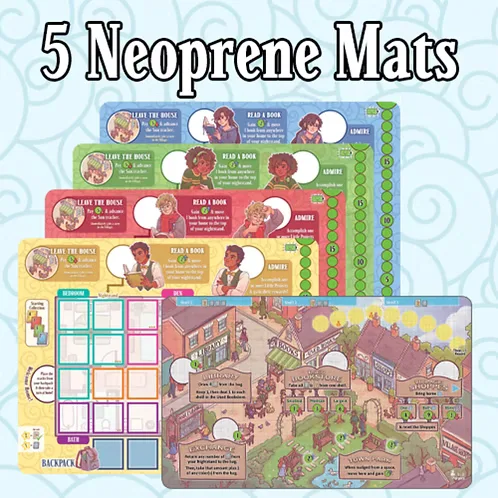
A Place for All My Books Neoprene Mat Set
That is a real trade-off: you spend extra on a game you already own, and you get a more stable, durable table presence in return. If you only play occasionally, the base game is enough. If A Place for All My Books is a regular in your rotation, the mats reduce the small frustrations that add up over many sessions.
- Buy the mat set only after you know the base game will hit the table often.
- Non-slip mats help most when you stack and re-stack books repeatedly.
Trade-offs to weigh before you buy
- Personal puzzle vs shared map: A Place for All My Books keeps your apartment as your own project, while classic tile-layers put everyone on one contested landscape. Choose personal sorting for low-conflict nights; choose shared maps for direct competition.
- Calm theme vs competitive tension: The book-gathering and organizing loop is gentle and rewards efficiency, not blocking. Classic tile games generate tension from racing for the best placements. Match the game's pressure level to your group's appetite for conflict.
- Base game vs mat upgrade: The Neoprene Mat Set requires the base game and adds non-slip, durable boards, including a double-sided town mat like the default board. Add mats only if the base game is a frequent pick; otherwise the base game alone is enough.
Product facts that shape the choice
- A Place for All My Books: A puzzley book gathering, sorting and organizing strategy game where players arrange stacks of books in different rooms of their apartment as personal projects, then gain rewards including renewed energy to spend on heading into the village for more. The personal-project loop is the core difference from shared-map tile games, so it suits players who want sorting and organization over territorial competition.
- A Place for All My Books Neoprene Mat Set: Requires the A Place for All My Books base game to use, and upgrades player boards and the town board with non-slip, durable playmats; the town mat is double sided, just like the default board. This is an add-on for owners of the base game, best justified if you play often and want stacks to stay put during repeated sorting.
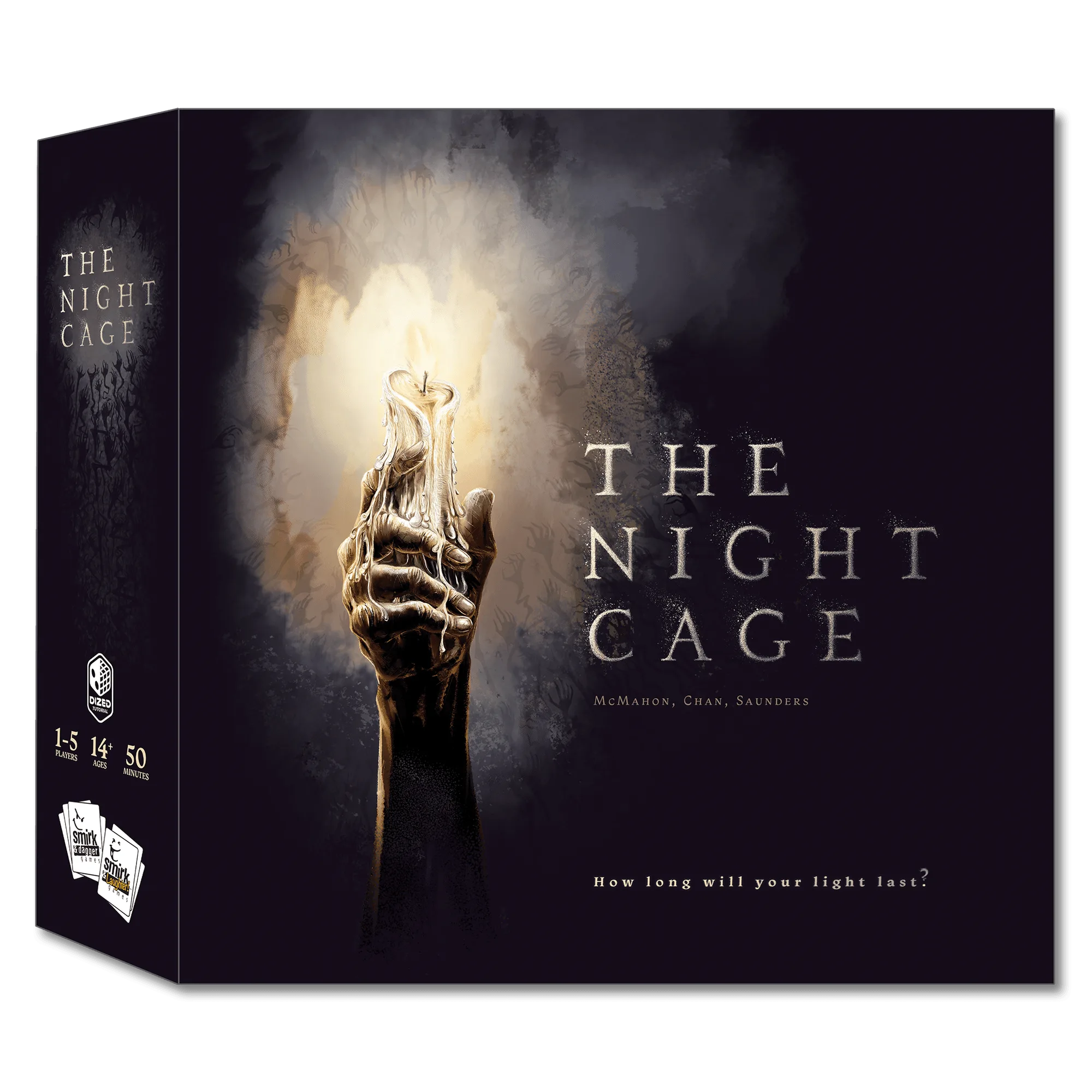
- The Night Cage: A fully cooperative, horror-themed, tile-placement game that traps 1 to 4 lost souls within an otherworldly labyrinth of eternal darkness, where each prisoner has only a candle. If you want tile-laying with cooperative tension instead of either competitive map-building or calm sorting, this is a third direction worth considering.
Who should choose which
Best for
- Solo players who want a quiet, sorting-heavy puzzle with a book theme
- Groups that prefer personal projects over blocking and area control
- Players who enjoy organizing, stacking, and arranging components
- Owners of A Place for All My Books who play often and want non-slip boards
Not for
- Groups whose main fun comes from direct competition on a shared map
- Players who want tile-laying with horror or cooperative tension, who should look at The Night Cage instead
- Buyers who want a standalone accessory, since the mat set requires the base game
A Place for All My Books is the better pick when you want a calm, book-themed sorting puzzle that works solo and avoids shared-board conflict. Classic tile-laying games remain the choice when your group wants to fight over one map. Decide which kind of tension your table actually enjoys, then buy the base game first and consider the mat set only if it becomes a regular.