Quick answer
For most NEMA 17 builds running at or below about 1 A per phase, the A4988 is the simpler, cheaper choice. Choose a DRV8825 when you need higher current or finer microstepping, but plan to set its current limit carefully. If your board uses StepStick-style sockets, both drop in the same way.
What actually differs between A4988 and DRV8825 modules
Both are StepStick-format stepper driver modules that plug into the same sockets on common 3D printer and CNC boards, so the decision usually comes down to current capability, microstepping, and how much setup work you want. The A4988 is based on the Allegro A4988 driver and is widely used for precise stepper control in 3D printers and CNC machines. The DRV8825 is a newer design that supports higher current and finer microstepping, which matters when you are pushing a larger motor or want smoother motion. Neither module is automatically better; the right pick depends on your motor's rated current and the microstepping your firmware expects.
How to set the current limit on each driver
Current limiting is the step that protects both the driver and the motor, and it is where the two modules behave differently. On an A4988 you adjust the small potentiometer while measuring a reference voltage, then calculate the current from the sense resistor value on your specific board. On a DRV8825 the reference voltage to current relationship is different, so you cannot copy the same voltage from an A4988 setup. Always check the motor's rated current per phase and set the driver below that value, then test with a short, low-speed move before running a full print or job. If you are unsure of the sense resistor on your board, treat the setting as a starting point and verify motor temperature during the first run.
Microstepping and motion quality
Microstepping divides each full step into smaller increments, which can make motion quieter and smoother. The A4988 and DRV8825 support different maximum microstep settings, and the DRV8825 generally offers finer options. In practice, the useful microstep setting also depends on your firmware configuration and the mechanical resolution of your machine. Very fine microstepping reduces torque per microstep, so a heavy gantry or a high-friction axis may perform better at a coarser setting. Match the microstep value in your firmware to the jumpers or settings on the module, or the machine will move the wrong distance.
Heat, cooling, and long jobs
Both modules can get warm, and the DRV8825 tends to run hotter when delivering higher current. A small heatsink and airflow across the driver bay are cheap insurance for long prints or CNC jobs. If a driver shuts down mid-job, thermal protection is a likely cause, so reduce current slightly or improve cooling before assuming the module is faulty. Mount the module fully seated in its socket and avoid bending pins during installation.
Trade-offs to weigh before you buy
- Current headroom: The DRV8825 is the better fit when your motor needs more current than an A4988 can comfortably supply, but that headroom comes with more heat and a more sensitive current-limit adjustment. Check your motor's rated current first; if it is near the A4988's practical limit, the DRV8825 is the safer choice.
- Setup simplicity: The A4988 is the easier module to set up for a first build because its current-limit procedure is widely documented and its behavior is predictable at moderate currents. Choose the A4988 if you want a straightforward a4988 stepstick setup and your motor current is modest.
- Microstepping flexibility: Finer microstepping on the DRV8825 can smooth motion, but it also reduces torque per microstep and demands correct firmware settings to avoid distance errors. Match microstepping to your machine's mechanics and firmware, not to the highest number available.
Modules from our catalog
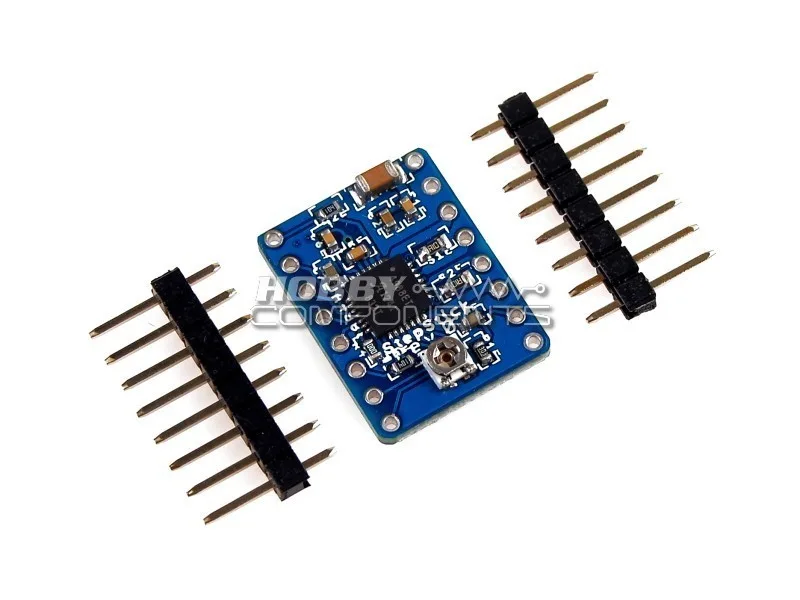
- A4988 StepStick Compatible Stepper Module: Based on the Allegro A4988 stepper motor driver and intended for 3D printer, CNC, and other applications requiring precise stepper control. A proven, low-cost starting point for NEMA 17 builds where current demand is modest.
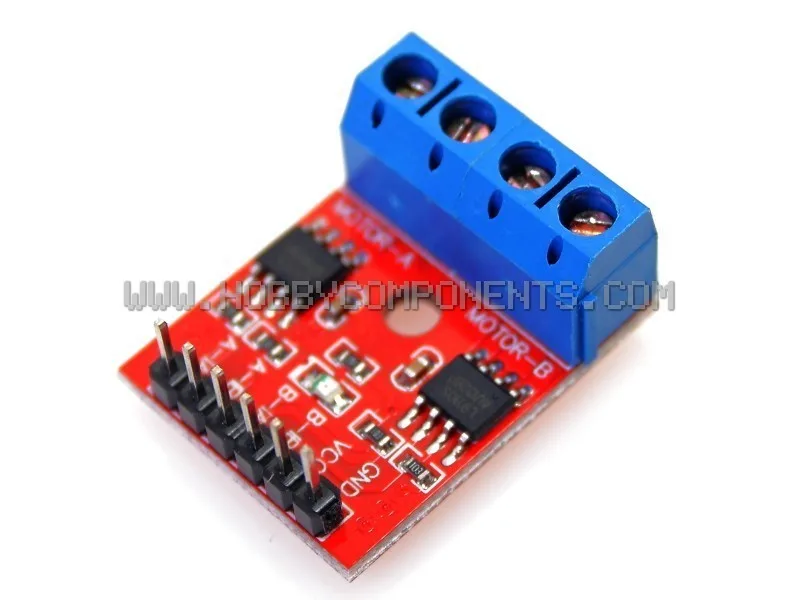
- L9110S DC Stepper Motor Driver H-Bridge: Compact dual-channel H-bridge module using two L9110S driver ICs, able to control one stepper or two DC motors independently from a 2.5 to 12 V supply. A different tool for small motors and simple motion, not a direct StepStick replacement for a 3D printer axis.
Which driver fits your build
Best for
- First-time 3D printer or CNC builders using NEMA 17 motors at moderate current
- Anyone who wants a low-cost, well-documented StepStick driver for a standard board
Not for
- Builds that need higher current than the A4988 can deliver, where a DRV8825 is the better match
- Projects using only small DC motors or a single low-voltage stepper, where a compact H-bridge module is simpler