Quick answer
Choose an activity box when you want a ready-to-start project with a clear finish line, like the Bijoux Box - XS Multi-Rows Bracelets - 7y+, which suits kids who like step-by-step making. Choose open-ended toys when you want replay value that grows with your child, like the Ice Queen Costume Cape for Kids or the Rosaline wand, which can be reused in endless pretend scenarios. Many families get the best value by keeping both: a small stock of open-ended pieces plus one or two activity boxes for focused making time.
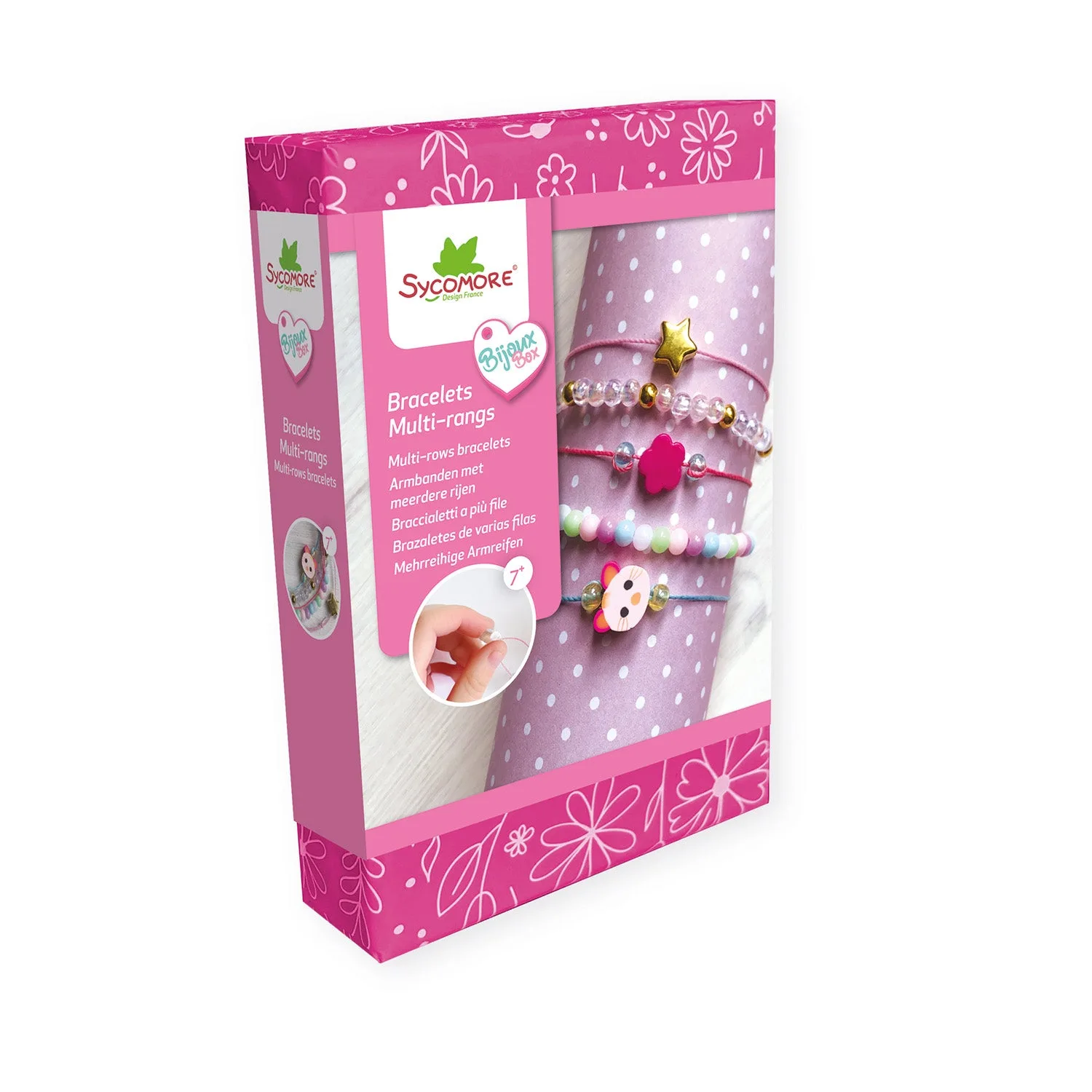
Bijoux Box - XS Multi-Rows Bracelets - 7y+
Most parents ask this question after watching a craft kit get finished in one sitting while a cape or wand gets used every day for a month. That contrast is the real difference between an activity box and an open-ended toy: one delivers a defined making experience, the other delivers a reusable play tool.
This comparison looks at both on the things that actually affect your decision: how quickly play starts, how often the item gets used again, what it costs per hour of play, and how much adult help each one needs. The goal is not to crown a winner but to help you match the format to your child and your household.
What each format actually is
An activity box is a self-contained kit with materials and instructions for a specific outcome. The Bijoux Box - XS Multi-Rows Bracelets - 7y+ is a clear example: it includes beads, cords, and charms for making multi-row bracelets, and it is designed for children aged 7 and up. The play has a beginning, a middle, and a finished object. Open-ended toys, by contrast, come with no fixed outcome. The Ice Queen Costume Cape for Kids and the Rosaline wand are costume pieces that can be worn, combined, and reimagined in different stories each time.
That structural difference drives everything else. A box is judged on whether the project works and whether the child enjoyed the process. An open-ended toy is judged on how many different games it can support over months. Neither is better in the abstract; they solve different problems.
- Ask whether your child prefers a finished result or a continuing story.
- Check the stated age range before buying either format.
Setup time and adult involvement
Activity boxes usually need a table, some tidying, and often an adult nearby for the first attempt. The Bijoux Box is aimed at ages 7 and up and involves beads, cords, and charms, so younger children will need supervision and help with patterns. The upside is that the instructions carry the creative load: you are not inventing the activity, just supporting it.
Open-ended costume pieces are faster to start. The Spaceman Helmet has an easy-to-use Velcro opening and adjustable sizing, so a child can put it on and begin playing almost immediately. The trade-off is that open-ended play depends more on the child's own ideas, and some children freeze when handed a cape with no prompt. If your child needs a nudge, keep a few story starters ready or pair the costume with a specific game.
- Keep a shallow tray for beads and small parts to reduce cleanup friction.
- For open-ended pieces, suggest a scenario rather than a script.
Replay value and how long the item stays in rotation
This is where the two formats diverge most. An activity box is typically consumed: once the bracelets are made, the kit's main purpose is done, though leftover beads and tools can be reused. Its value is concentrated into a few focused sessions. An open-ended toy is designed to be reused. The Elody Fairy Costume, a skirt and wings set for ages 3 to 5, supports twirling, forest adventures, and magical role-play, and those scenarios change as the child grows.
In practice, open-ended items often have a longer shelf life in the toy rotation, while activity boxes deliver a sharper, more memorable burst. If your child loses interest quickly once a project is finished, lean toward open-ended pieces. If your child loves the satisfaction of completing something, boxes will hold attention better.
- Track which toys your child returns to after two weeks, not two days.
- Store finished craft objects where they can be seen and used again.
Cost per hour of play
Activity box value for money depends on how many sessions the kit covers. A box that takes two focused afternoons to complete spreads its cost across a short window. A box that becomes a repeat activity, with beads reused for other projects, spreads it further. The Bijoux Box at USD 5.00 against a catalog comparison price of USD 9.99 is a low entry point, which makes it easier to test whether your child enjoys structured making before investing in a larger kit.
Open-ended toys tend to look more expensive per item but often cost less per hour because they are used repeatedly. The Ice Queen Costume Cape at USD 17.50 against a comparison price of USD 34.99 supports repeated dress-up sessions, and the Rosaline wand at USD 4.00 against USD 7.99 is a small add-on that extends existing costumes. The honest trade-off: boxes are cheaper to try, open-ended pieces are cheaper to keep.
- Estimate sessions, not just the sticker price, before deciding.
- Small accessories can refresh an existing costume for very little.
When a mix works better than either alone
Many families do not need to pick a side. A practical pattern is one activity box for focused making time plus a small set of open-ended pieces for daily play. For example, a child could make bracelets from the Bijoux Box in the afternoon and then use the Tiara Samara hat black hairband, a miniature witch hat with glittering accents, dark tulle, and feathers, in an evening costume game. The box provides structure; the accessories provide range.
This mix also solves the storage problem. Activity boxes are compact and can be stacked until needed, while open-ended costume pieces need hanging space. Keeping one or two of each limits clutter and keeps both formats in active use.
- Rotate open-ended pieces in and out to keep them feeling new.
- Reserve one shelf for in-progress activity boxes.
Trade-offs to weigh before you buy
- Structure vs. freedom: Activity boxes give a clear path and a finished object; open-ended toys give no instructions and depend on the child's ideas. Pick structure if your child asks what to do next; pick freedom if they invent games unprompted.
- One-time use vs. repeat use: A kit is mostly consumed once the project is done, while a costume or wand can be reused across many scenarios. If you want long rotation life, open-ended pieces usually win; if you want a focused afternoon, a box wins.
- Adult time vs. independent play: Bead kits for ages 7 and up often need help with patterns and small parts; adjustable costume pieces are quicker to self-start. Match the format to how much supervision you can realistically give.
- Upfront cost vs. cost per hour: Boxes are often cheaper to try, while open-ended pieces cost more per item but spread the cost over repeated sessions. Estimate how many times your child will actually use it before comparing prices.
Product facts that matter for this choice
- Bijoux Box - XS Multi-Rows Bracelets - 7y+: Includes beads, cords, and charms for making multi-row bracelets, designed for children aged 7 and up. It is a structured making activity with a clear outcome, so it suits kids who enjoy following steps and finishing a project.
- Ice Queen Costume Cape for Kids - Carnival & Festive Use (3 sizes): Flowing, frosty blue fabric with delicate shimmering accents, available in three sizes. It is an open-ended costume piece that can be worn alone or over a gown, so it supports repeated pretend play rather than a single project.
- Spaceman Helmet - Costume Accessory for Kids - Carnival & Festive Use: Features an easy-to-use Velcro opening and adjustable sizing, made from lightweight material. Fast to put on and adjust, which lowers the barrier to open-ended play for children who need a quick start.
- Rosaline wand - Costume Accessory for Kids - Carnival & Festive Use: Gold star atop a white satin ribbon, made from PU, sateen ribbon, and other materials. A low-cost accessory that adds a prop to existing costumes, extending their play value without a new kit.
Which one fits your child?
Best for
- Children who enjoy step-by-step making and finishing a project, especially ages 7 and up for bead kits like the Bijoux Box.
- Families who want a compact, low-commitment activity that can be stored and brought out for a focused session.
- Parents looking for a small gift or rainy-day option at a low entry price.
Not for
- Children who lose interest as soon as a project is complete and prefer ongoing stories.
- Kids under the stated age range for small-part kits, unless an adult is closely involved.
- Households that already have plenty of craft supplies and need reusable play pieces instead.
There is no universal winner. Activity boxes deliver focused, guided making; open-ended toys deliver repeatable, child-led play. Match the format to your child's attention style and your available adult time, and consider keeping one of each so both needs are covered.