Quick Answer
Adding a super tweeter extends your system's high-frequency response without replacing your main speakers. For best results, use a planar-magnetic ribbon design and follow careful placement and crossover matching.
Why Add a Super Tweeter?
Standard tweeters often roll off above 20 kHz, but a dedicated super tweeter can extend response to 40 kHz or higher. This isn't about hearing ultrasonic frequencies—rather, it adds air, ambience, and a sense of space to cymbals, strings, and room reflections. The PST Planar-Magnetic Ribbon Super Tweeter Pair excels here because its ribbon design delivers low distortion and wide dispersion, blending seamlessly with most speakers.
Placement Trade-offs
Mounting the super tweeter too high or too far from the main tweeter creates a time-alignment mismatch, making the treble sound detached. Placing it directly on top of your speaker (using a dedicated stand like the Super Tweeter Platform) keeps the acoustic centers close and maintains coherent imaging. A separate stand gives you flexibility to angle the tweeter toward the listening position, but adds floor clutter.
How to Add a Super Tweeter: Step-by-Step
- Choose Your Connection Method: Most super tweeters offer both a direct-wire option (using speaker-level inputs) and a high-pass filter. For simplest integration, connect the super tweeter's positive and negative wires to the same terminals as your main speaker. The built-in crossover in the super tweeter will handle frequency division. Check if your super tweeter has a crossover switch or capacitor; using the wrong setting can cause a gap or overlap in the frequency response.
- Position the Super Tweeter on Your Main Speaker: Place the super tweeter as close as possible to your main speaker's tweeter, ideally directly on top. Use a dedicated platform (like the Super Tweeter Platform Pair) to ensure stability and proper aiming. Angle the super tweeter toward your listening position if the main speaker is tall or tilted. A common mistake is placing the super tweeter too far forward or back—this creates a time delay that smears the image. Keep the front baffles aligned.
- Set the Level and Listen: Start with the super tweeter's level control (if equipped) at its lowest setting. Play a familiar track with high-frequency content (e.g., cymbals, strings) and gradually increase the level until you hear the treble become airier without sounding harsh or sibilant. The goal is subtle enhancement, not a dominant treble boost. If you hear a metallic or 'zippy' quality, the level is too high. Back it off until the super tweeter disappears and only the sense of space remains.
- Fine-Tune with Room Acoustics: Super tweeters are sensitive to reflections. If the treble sounds overly bright or diffuse, try moving the super tweeter slightly inward (toward the center of the room) or adding a small amount of toe-out. For hard-walled rooms, a bit of absorption behind the listening position can help tame excess sparkle. Don't rely solely on the level control—placement adjustments often yield a cleaner result than turning the tweeter down.
Product Facts
-
PST Planar-Magnetic Ribbon Super Tweeter Speaker Pair (Open Box): Multiple super tweeters available in like new condition; thoroughly inspected and tested with a 3-year warranty and lifetime customer service. Open-box pricing (15% off retail) gives you a high-end ribbon tweeter at a lower cost, backed by the same support as new gear.

PST Planar-Magnetic Ribbon Super Tweeter Speaker Pair (Open Box)
-
Super Tweeter Platform - Pair: The Super Tweeter Stand is crafted in Stealth Black and securely accommodates the super tweeter, even on curved speaker enclosures. It solves the common placement challenge of keeping the tweeter stable and aimed correctly, especially on non-flat speaker tops.
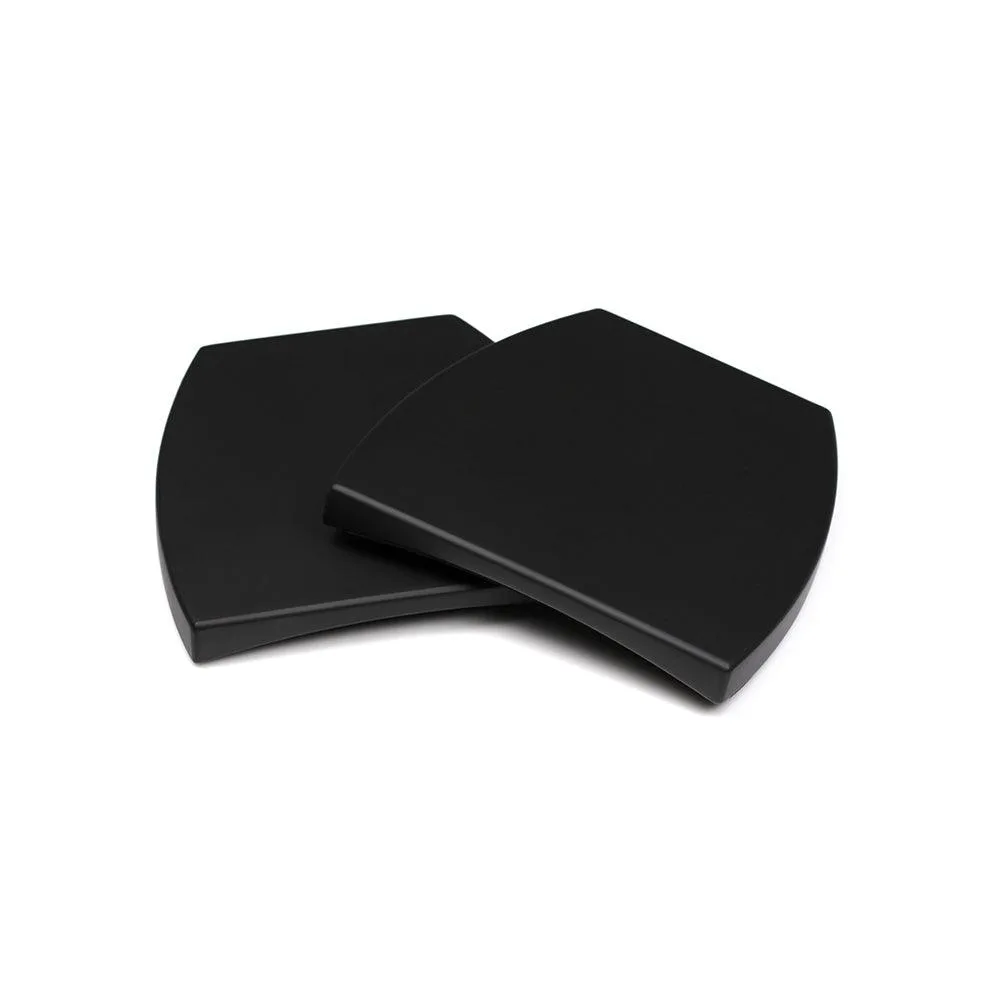
Super Tweeter Platform - Pair