Quick answer
Most aerial amplifier faults are power faults, not antenna faults. Check that the amplifier's dedicated power wire has 12V with the radio on and that its ground is clean; if power is present but AM and FM are still weak, inspect the mount and cable before replacing anything. Only replace the antenna once power, ground and cable are proven good.
Confirm the amplifier is actually powered
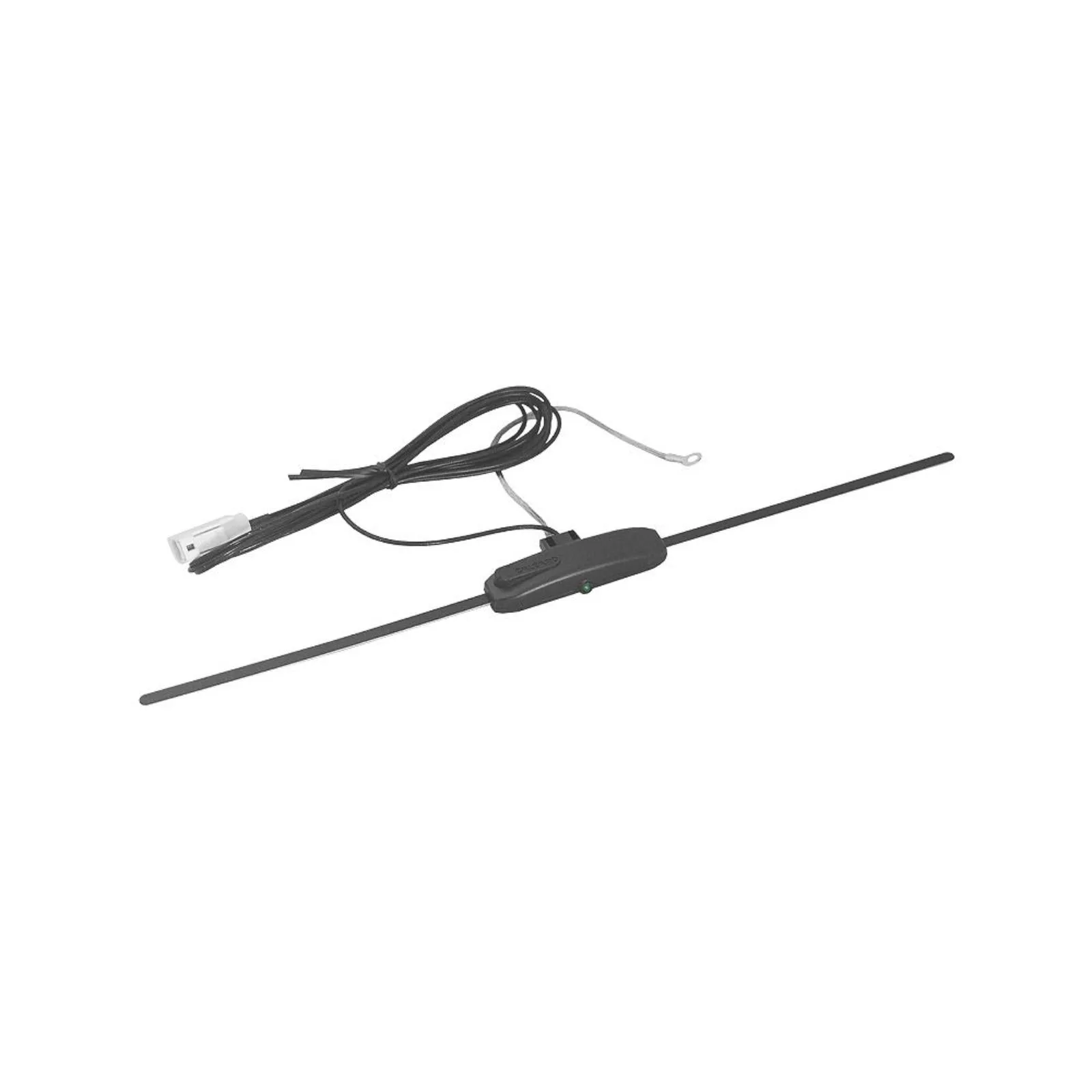
An amplified antenna needs a live feed, and a screen-mount unit such as the Calearo 7697018 is powered through a dedicated wire rather than the coax. With the radio switched on, back-probe that wire at the antenna end and look for battery voltage. If it reads zero, the fault is upstream: a blown inline fuse, a loose crimp behind the dash, or a head unit that no longer supplies antenna turn-on. If it reads low, suspect a poor ground or a corroded connector rather than the antenna itself.
Check the mount and cable before condemning the antenna
A windscreen aerial install lives or dies on its bonding and its cable route. Press gently around the antenna pad: if reception changes when you push on it, the coupling or adhesive is failing, not the amplifier. Follow the coax to the radio and look for sharp bends, crushed sections behind trim, or a Fakra plug that is not fully latched. Water in a connector or a pin pushed back in the housing will kill both AM and FM at once, which is the classic sign of a cable fault rather than an amplifier fault.
Separate AM-only and FM-only symptoms
If FM is weak but AM is fine, the amplifier is probably working and the problem is more likely local interference or a failing tuner stage. If AM is static-heavy but FM is clean, expect electrical noise from the vehicle rather than a dead booster. When both bands drop together, that points to shared hardware: power feed, ground, cable, or the antenna module itself. Testing one band at a time stops you from replacing parts that are still doing their job.
When to stop diagnosing and replace instead
Stop chasing the fault when you have confirmed 12V at the amplifier, a clean ground, an intact cable, and a correctly seated plug, yet reception is still poor. At that point the amplifier module has failed and no amount of re-routing will recover it. This is also the moment to weigh a replacement against a different antenna type, because a screen-mount amplified antenna is not the only option for every vehicle.
Symptom-to-fix diagnosis
- No reception on AM or FM, amplifier wire reads 0V: Trace the dedicated power wire back to its source. Check the inline fuse, the crimp at the radio harness, and whether the head unit outputs an antenna turn-on signal. Fix the feed first; the antenna is probably fine.
- Reception cuts in and out when you touch the screen pad: The antenna bonding or adhesive is failing. Clean the glass, re-seat the pad, and confirm the cable is not strained where it leaves the glass. Mechanical, not electrical. Re-mount before replacing.
- Both bands weak, 12V present, cable and plug intact: The amplifier module has failed internally. Replace the antenna with a matching amplified screen-mount unit and reuse the existing power feed. Stop testing here; replacement is the correct next step.
- FM weak but AM normal, or AM static but FM clean: A single-band fault usually means interference or a tuner issue, not the booster. Check for noise sources and confirm the radio itself performs on another vehicle. Do not replace the aerial for a one-band symptom.
Product facts that matter here
- Calearo AM FM Fakra Aerial Amplifier Internal Windscreen Mount Antenna 7697018: AM/FM dual amplified screen mount antenna with Fakra connection, powered via a dedicated power wire. Because it needs its own 12V feed, a dead power wire mimics a dead antenna. Test the feed before buying a replacement.
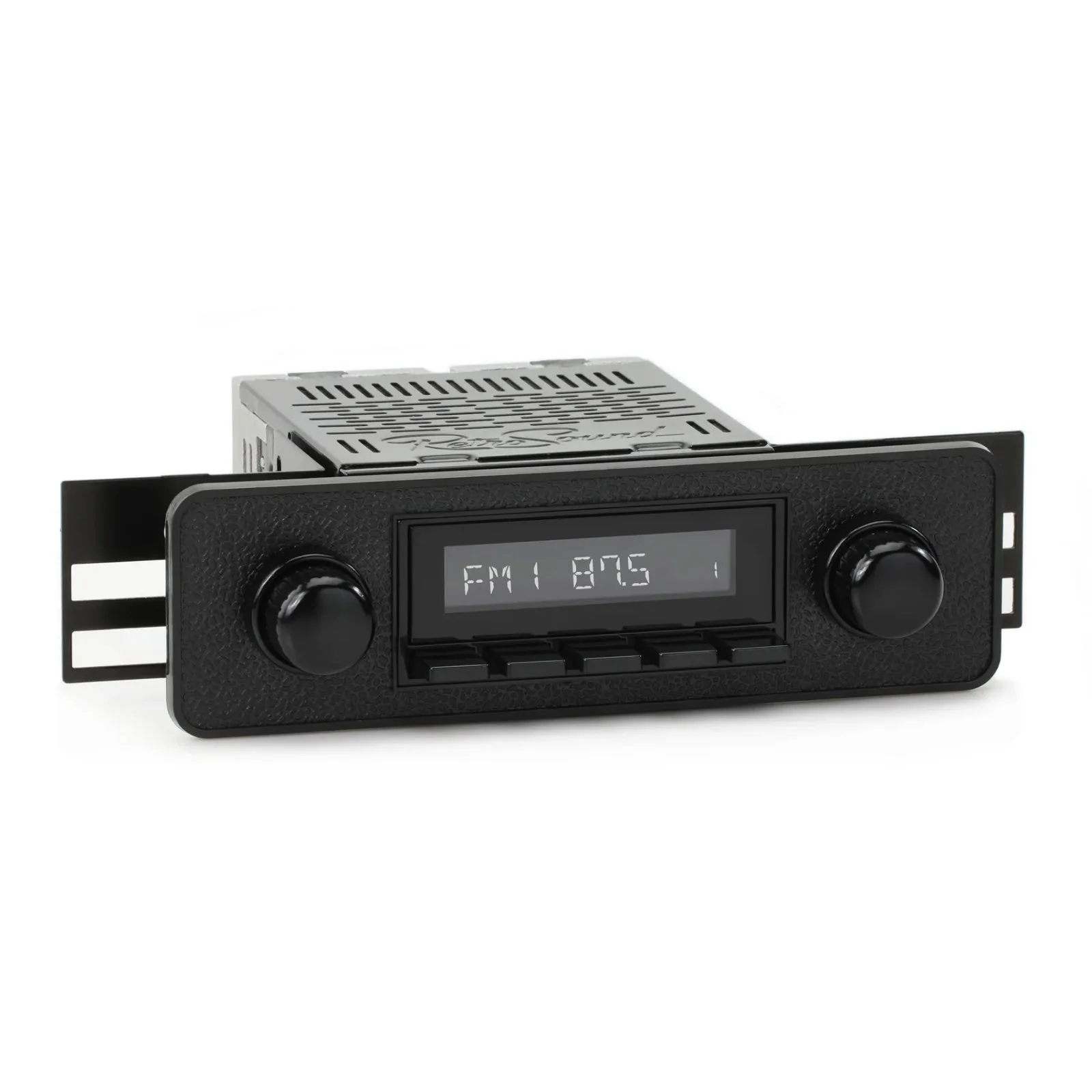
- RetroSound Euro Style Motor 1 Bluetooth FM AM Radio All Black Classic Car Stereo: RetroSound Euro Style Motor 1 Bluetooth FM AM radio with a period-correct faceplate and push-buttons. If your classic car still runs its original radio, the head unit may not supply an antenna turn-on signal at all, which makes any amplified aerial appear faulty.