Quick Answer
Choose an AirFort if you want a large, open play space that inflates in seconds over a standard box fan and packs down small afterward. Choose a play tent if you want a structure that holds its shape without a fan, works outdoors, and needs no power source. For most indoor rooms where kids want room to move, the AirFort is the better fit.
How Each One Actually Works
An AirFort is a fabric fort that attaches to a standard box fan (not included). The fan inflates the fabric into a dome, and kids crawl in through the opening. Turn the fan off and the fort deflates, so it only exists while the fan runs. That single fact drives most of the differences below.
A play tent uses poles, wires, or a pop-up frame to hold its shape. It stands on its own with no power, which is why tents show up at parks, campsites, and backyards as often as living rooms. The trade-off is that a tent's frame sets a fixed footprint and ceiling height that you cannot adjust.
Setup, Teardown, and Storage
AirFort setup is a two-step job: place the fan, then attach and inflate the fabric. There are no poles to thread and no sleeves to wrestle with, which matters when a child wants to play right now. Teardown is just as quick, and the fabric folds down to a size that fits on a shelf or in a drawer.
Tents vary widely. Pop-up tents spring open fast but can be genuinely hard to fold back into their bag. Pole-and-sleeve tents take longer to build and usually stay up once built, because rebuilding them is a chore. If your child changes activities every twenty minutes, that difference shows up daily.
- AirFort: fast inflate, fast deflate, small storage footprint, needs an outlet and a fan.
- Pop-up tent: fast open, often frustrating to close, stores flat but bulky.
- Pole tent: slow to build, stable once up, best left assembled.
Floor Space and Headroom
An AirFort takes up more floor area than most people expect, because the inflated dome needs clearance on all sides and a fan sitting at one end. In exchange, kids get an open interior with enough height to sit upright and room for a friend, a pillow, and a few toys.
A tent's footprint is fixed by its frame, so you can measure once and know exactly what you are committing to. That predictability is a real advantage in a small bedroom or a shared playroom where every inch is accounted for.
Noise, Airflow, and Comfort
The fan is the trade-off nobody mentions in the marketing photos. A box fan running continuously produces steady white noise, which some families find helpful at nap time and others find annoying during a phone call. The constant airflow also keeps the interior from getting stuffy, which is a genuine plus in a warm room.
A tent is silent and needs no electricity, so it works in a power outage, on a porch, or anywhere you would rather not run a cord. It also traps heat more than an inflated fort, which is worth knowing before you set one up in a sunny room in July.
Durability and Cleanup
Both options are fabric, so both will eventually meet juice, crumbs, and a pet. The practical difference is access. An AirFort deflates completely, which means you can lay it flat, wipe or spot clean it, and let it dry without fighting a frame. A tent has to be cleaned around poles and seams, and a pop-up tent can be awkward to reach into.
On durability, the failure points differ. Tents fail at poles, hinges, and zippers. AirForts fail at seams and fabric, especially if they are dragged across carpet while inflated. Neither is indestructible, so treat both as a two-to-three-year item for heavy daily use.
Cost and What You Actually Need to Buy
The headline price of an AirFort is not the whole cost, because you still need a standard box fan. If you already own one, the AirFort is the cheaper path to a large play space. If you do not, budget for the fan alongside the fort.
A play tent is a single purchase with nothing extra required. That makes tents the simpler gift and the easier handoff to a grandparent or babysitter who should not have to figure out a fan setup.
Trade-Offs to Weigh Before You Buy
- Play space vs. power source: An AirFort gives kids a bigger, open interior than most tents at the same price, but it only exists while a box fan is running. A tent trades some room for independence from electricity. If the playroom has an outlet and you do not mind fan noise, the AirFort wins on usable space.
- Quick setup vs. self-supporting frame: AirForts inflate and deflate in seconds with no poles, which suits kids who switch activities constantly. Tents hold their shape on their own, which suits a fort that stays up for weeks. Ask how often the fort will be put away. Frequent teardown favors the AirFort.
- Indoor-only vs. indoor and outdoor: AirForts are designed around a box fan and an indoor outlet, so they are not a backyard or camping option. Tents can go outside, though they still need to come in before rain. If you need one structure for both the living room and the yard, buy the tent.
- Lower entry price vs. total cost: AirFort models are priced competitively, but you must add a standard box fan if you do not already own one. A tent is a single, complete purchase. Own a box fan already? The AirFort is the better value. Starting from zero? Compare the tent plus nothing against the fort plus a fan.
AirFort Options Worth Knowing
- The Original AirFort - UFO: The Original AirFort - UFO uses durable, breathable construction, works with any standard box fan (not included), and is described as child safety tested. The breathable fabric and fan-powered airflow keep the interior from getting stuffy, and the child safety testing answers the first question most parents ask.
- The Original AirFort - Beach Ball Blue: The Original AirFort - Beach Ball Blue has bright beach ball coloring and is positioned as beach fun without the sand; a box fan is not included. A useful pick if you want a fort that doubles as a themed play space for indoor summer activities or a rainy-day beach party.
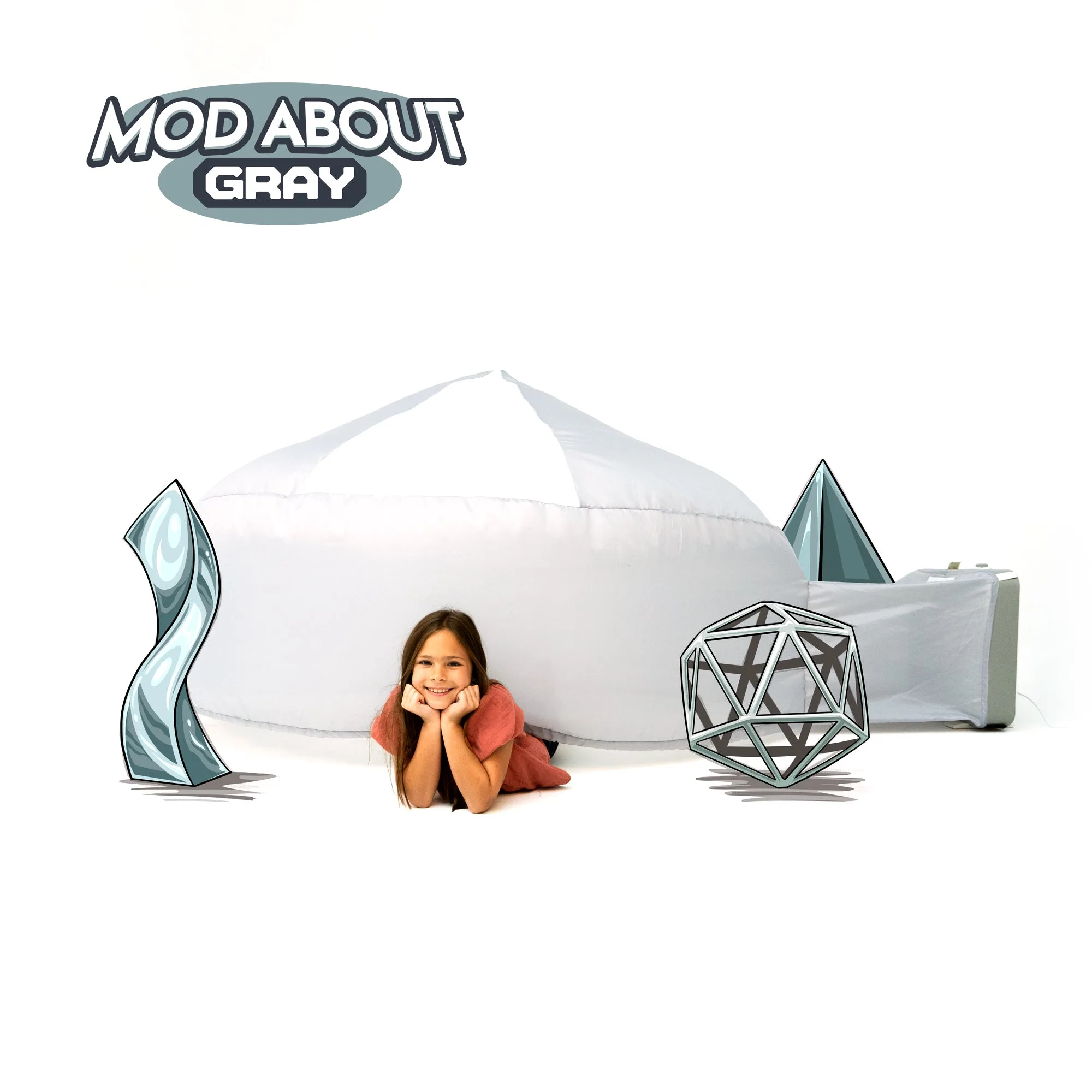
- The Original AirFort - Mod About Gray: The Original AirFort - Mod About Gray is described as a sleek-looking blowup fort and is child safety tested and approved; a box fan is not included. The neutral gray is the easiest of the options to leave up in a living room or guest room without it reading as a toy.
- The Original AirFort - Space Shuttle: The Original AirFort - Space Shuttle uses durable, breathable construction, works with any standard box fan (not included), and is listed for kids 3 and up. The stated age range gives you a clear starting point if you are buying for a younger child rather than a school-age kid.
Which One Fits Your Family
Choose an AirFort if
- You have an indoor outlet and a standard box fan available
- Your child wants a large open space to sit, read, or play with a sibling
- You want something that packs down small between uses
- You are looking for a screen-free indoor activity for a rainy day
Choose a play tent instead if
- You need a fort that works outdoors, at a park, or while camping
- You want a structure that stands on its own without electricity or noise
- You are buying for a space with no outlet nearby
- You want a single purchase with no additional fan to buy