Quick Answer
For most families, an AirFort offers more day-to-day value than a plastic or wooden playhouse because it sets up in seconds, packs away small, and costs less upfront. Choose a traditional playhouse only if you have permanent outdoor space and want a fixed structure that stays up year-round.
If you are weighing an AirFort against a plastic or wooden playhouse, the real question is not which one is more fun. It is which one fits your space, your routine, and your budget without becoming a chore. AirFort inflatables and traditional playhouses solve the same problem in very different ways.
This comparison looks at setup time, storage, safety, durability, and cost using the AirFort catalog facts, so you can decide which option makes sense for your home. We will also cover who each choice suits best and where it falls short.
Setup and Takedown: Seconds vs Hours
An AirFort inflates in seconds when you attach it to any standard box fan, which is not included. That means play can start almost immediately, and takedown is just as quick. A plastic or wooden playhouse typically requires assembly, tools, and a permanent or semi-permanent spot. If your child wants to play right now, the AirFort wins on speed.
For daily use, that speed matters. You can set up an AirFort in a living room, playroom, or bedroom and pack it away before dinner. A playhouse stays where it is built, so it becomes part of your yard or room layout rather than a temporary activity.
- Keep a box fan near the play area so setup takes under a minute.
- If you want zero setup, a playhouse is ready once assembled.
Space and Storage: Packable vs Permanent
AirFort models are designed to deflate and store away, which makes them a strong fit for apartments, small homes, and shared rooms. A plastic or wooden playhouse occupies floor or yard space all the time, even when no one is using it. If your space does double duty, an AirFort is the more flexible choice.
That flexibility also helps if you move or rearrange rooms often. You are not committing a corner of your home or garden to a fixed structure. The trade-off is that an AirFort only exists while the fan runs, so it is not a place to leave toys out permanently.
- Measure your storage spot before buying any inflatable fort.
- A playhouse needs a dedicated footprint you are willing to give up.
Safety and Materials: What the Catalog Confirms
AirFort products are described as child safety tested and approved, and the Space Shuttle is noted as safe and worry-free for kids 3 and up. The Space Shuttle and Constellation models also use durable, breathable construction. These are the facts the catalog provides, so treat them as the baseline rather than a full safety guarantee.
Plastic and wooden playhouses vary widely by brand, so you would need to check each manufacturer's safety claims and age recommendations. If you want a product with published child safety testing, AirFort gives you that starting point. If you need a structure that can be climbed on, a playhouse may be the better fit.
- Always supervise young children, regardless of which option you choose.
- Check the age guidance on any playhouse before purchase.
Cost and Long-Term Value
AirFort prices in the catalog range from about $25 to $30, with comparison prices from about $49.99 to $59.99. A plastic playhouse often costs more once you add assembly and replacement parts, and a wooden playhouse can cost several times that. If you want the lowest entry price for imaginative play, AirFort is the clear value pick.
Value also depends on how often your child plays. An AirFort can be used indoors year-round and stored when interest fades. A playhouse may get heavy use in good weather but sit unused in winter. Neither is automatically better; the right answer depends on your climate and play habits.
- Compare total cost, including fan and storage, not just the sticker price.
- A playhouse may hold resale value better than an inflatable.
Trade-Offs to Weigh Before You Buy
- Setup speed vs permanence: AirFort inflates in seconds with a box fan, but it only stays up while the fan runs. A playhouse takes assembly and stays put. Choose AirFort for instant play; choose a playhouse if you want a fixed structure.
- Storage vs dedicated space: AirFort packs away and suits small homes. A playhouse claims permanent floor or yard space. If space is tight, AirFort is the practical pick.
- Upfront cost vs long-term durability: AirFort models are priced around $25 to $30. Wooden playhouses cost more but may last longer outdoors. Match the purchase to how long you plan to use it.
- Indoor vs outdoor use: AirFort is designed for indoor rooms. Playhouses are often built for yards and weather. Decide where play will actually happen before you buy.
AirFort Products at a Glance
- The Original AirFort - Space Shuttle: Durable and breathable construction; safe, worry-free forts for kids 3 and up; works with any standard box fan, which is not included. You get a space-themed fort that is easy to set up and suitable for young children, as long as you already own or buy a box fan.
- The Original AirFort - Constellation (Glow): Glow-in-the-dark design for spotting constellations like Ursa Major and Orion; child safety tested and approved; box fan not included. This model adds a nighttime visual feature that a standard playhouse does not offer, which can make indoor play more engaging after dark.
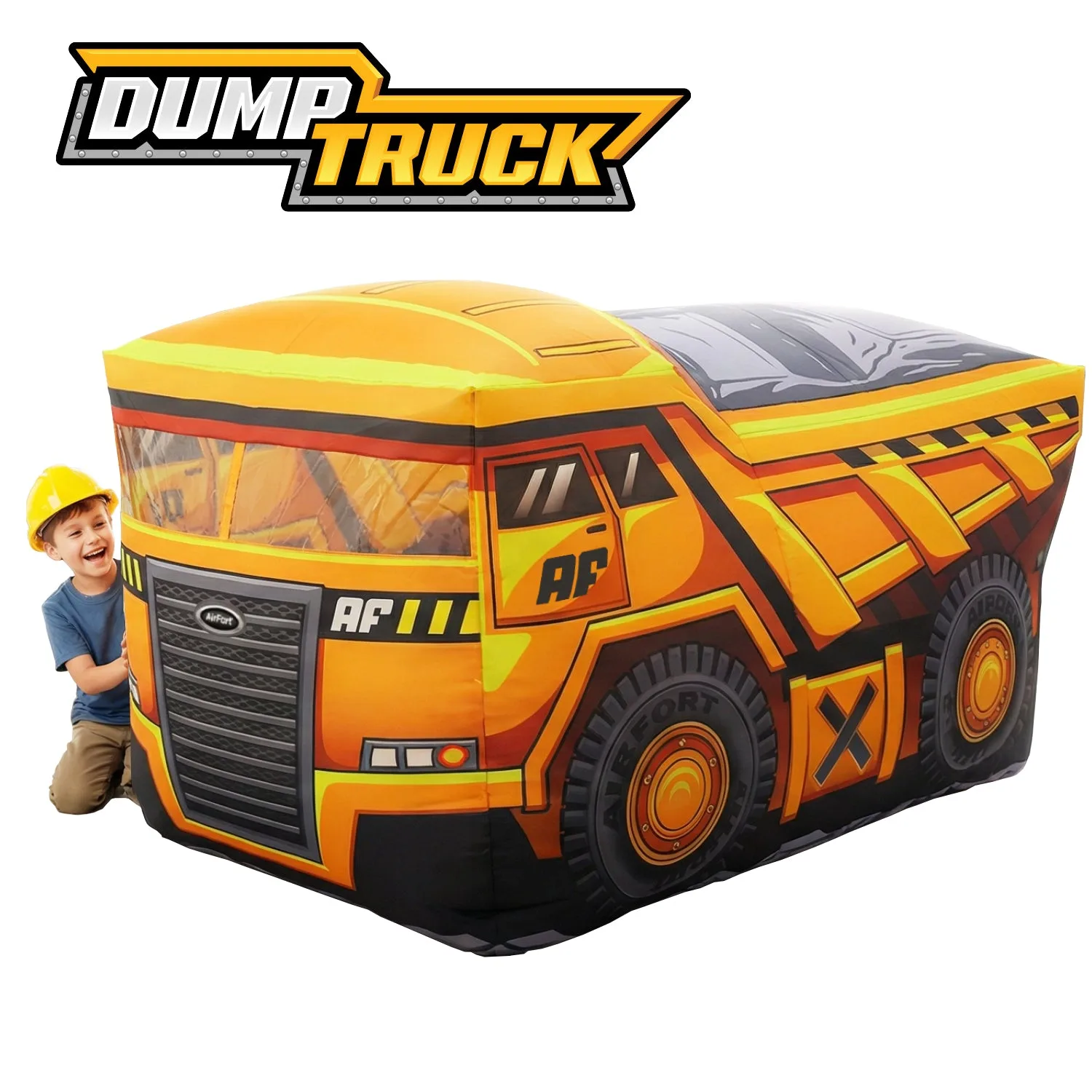
- The Original AirFort - Big Yellow Dump Truck: Inflatable fort that transforms a room into a construction zone in seconds; box fan not included. A themed option for kids who love trucks, and it stores away quickly when playtime ends.
- AirFort Buddy Chicken Pillow: Plush pillow described as perfect for daytime feathered flights and nighttime coop cuddles. A small add-on that extends AirFort play into quiet time or bedtime, which a playhouse cannot do.
Which Should You Choose?
AirFort is best for
- Families in apartments or small homes who need play equipment that stores away
- Parents who want a lower-cost, indoor option that sets up in seconds
- Kids who enjoy themed pretend play and glow-in-the-dark features
A traditional playhouse is better for
- Families with a permanent yard or playroom who want a fixed structure
- Kids who need a playhouse they can climb on or leave toys in
- Buyers who prefer a one-time assembly over using a box fan each time
For most families, an AirFort delivers more value because it is affordable, quick to set up, and easy to store. If you have permanent outdoor space and want a structure that stays up, a playhouse may still be the better fit. Match the choice to your space and routine, and you will get more play for your money.