Quick answer
Use Seachem Alkaline Buffer only when your aquarium pH has dropped below species-safe levels and you have a planted tank or hard water. Dose slowly, retest after each addition, and stop once pH reaches your target range.
When a pH boost is needed and when it is not
A sudden pH crash (below 6.0) can stress or kill fish, especially in soft water tanks with heavy bioloads or CO2 injection. Alkaline Buffer is designed for planted aquariums and hard water systems where phosphate-based buffers might cause algae or cloudiness. If your pH is stable and within the tolerance of your livestock, do not add any buffer—stability matters more than a specific number.
If you have a low-tech or non-planted tank with soft water, a phosphate buffer or a simple water change may be a safer, cheaper option. Alkaline Buffer is best when you need to raise pH without adding phosphate.
Trade-offs: Alkaline Buffer vs. other pH raisers
Alkaline Buffer contains no phosphate, which makes it ideal for planted aquariums where phosphate can trigger algae blooms. However, it raises both pH and alkalinity (KH), so it will increase the water's buffering capacity. Overdosing can push pH above 8.5, which is too high for many freshwater fish and shrimp.
Because it is a non-phosphate buffer, it works best when paired with Acid Buffer for precise control. If you only need a small temporary pH lift, consider a water change or crushed coral instead.
How to diagnose and fix a low pH problem
- Symptom: Fish gasping at surface, lethargy, clamped fins, or sudden death; pH reading below 6.5 or below your species' tolerance. Confirm with a liquid test kit before adding anything.
- Likely cause: Low alkalinity (KH below 3 dKH) from soft water, heavy bioload, or CO2 injection without buffering. Test KH first; if it is below 3 dKH, a buffer is appropriate.
- Corrective action: Dissolve 1 teaspoon (approx. 5 g) of Seachem Alkaline Buffer per 80 L (20 gal) of water in a cup of tank water, then add slowly to high-flow area. Wait 15 minutes, retest pH, and repeat until target pH is reached. Do not exceed 8.5. Always dissolve before adding; never add dry powder directly to the tank.
- Stop or choose another option: Stop if pH exceeds 8.5 or if your target is reached. If your KH is already above 6 dKH or your tank is not planted, consider crushed coral, a water change, or a phosphate buffer instead. Over-buffering can harm fish and plants; stability is more important than a specific number.
Product fact
-
Seachem Alkaline Buffer: Alkaline Buffer adjusts pH to 7.2–8.5 and increases alkalinity without adding phosphate. This makes it safe for planted aquariums where phosphate buffers can cause algae, but limits its use in soft water or low-tech setups.
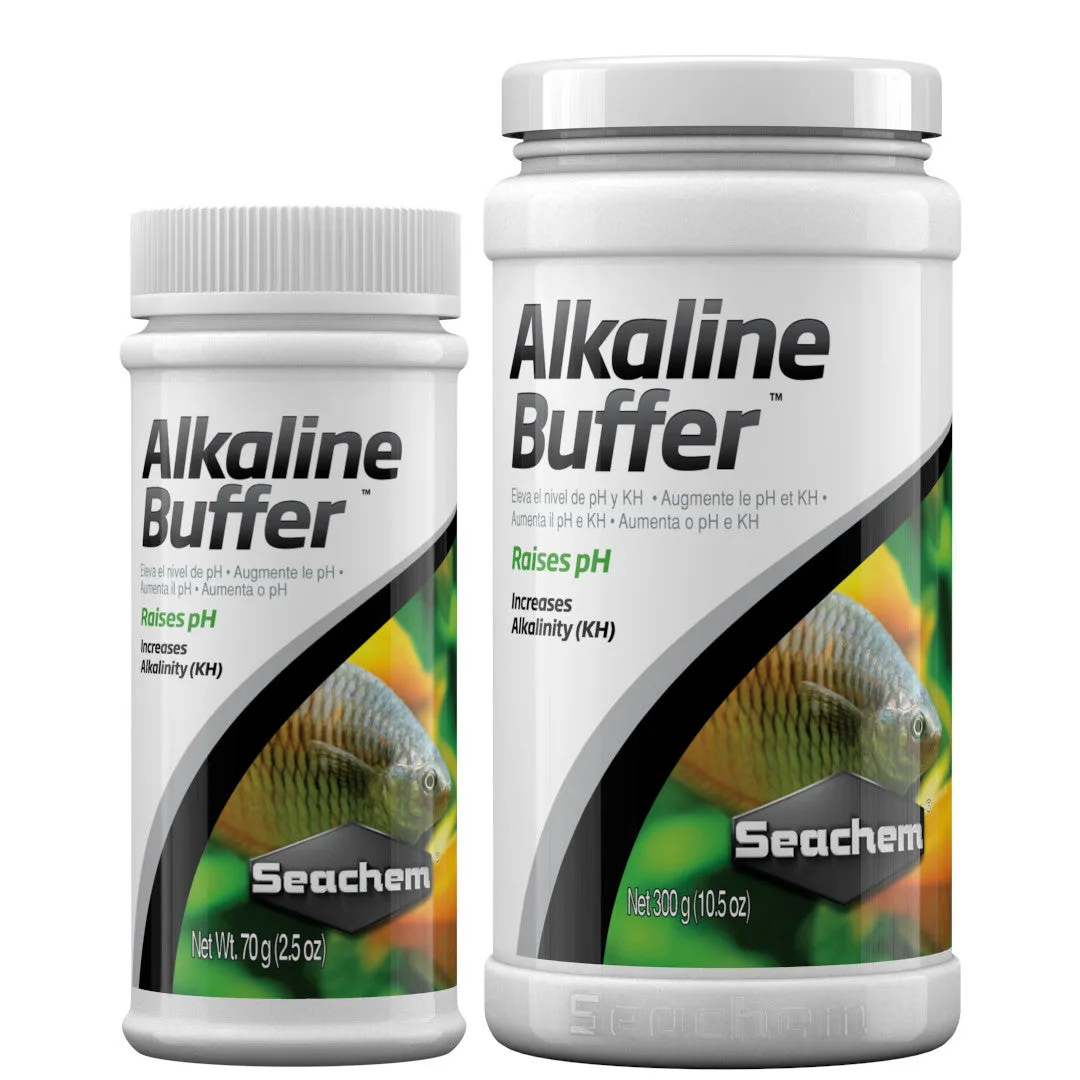
Seachem Alkaline Buffer