Quick Answer
Use allulose fine powder as a 1:1 substitute for sugar in most low sugar baking recipes, but expect less browning and a cooling aftertaste. Adjust liquids and baking time for best results.
Why allulose behaves differently in baking
Allulose is a rare sugar found naturally in figs, raisins, and maple syrup. It tastes like sugar without an unpleasant aftertaste and has zero calories, making it a popular sugar free sweetener for baking.
Unlike sugar, allulose does not caramelize or brown the same way. It also has a cooling effect when it dissolves, which can change the texture of certain baked goods. Understanding these differences helps you adjust recipes for the best outcome.
Trade-offs to know before you swap
Allulose is about 70% as sweet as sugar, so you may need to use slightly more or add a touch of another sweetener. It also retains moisture, which can make cookies and cakes chewier or more tender.
Because allulose resists fermentation in the digestive system, it is unlikely to cause gas or bloating. That makes it a gentle option for those sensitive to other sugar alcohols.
If you are new to allulose, start with a recipe that has strong flavors like chocolate or spice, which can mask the slight cooling aftertaste.
How to bake with allulose fine powder
- Start with a 1:1 swap: Replace sugar with allulose fine powder in equal amounts for most recipes. For cookies and cakes, you may need to add 10% more allulose to match sweetness, or combine with a high-intensity sweetener like stevia. Taste your batter before baking and adjust sweetness if needed.
- Reduce liquid slightly: Allulose retains moisture, so reduce the liquid in your recipe by 2-3 tablespoons per cup of allulose used. This prevents overly wet or dense baked goods. Check the dough or batter consistency; it should be similar to your usual sugar-based version.
- Watch browning and baking time: Allulose browns less than sugar. To get a golden top, brush with milk or egg wash before baking, or increase the oven temperature by 25°F and reduce baking time slightly. Check for doneness a few minutes early to avoid overbaking.
- Account for the cooling effect: Allulose has a cooling sensation when dissolved. Use it in recipes with warm spices, chocolate, or nutty flavors to balance the effect. In frostings, add a pinch of salt to enhance sweetness. If the cooling aftertaste is too strong, blend allulose with a bit of erythritol or monk fruit sweetener.
- Store baked goods properly: Allulose attracts moisture, so store baked goods in an airtight container at room temperature. They may stay softer longer than sugar-based versions. For crispy textures, reheat in the oven briefly before serving. If your cookies spread too much, chill the dough for 30 minutes before baking.
Product fact
-
Allulose Fine Powder 1 Pound: Allulose Fine Powder 1 Pound comes in eco compostable packaging, is non-GMO, zero glycemic, and dissolves easily due to its fine powder form. The fine powder dissolves quickly in batters and doughs, making it a convenient choice for low sugar baking without gritty texture.
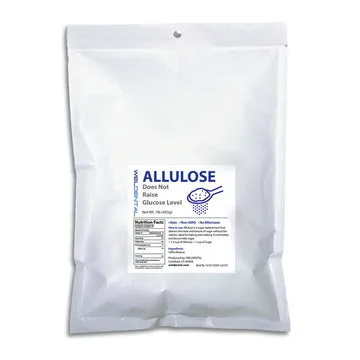
Allulose Fine Powder 1 Pound