Start with a theme, not a pantheon
When you open a world mythology guide with a child, the usual instinct is to begin at the beginning or with the most familiar names. A more engaging approach is to pick a theme that already interests your reader. Amazing Immortals organizes its entries by theme—gods of creation, death and the underworld, water, fire, love, and war—so you can follow a child's curiosity rather than a fixed order.
Ask what kind of story they want: a creation tale, a tricky underworld journey, or a battle between powerful figures. Then turn to that section. This method works for a mythology picture book because the theme gives each session a clear focus and a natural stopping point.
Use the illustrations as a map
The full-color illustrations in Amazing Immortals do more than decorate the page. They give children a visual anchor for unfamiliar names and places. Before reading the text, spend a minute on the artwork: What do you notice about this figure's expression, clothing, or animal companion? What might that tell us about the story?
This preview step is especially helpful for younger listeners who may not follow every detail of the text. It also lets you gauge interest—if a child lingers on a particular deity, that is your next entry point.
Read one entry at a time
A guide to over 80 gods and goddesses is not a book to finish in one sitting. Treat each entry as a complete story session. Read the entry aloud, pause at the family tree or animal companion details, and let the child ask questions. Then close the book and talk about what happened.
This pace respects the density of the material. The book is packed with facts, and young readers need time to absorb names, relationships, and powers. One entry per night is plenty for most families.
What this mythology picture book contains
-
Amazing Immortals: A Guide to Gods and Goddesses Around the World: Amazing Immortals is a culturally diverse, fact-filled, and gorgeously illustrated introduction to over 80 gods and goddesses from around the world. Knowing the scope helps you set expectations: this is a broad reference, not a single storybook, so plan for repeated short sessions rather than one long read.
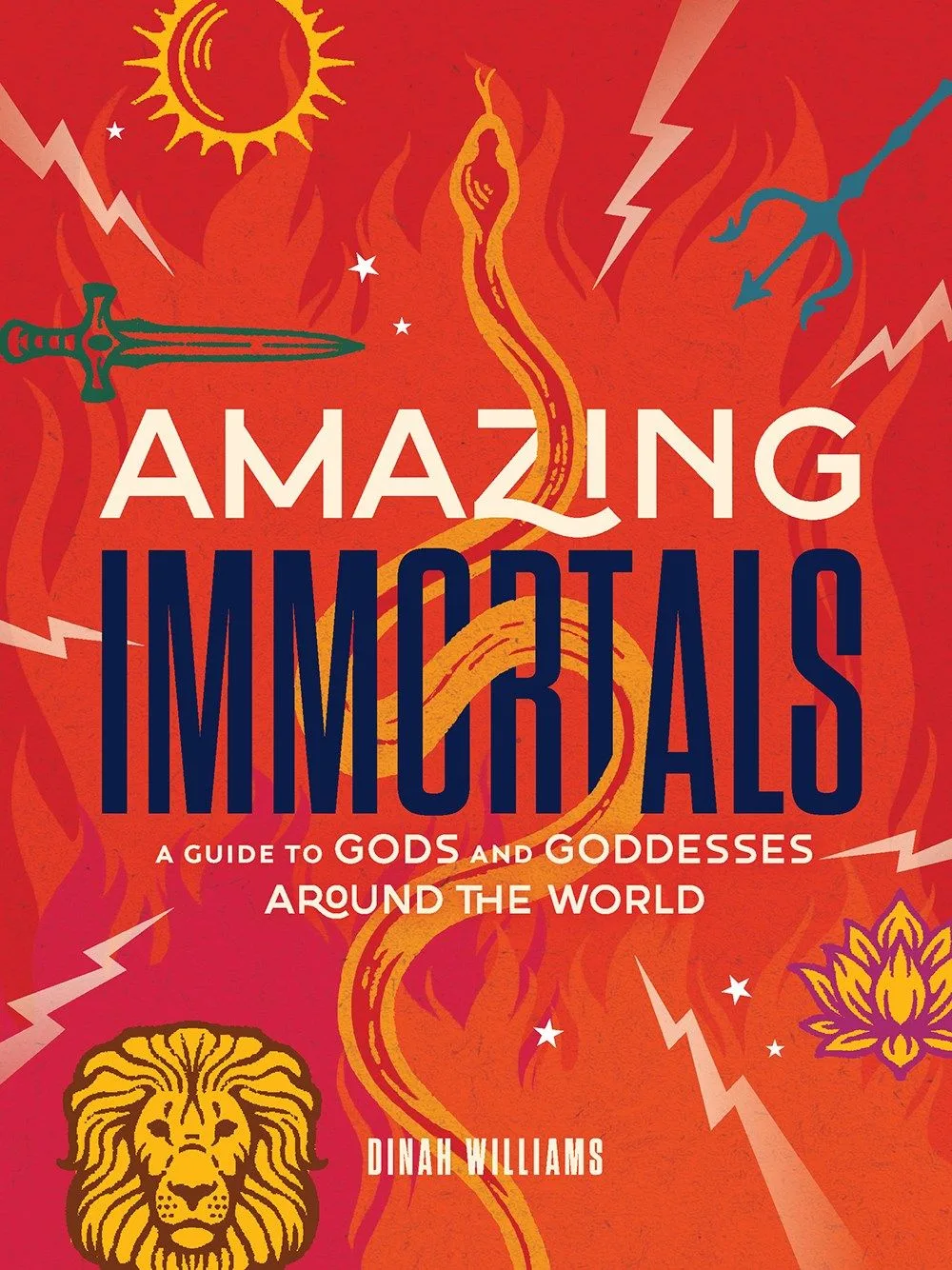
Amazing Immortals: A Guide to Gods and Goddesses Around the World
-
Amazing Immortals: A Guide to Gods and Goddesses Around the World: The book is organized by theme—from gods of creation to gods of death and the underworld; from gods of water to gods of fire; from gods of love to gods of war. Thematic organization lets you follow a child's interest and makes it easy to find a starting point without knowing every pantheon.
-
Amazing Immortals: A Guide to Gods and Goddesses Around the World: It includes gods and goddesses from 30 pantheons, including Akan, Aztec, Celtic, Chinese, Egyptian, Greek, Hawaiian, Hindu, Hopi, Incan, Inuit, Korean, Māori, Mayan, Navajo, Norse, Roman, Shinto, Sumerian, and Yoruba. The wide range supports a world mythology kids guide that goes beyond the usual Greek and Norse names, giving children a broader view of how different cultures tell stories.
Connect the stories to what children already know
Amazing Immortals highlights each deity's appearances in pop culture alongside their famous adventures and formidable powers. That detail is a bridge. After reading an entry, ask your child where they have seen a similar character before—in a movie, a game, or another book. This comparison makes unfamiliar myths feel relevant and helps children see how old stories travel into modern life.
Keep the conversation light. The goal is connection, not a quiz. If a child does not recognize a reference, move on; the story itself is the main event.
A simple family read-aloud routine
- Choose a theme together: Look at the book's themed sections and let the child pick one that sounds interesting. This gives them ownership of the session.
- Preview the illustration: Spend a minute on the artwork before reading. Ask what they notice about the figure and what they predict will happen.
- Read the entry aloud: Read at a steady pace, pausing naturally at family trees, animal companions, and powers. Do not rush to finish.
- Talk about it: Ask one or two open questions: What did this god care about? What would you have done in that story? Which part surprised you?
- Mark the page and stop: End while interest is still high. The book will be there tomorrow, and a child who wants more is a child who will come back.
What to know before you buy
The catalog lists Amazing Immortals in hardcover format. The book is a picture book and a reference guide, so it suits shared reading and browsing rather than a linear chapter-book read. It is written by Dinah Williams and includes full-color illustrations throughout.
The catalog does not state a specific age range or reading level. That means you will need to judge based on your own child's attention span and interest in mythology. The entries are short enough for a read-aloud with younger listeners, but the density of facts may work better for children who already enjoy encyclopedic books. If you are unsure, start with one entry and see how it goes.
When a child wants to go deeper
After a few entries, some children will want to compare versions of the same story or find more about a specific pantheon. Amazing Immortals can serve as a starting map: its 30 pantheons and thematic organization give you a list of cultures to explore next. Pair it with a single-culture story collection or a visit to the library's mythology section.
The book's family trees and animal companions are also natural research prompts. A child who loves the animal companion of one deity may enjoy learning about that animal in other stories. Follow those threads; they turn a reference book into a launchpad for independent reading.