Quick answer
Animal alphabet blocks combine letter recognition with animal imagery, making them a versatile learning tool for toddlers. Look for sets with smooth edges, clear engraving, and non-toxic finishes.
Why animal themes boost toddler engagement
Toddlers naturally gravitate toward animals. By pairing each letter with a familiar creature—like A for Aardvark or Z for Zebra—alphabet blocks turn abstract symbols into memorable pictures. This dual coding helps children connect the letter shape to a sound and a word, reinforcing early phonics naturally during play.
Safety and durability considerations
Since toddlers explore with their mouths, safety is non-negotiable. Look for blocks made from solid wood with smooth, splinter-free surfaces. Non-toxic, water-based paints or stains are ideal. Engraved letters (rather than printed stickers) last longer and won't peel off if chewed or washed.
Decision rules for choosing animal alphabet blocks
- Check block material and finish: Opt for solid wood blocks with a smooth, non-toxic finish. Avoid blocks with painted coatings that may chip or contain harmful chemicals.
- Prioritize engraved over printed letters: Engraved letters and images last through heavy use and teething. Printed stickers or paint can wear off quickly, reducing the block's educational value.
- Look for varied animal illustrations: A set with unique animals for each letter (not just the usual cat, dog, fish) expands vocabulary and keeps toddlers curious. Check that the animal names match the letter sounds. A diverse animal set supports broader language development.
- Consider block size and weight: Blocks should be large enough to prevent swallowing (at least 1.5 inches) but light enough for small hands to stack and grasp comfortably.
Product highlights
-
Animal Alphabet Blocks: The edges and sides are smooth, the engraved alphabet is clear and not all the same animals/items found on other alphabet blocks and books. Smooth edges reduce choking hazards and splinter risks, while unique animal pairings keep the set engaging longer than generic blocks.
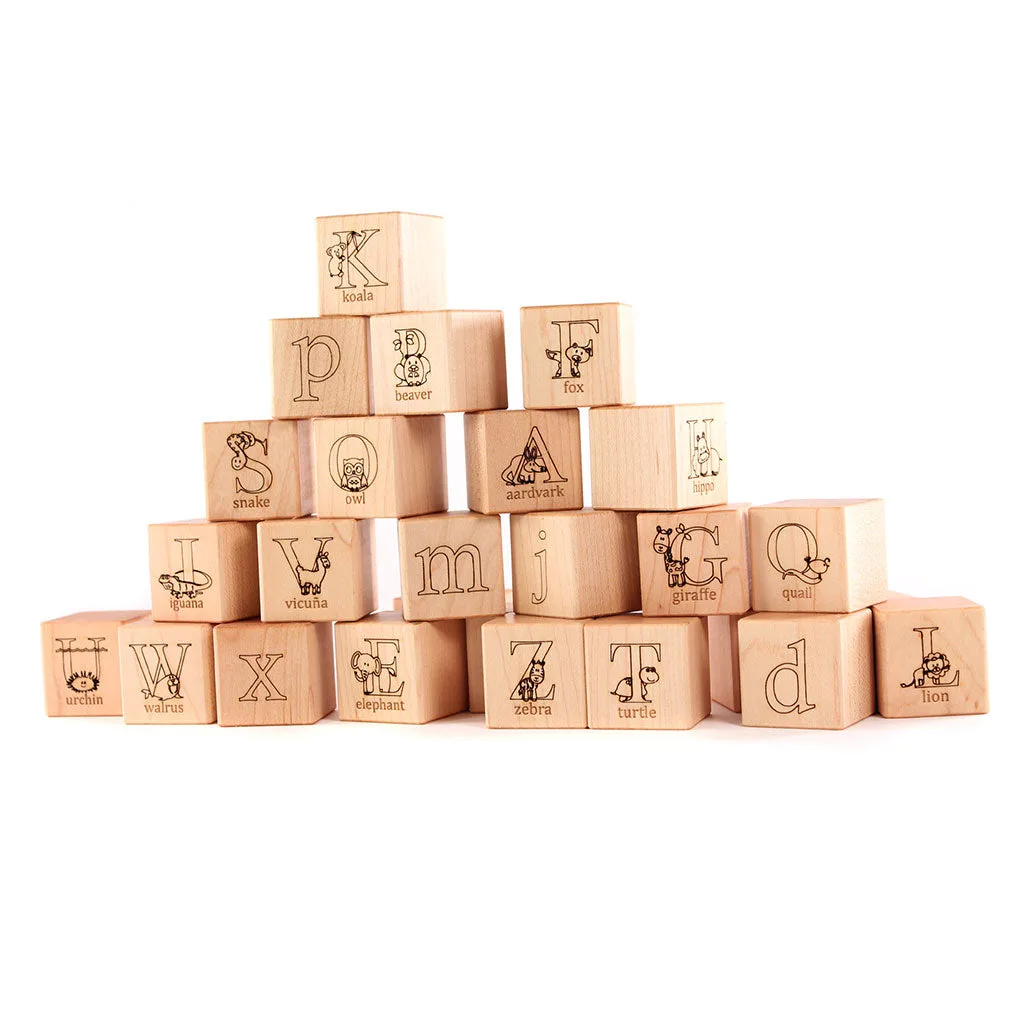
Animal Alphabet Blocks
Is this the right choice for your child?
Best for
- Toddlers aged 12–36 months who are starting to recognize letters and animals
- Parents seeking a durable, heirloom-quality toy that supports early literacy
Not ideal for
- Older children who need more advanced phonics practice (consider a phonics game or reading app)
- Families looking for a budget plastic toy (wooden blocks cost more upfront but last longer)