Quick answer
Choose an animatronic prop when you want motion, sound, or a scare that reacts to visitors, and you can supply power and accept setup and upkeep. Choose a static prop when you want screen-accurate detail, instant placement anywhere, and zero power or maintenance demands. Many home haunts get the best result by mixing both: one or two motion-activated pieces as focal points, surrounded by detailed static collectibles that carry the theme.
How the two categories actually differ
Animatronic props are built around a mechanism: a motor, a controller, and usually a sensor that triggers movement or sound when someone approaches. That mechanism is what creates the reaction, and it is also what creates every practical requirement that follows, from a power source to a place to hide the wiring. Static props have no mechanism at all. They are sculpted, painted, or printed objects that hold a pose indefinitely, which is why they can go anywhere with no outlet, no batteries, and no trigger range to worry about.
The trade-off is straightforward: you are trading motion and surprise for detail, placement freedom, and zero upkeep. Neither category is better in the abstract. The right answer depends on whether your display is meant to startle people or to be studied up close.
Power, placement, and setup
Animatronic props need a power plan before you buy. Some run on batteries, some on wall power, and some support both, but the catalog listing is the only reliable place to confirm which applies to a specific item. If you plan to run a prop for several hours on Halloween night, check the power method and decide whether you are willing to manage batteries or run an outdoor-safe cord. Placement also matters more with animatronics: the trigger sensor needs a clear line to your walkway, and the prop itself needs to sit where visitors will pass close enough to set it off.
Static props have no such constraints. A metal ornament with a ribbon can hang in a car, a house, an office, or on a Christmas tree, and it will look the same in every one of those spots. A resin piece in a collector's window box can sit on a shelf year-round or come out for October. That flexibility is the quiet advantage of static display: you are not designing your yard around an outlet.
Maintenance and storage across seasons
Animatronic prop maintenance is mostly about the mechanism. Moving parts collect dust, moisture, and debris, and any prop that lives outdoors through rain or temperature swings will need cleaning and a dry storage plan for the off-season. Before you store it, remove batteries so they cannot corrode, and check the trigger and moving joints when you bring it back out. If a mechanism fails, the prop usually becomes a static piece whether you want that or not.
Static props are far simpler. Screen-printed metal and painted resin generally need only a soft dusting and a dry box. Store them away from direct sun and heavy moisture, and they will look the same next season. The one thing to watch is fragile detail: thin sculpted elements can chip if a box is packed carelessly, so wrap resin pieces rather than stacking them loose.
Matching the prop to the scare you want
Motion-activated Halloween props work best as the moment of surprise: a figure that turns, speaks, or lunges as a visitor crosses a trigger line. That effect depends on timing and proximity, so one well-placed animatronic usually reads stronger than several competing ones. Static horror prop display works best as the atmosphere around that moment: detailed pieces that hold a theme and reward a second look once the visitor has stopped moving.
If your budget only covers one direction this year, decide which reaction you care about more. A startle is memorable but brief. A detailed static piece stays on display long after the last trick-or-treater leaves.
Trade-offs at a glance
- Motion and surprise: Animatronic props create a reaction when a sensor triggers movement or sound. Static props hold one pose and never react. Pick animatronic if the startle is the point; pick static if the detail is the point.
- Power and placement: Animatronics need a power source and a clear trigger path. Static props need neither and can hang or sit almost anywhere. Confirm the power method on the product listing before you commit to a location.
- Maintenance and storage: Animatronics add moving parts, dust, and moisture concerns plus battery removal before storage. Static pieces typically need only dusting and a dry box. Budget time for upkeep, not just the purchase price.
- Year-round use: Static ornaments and masks can stay on display past October. Animatronic props are usually seasonal and stored the rest of the year. If you want year-round value, static wins on cost per month of display.
Product facts
- Holiday Horrors - Trick 'r Treat Sam Lillipop Metal Ornament: Officially licensed Holiday Horrors Trick 'r Treat Sam Lollipop metal ornament, screen printed on a double-sided metal frame with a ribbon for hanging in a car, house, office, or on a Christmas tree. A static piece with no power or trigger requirements, so it can move between rooms, vehicles, and holiday displays without any setup.
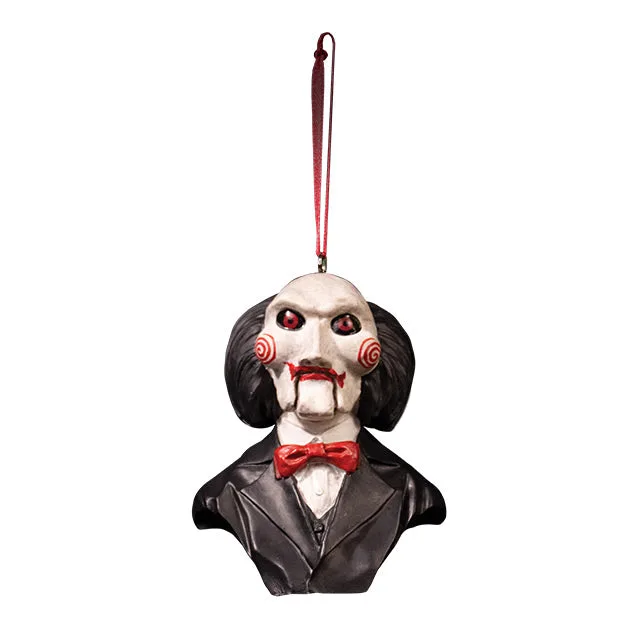
- Holiday Horrors - SAW - Billy Puppet Ornament: Officially licensed Holiday Horrors Saw Billy Puppet ornament, sculpted resin with detailed painting, arriving in a collector's window box, and designed for display in a car, house, office, or on a tree. Shows how much sculpted detail a static ornament can carry, and the window box gives it a safe storage and display option between seasons.
Which should you choose?
Best for
- Home haunters who want a motion-activated scare at the walkway or porch
- Buyers willing to plan power, triggering, and off-season storage
- Shoppers who want one dramatic focal prop rather than many small pieces
Not for
- Collectors who want screen-accurate detail with no power or maintenance demands
- Renters or apartment dwellers with no outdoor outlet or trigger space
- Anyone who wants a piece that can stay displayed year-round