Quick Answer
Choose a cable or rolo chain for everyday wear, a box chain when you want a sleeker line, and a bead or Figaro chain when the anklet itself should be the detail. Size it so you can slide one finger under the chain with the clasp closed, and pick a charm only if it sits flat against your ankle. If you want the least maintenance, choose gold; if you want the widest styling range and lower cost, choose sterling silver and store it dry.
Match the Chain Type to How You Move
An anklet fails most often for mechanical reasons, not style reasons. A chain with many small links and a thin gauge catches on socks, shoe straps, and the opposite ankle. A chain with fewer, thicker links moves with you and resists kinking. Cable chains are the most forgiving because the open round links flex in every direction. Rolo chains look similar but sit flatter and feel slightly heavier. Box chains have a square profile that keeps the anklet facing outward, which makes them read as a clean line rather than a texture. Bead chains add visible texture but are the most likely to snag on knit fabrics.
Weight matters more on an ankle than on a wrist. A heavier chain stays in place and drapes predictably; a very light chain can flip over so the clasp shows. If you plan to wear an anklet with sneakers or boots, favor a smoother chain profile. If you wear it mostly with sandals or bare ankles, texture and charms are far easier to manage.
- Cable chain: best all-rounder, flexes without kinking
- Rolo chain: flatter and slightly heavier, good for stacking
- Box chain: sleek continuous line, resists flipping
- Bead chain: visible texture, highest snag risk on knits
Charm Anklet Styles and Where the Charm Sits
A charm is a weight hanging from a moving chain, so its position decides whether the anklet is comfortable. A charm placed at the front of the ankle stays visible but swings into shoe straps. A charm placed near the clasp sits against the Achilles tendon and can rub when you walk. The most wearable placement is slightly off-center, where the charm rests against the side of the ankle and moves less.
Charm count changes the feel more than charm size. One charm reads as a single deliberate accent; three or more turn the anklet into a stacked look and add cumulative weight that pulls the chain downward. If you want a charm anklet for summer, choose a single flat charm with a smooth back. Avoid charms with sharp edges or open loops that can catch on tights or fine knit hems.
- One flat charm: cleanest look, least movement
- Multiple charms: stronger visual weight, more swing
- Avoid charms that sit directly behind the ankle bone
Anklet Sizing Guide: Measure, Then Add Slack
Measure the circumference of your ankle at its narrowest point, just above the ankle bone, with a soft tape or a strip of paper you mark and then measure. That number is your base. An anklet is not worn tight, so add roughly 1.25 cm (half an inch) for a close fit or 2.5 cm (one inch) for a relaxed fit that hangs slightly. The test is simple: with the clasp closed, you should be able to slide one finger under the chain without pulling it away from the skin.
If you are between sizes, size up rather than down. An anklet that is too tight leaves a mark and is more likely to snap at the clasp; one that is slightly loose can be shortened by a jeweler. Remember that ankle size changes through the day and with temperature, and that a chain worn over a sock or a shoe strap needs extra room. Measure in the evening, when your ankle is at its largest.
- Measure at the narrowest point, above the ankle bone
- Add 1.25 cm for close, 2.5 cm for relaxed
- One finger should fit under the closed chain
- Measure in the evening for the most reliable number
Gold vs Silver Anklet: The Real Trade-Off
The choice is less about color than about maintenance and budget. Sterling silver is the more affordable option and takes a polish easily, but it tarnishes when it meets moisture, sweat, sunscreen, and chlorinated water, so it needs drying after wear and periodic cleaning. Gold, including gold vermeil, resists tarnish far better and holds its color, but it costs more and gold vermeil has a plated layer that can wear thin with heavy friction against shoes.
Decide based on how you will actually wear it. If the anklet will live on your ankle through beach days, gym sessions, and showers, gold or gold vermeil is the lower-effort choice. If you like to change your anklet with your outfit and you are willing to wipe it dry and store it in a pouch, sterling silver gives you more looks for the same budget.
- Sterling silver: lower cost, needs drying and polishing
- Gold: higher cost, resists tarnish, low daily effort
- Gold vermeil: gold look, plated layer can thin with friction
Decision Rules for Choosing an Anklet
- If you wear sneakers or boots daily: Choose a smooth cable or box chain with no dangling charm, and keep the fit close with about 1.25 cm of slack. Texture and charms snag on shoe straps and knit socks.
- If you want one anklet for summer only: Choose a bead or Figaro chain with a single flat charm placed slightly off-center, sized with about 2.5 cm of slack. Bare ankles tolerate more movement and more visual detail.
- If you never want to think about maintenance: Choose gold or gold vermeil and rinse and dry it after swimming or heavy sweating. Sterling silver is fine if you will dry and store it after each wear.
- If you are between two sizes: Take the larger size and have it shortened later if needed. A tight anklet marks the skin and stresses the clasp.
Kemmi Pieces That Show the Fit and Finish Points
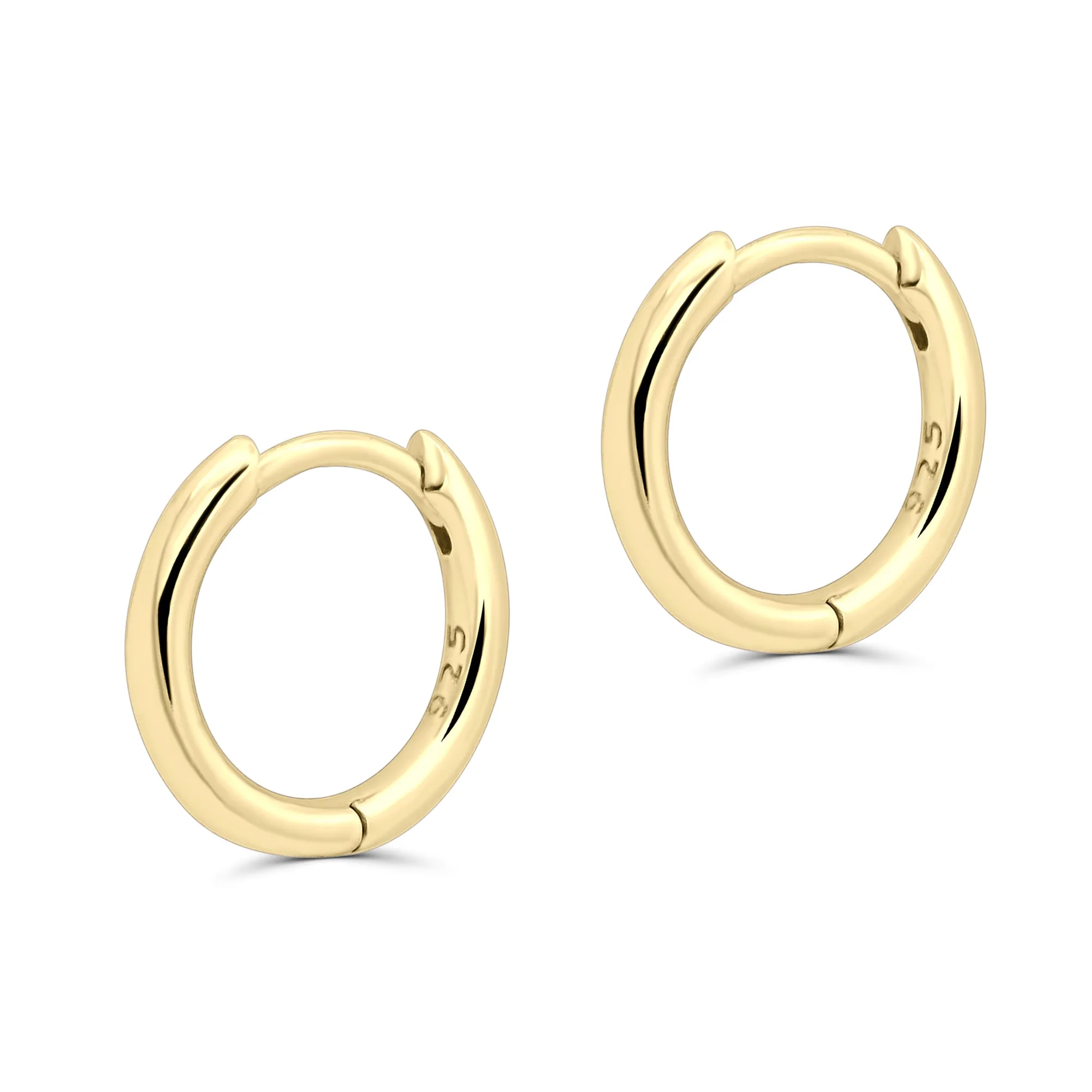
- Small Plain Hoops: Small Plain Hoops are available in 7mm, 8mm, and 9mm with a polished finish and a minimalist design intended for everyday wear. The same logic of small, polished, low-snag pieces applies to anklets: a smooth finish and a modest size stay comfortable and pair with almost anything.
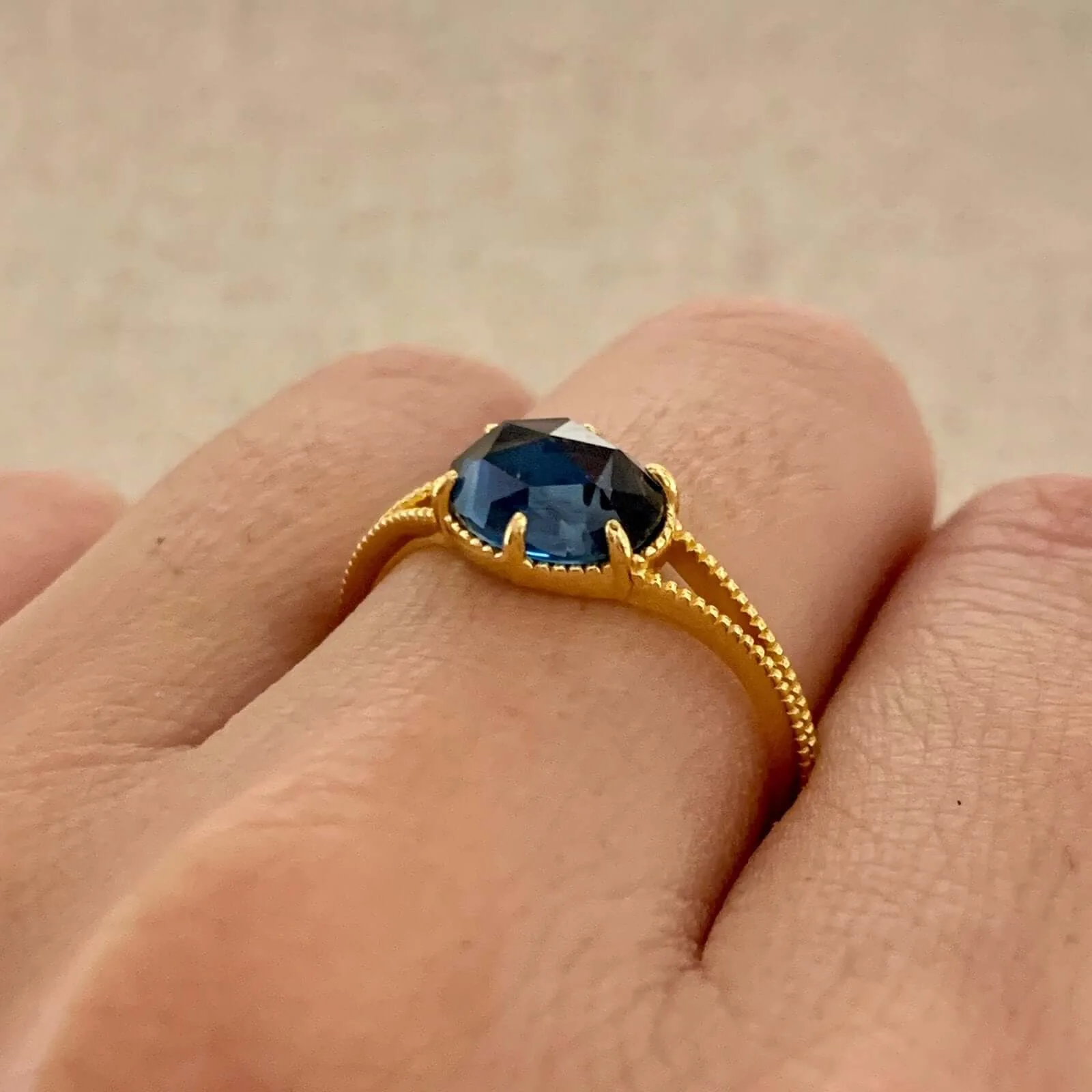
- Chandra London Blue Topaz Ring: The Chandra London Blue Topaz Ring is handmade and available in two materials: 18K gold vermeil and 925 sterling silver. It shows the exact gold-versus-silver decision you face with an anklet, including the vermeil trade-off between a gold look and a plated layer.
Who This Anklet Advice Fits
Best for
- Shoppers choosing their first anklet and unsure about chain type or size
- Anyone who wants an anklet that survives daily wear with shoes and socks
- Buyers deciding between gold and sterling silver for an ankle piece
Not for
- Shoppers looking for a fine, delicate anklet intended only for occasional evening wear
- Anyone who wants a fixed, non-adjustable anklet sized by a jeweler rather than at home