Quick answer
Anti-reflective coatings are designed to reduce surface reflection, which increases transmission through the lens. They don't create light, they don't fix spherical or chromatic aberration, and they aren't all equally durable. The real variables are the coating material, the substrate it's applied to, and how well the lens design already controls aberrations. For most visible and near-IR applications, single layer MgF2 is a reliable starting point, but the lens itself still does the heavy lifting.
Myth: AR coatings make any lens high-performance
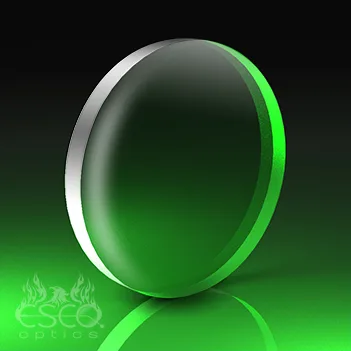
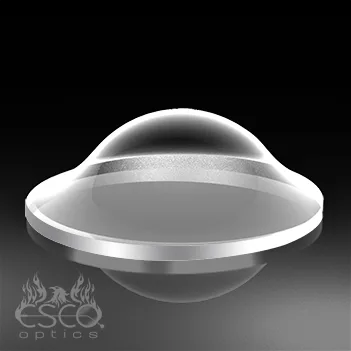
A coating can only reduce reflection at the surfaces it covers. It cannot correct aberrations that come from the lens shape or material. For example, an aspheric lens uses one aspheric convex surface to control spherical aberration, and a bestform lens uses a specific ratio of front and back radii to minimize spherical aberration when focusing a laser. If the underlying lens design doesn't address those issues, an AR coating won't rescue performance.
This matters when you're choosing between lens types. An achromatic lens is computer optimized to minimize chromatic and spherical aberrations simultaneously, which is why it can provide diffraction-limited performance over nearly its entire clear aperture. That performance comes from the design, not the coating. Coatings are an accessory to the optical design, not a substitute for it.
Myth: AR coatings always reduce transmission
The opposite is true. Anti-reflective coatings are designed to reduce reflection, which means more light passes through the lens instead of bouncing off. The confusion often comes from seeing a coated lens look dimmer or more colored under certain lighting; that's the coating doing its job by canceling reflected wavelengths, not blocking transmission.
The actual transmission gain depends on the substrate and coating. For many visible applications, a single layer MgF2 coating is recommended because it offers a practical balance of performance and cost. If you need higher transmission across a broader band, multi-layer coatings may be available, but the exact gain depends on the design and wavelength range. Without a supplied transmission curve, treat any specific percentage as a claim to verify with your supplier.
Myth: Coating durability is the same across all AR lenses
Durability depends on the coating material, deposition process, and how the lens is handled. A coating that survives normal lab cleaning may not survive repeated abrasion or harsh solvents. Esco Optics supplies lenses with anti-reflection coatings available, and single layer MgF2 is recommended for most applications, but the catalog does not specify abrasion or environmental test results. That absence is a decision limitation: if your application involves frequent handling or extreme conditions, ask for coating durability data before assuming a standard coating will hold up.
Practical steps help more than assumptions. Handle lenses by the edges, store them in clean containers, and follow a cleaning procedure appropriate for coated optics. If a coating is damaged, it cannot be repaired in the field; the lens must be replaced or recoated by the manufacturer.
What actually drives AR coating performance
Three factors matter most: the substrate, the coating design, and the wavelength range you need. An aspheric lens made from optical crown glass has different coating adhesion and transmission characteristics than one made from flint glass or fused silica. Achromatic lenses use both crown and flint glass, so a coating that works well on one element may behave differently on the other.
The coating design must also match your application. A single layer MgF2 coating is a good general choice for visible light. For laser applications, the coating must be optimized for the laser wavelength to avoid absorption or damage. Bestform laser lenses, for example, are often used to focus a laser beam to a minimum spot, and the coating should be selected for that specific wavelength. If you're unsure, start with the lens material and the wavelength, then choose the coating.
Myth verdicts: what to believe and what to check
- AR coatings can fix any lens: False. Coatings reduce reflection but cannot correct spherical or chromatic aberration. Achromatic and aspheric lenses rely on their optical design to control aberrations, and bestform lenses use a specific shape factor for laser focusing. Choose the lens design for aberration control, then add the coating for transmission.
- AR coatings reduce transmission: False. They reduce reflection, which increases transmission. Single layer MgF2 is recommended for most applications, but exact transmission gains depend on the substrate and coating design and are not specified in the catalog. Ask for a transmission curve if your application is transmission-critical.
- All AR coatings are equally durable: False. Durability depends on coating material, deposition, and handling. The catalog does not provide abrasion or environmental test data, so treat durability as application-specific. Handle coated optics carefully and request durability data for harsh environments.
Products where coating choices matter
- Bestform Laser Lenses, N-BK7 Optical Glass*: Bestform laser lenses are designed with a specific ratio of front and back radii to minimize spherical aberration when focusing a laser beam to a minimum spot. If you're focusing a laser, the lens shape does the aberration control; the AR coating should be selected for your laser wavelength to avoid reflection losses and damage.
- Aspherical Lenses, Optical Crown Glass: Aspherical lenses from Esco Optics are precision molded from optical crown glass and felt polished, with anti-reflection coatings available and single layer MgF2 recommended for most applications. These lenses already control spherical aberration through their aspheric surface, so adding the recommended MgF2 coating reduces reflection without needing a complex multi-layer stack for many condenser applications.
- Achromatic Lenses, Optical Crown and Flint Glass: Achromatic lenses provide diffraction-limited performance over nearly their entire clear aperture and are computer optimized to minimize chromatic and spherical aberrations simultaneously. In high-resolution imaging, the lens design is responsible for image quality; an AR coating only reduces surface reflections. Don't expect a coating to fix color fringing or blur that comes from aberrations.