Quick answer
An anti-theft sling protects through three concrete mechanisms: cut-resistant fabric or strapping, lockable zippers, and an RFID-blocking pocket. A regular sling protects only by where you wear it and how you close it. If you carry a passport, cards, or a phone in crowded transit, the anti-theft version is the safer default; if you mostly walk familiar neighborhoods with a water bottle and a paperback, a regular sling is lighter and cheaper.
What anti-theft features actually do (and don't do)
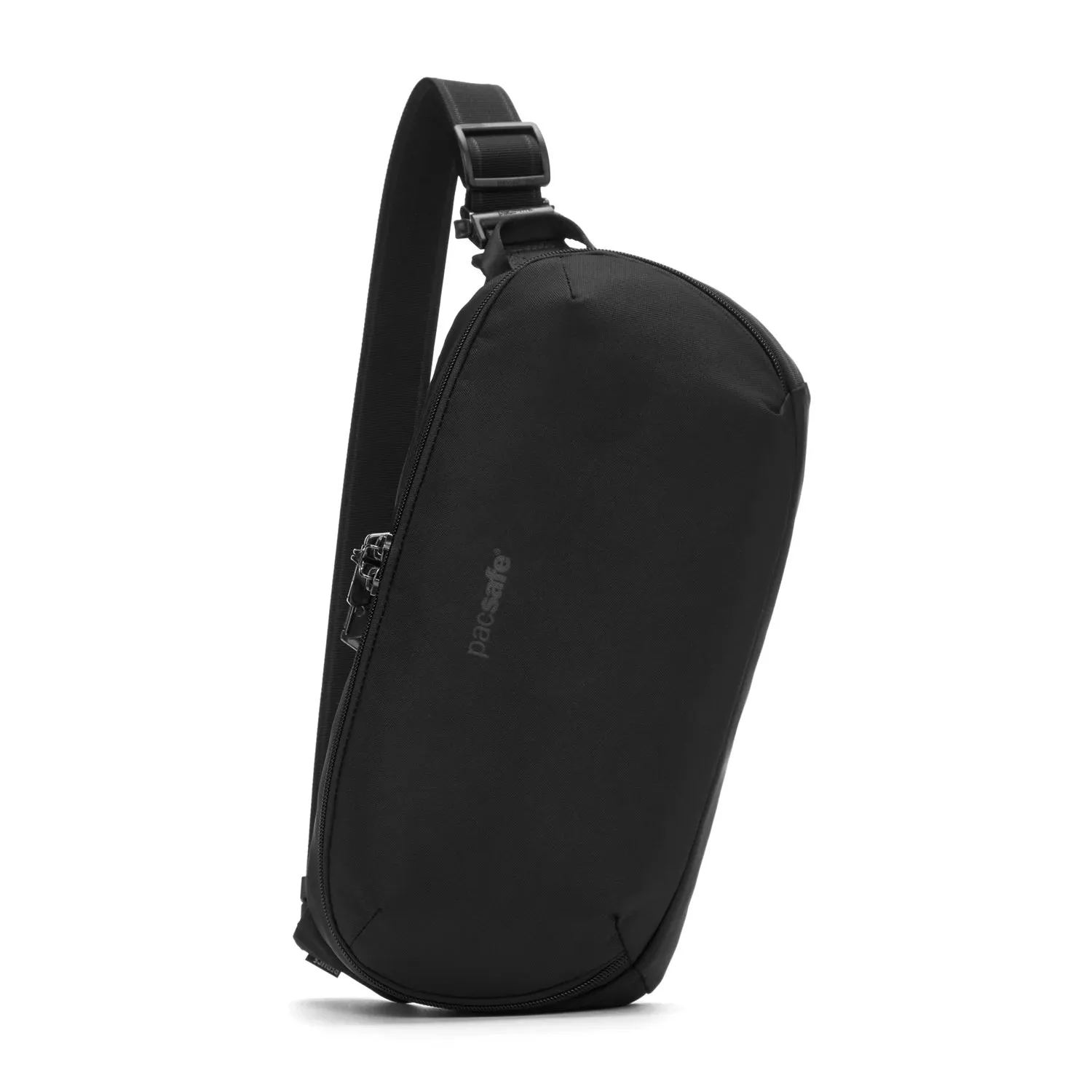
Cut resistance is the headline feature, and it is also the most misunderstood. On the Pacsafe® V Anti-Theft Urban Sling, the catalog lists cut-resistant eXomesh® lining and a cut-resistant shoulder strap. That means a thief with a knife or box cutter cannot simply slice the bag open or cut the strap and run. It does not stop someone from unzipping an unlocked compartment, and it does not stop a straight grab-and-run if the bag is loose. The mesh and strap raise the time and noise required to get your gear, which is the real goal.
Lockable zippers work differently. They let you clip the main zipper pulls together so a pickpocket cannot quietly open the bag in a crowd. You still have to remember to lock them after each use. RFID blocking is the third piece, and it only matters for cards and passports with contactless chips. It does nothing for a phone that is not RFID-enabled, and it does nothing for cash. Treat RFID as a narrow, useful layer rather than whole-bag protection.
Where a regular sling still wins
A regular sling is not a worse bag; it is a different trade. Without eXomesh lining and locking hardware, it is usually lighter, softer against the body, and easier to pack flat. It also costs less. If your sling lives on a commute through low-risk areas, or you use it mainly to hold a water bottle, a snack, and a charger, the anti-theft hardware adds weight and fiddliness you may not want.
The honest limitation is that no sling, anti-theft or not, replaces situational awareness. A bag worn across the front of your body with the closure facing you is harder to reach than one swung to your back. That habit matters more than any single feature.
How to choose without overbuying
Start with what is inside the bag. If the answer is passport, primary credit card, or a phone you use for transit tickets, choose anti-theft and use the RFID pocket for the card you tap most. If the answer is a paperback and a granola bar, a regular sling is enough.
Then check the strap. A cut-resistant shoulder strap only helps if the bag is worn crossbody and the strap sits against your torso, not dangling behind you. Finally, decide whether you will actually lock the zippers. A locking sling bag that stays unlocked is just a heavier regular sling.
The real trade-offs, item by item
- Weight and bulk: Cut-resistant eXomesh lining and locking zipper hardware add material that a plain sling does not have. On a full-day walk, that difference is noticeable against your shoulder. Choose anti-theft if the contents are worth the extra ounces; choose regular if the bag is mostly empty.
- Everyday speed: Lockable zippers are slower to open than a standard zipper. If you reach for your phone or transit card dozens of times a day, you will either stop locking them or feel the friction. Use the RFID pocket for the card you tap most so you are not unlocking the main compartment every time.
- Price and lifespan: Anti-theft slings carry a higher catalog price because of the added materials and hardware. That cost buys time and noise for a thief, not an invisible force field. Spend on anti-theft when the bag regularly holds a passport or primary cards, not as a default upgrade.
Two grounded options to compare
- Pacsafe® V Anti-Theft Urban Sling: Packed with cut resistant eXomesh® lining, lockable zippers, RFID blocking pocket, and a cut resistant shoulder strap. This is the full anti-theft stack in one sling, so it covers slash attempts on the body and strap, quiet zipper openings, and contactless card skimming.
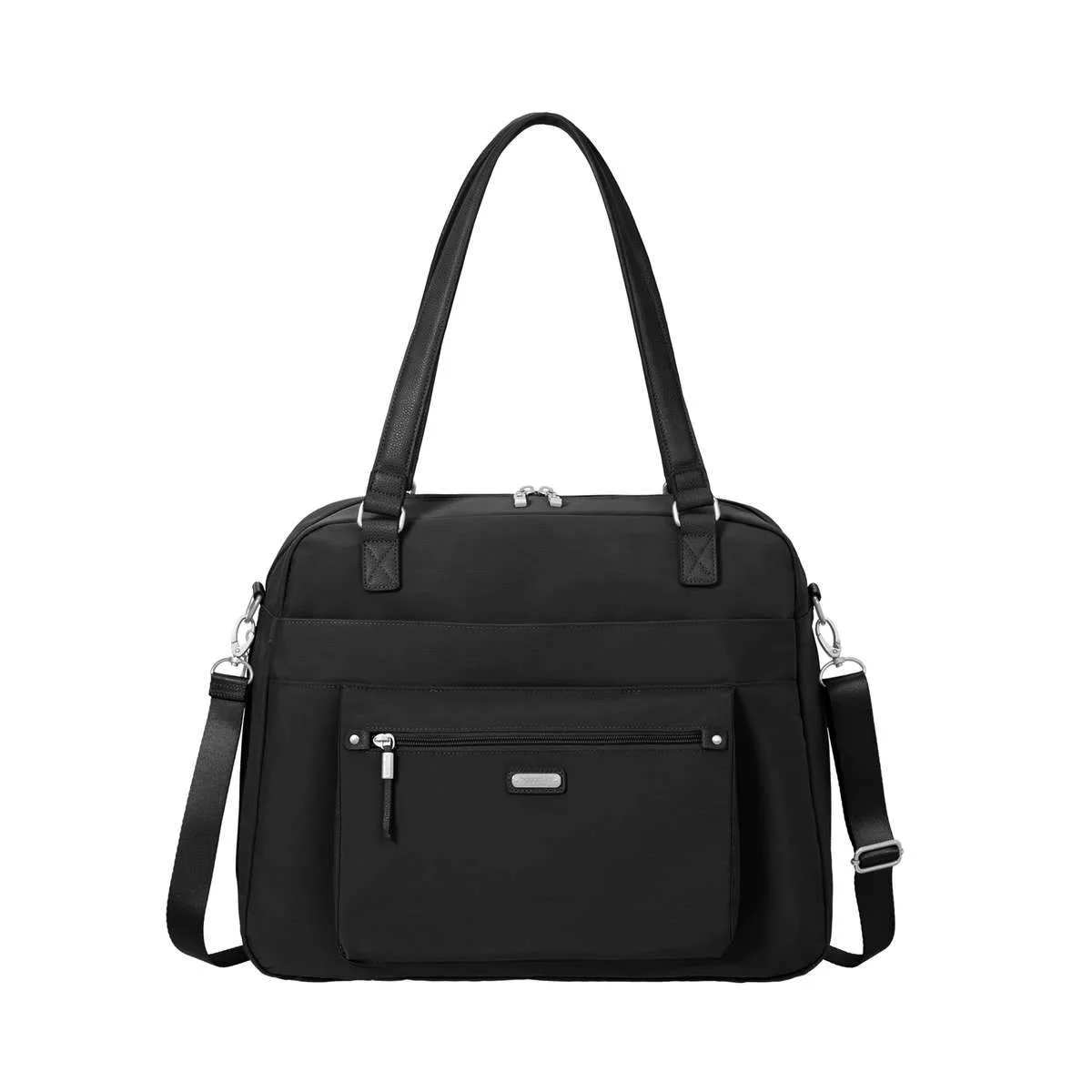
- Overnight Expandable Laptop Tote: Overnight expandable laptop tote with an included RFID-blocking phone wristlet, removable crossbody strap, and carry on size. If your trip needs one bag for a laptop and an overnight, this gives you RFID protection for your phone and cards without carrying a separate sling, though it is not a slash-resistant sling.
Which sling fits your trip
Best for
- Travelers carrying a passport, primary credit cards, or a transit phone in crowded stations and markets
- Commuters who want lockable zippers and a cut-resistant strap as a daily habit
Not for
- Walkers who only carry a water bottle, snack, and paperback and want the lightest possible sling
- Anyone who will not consistently lock the zippers or wear the bag crossbody against the torso