Quick answer
For cavity protection, anticavity toothpaste is more essential than mouthwash because it delivers fluoride directly to tooth surfaces and provides enamel repair benefits. However, a mouthwash with anticavity protection can be a useful supplement for reaching areas your toothbrush misses.
Why toothpaste is the foundation of cavity protection
Anticavity toothpaste is designed to deliver fluoride directly to your teeth through brushing, which physically removes plaque and food particles while depositing fluoride that strengthens enamel. Most dentists agree that brushing with a fluoride toothpaste is the single most effective at-home step you can take to prevent cavities.
Products like Tom's of Maine Whole Care Wintermint Anticavity Toothpaste not only protect against cavities but also support enamel repair and strengthening. This multi-benefit approach means you get cavity prevention plus ongoing enamel health every time you brush.
The role of mouthwash in cavity prevention
Anticavity mouthwash can reach areas that brushing might miss, such as between teeth and along the gumline. It also freshens breath and reduces bacteria. However, mouthwash is a rinse, not a scrub—it doesn't provide the mechanical cleaning that toothpaste does.
A product like Tom's of Maine Fresh Mint Whole Care Mouthwash offers anticavity protection and a refreshing clean, making it a good addition to your routine. But it works best as a complement to, not a replacement for, brushing with toothpaste.
Key differences in formulation and use
Toothpaste contains abrasives that help physically remove plaque, while mouthwash relies on antimicrobial agents and fluoride to fight cavities chemically. Brushing with toothpaste is a two-step process (mechanical + chemical), whereas mouthwash is purely chemical.
For maximum cavity protection, use toothpaste twice daily and mouthwash once daily, preferably at a different time than brushing to avoid rinsing away the concentrated fluoride from your toothpaste.
Decision rules: Toothpaste vs Mouthwash for Cavity Protection
- If you can only choose one: Choose anticavity toothpaste. It provides both mechanical cleaning and fluoride delivery, which is more effective for cavity prevention than mouthwash alone.
- If you want to add extra protection: Add anticavity mouthwash to your routine. Use it at a different time than brushing (e.g., after lunch) to avoid washing away the fluoride from your toothpaste. This maximizes cavity protection without compromising your toothpaste's benefits.
- If you have sensitive teeth or gums: Stick with a gentle anticavity toothpaste and consider a mouthwash that is alcohol-free and formulated for sensitive mouths. Mouthwash can be too harsh if used excessively.
Product facts
-
Whole Care Wintermint Anticavity Toothpaste: Tom's of Maine Whole Care Wintermint Anticavity Toothpaste helps protect against cavities with its anticavity formula and supports enamel repair and strengthening. This means you get ongoing enamel health benefits beyond just cavity prevention, making it a solid foundation for your daily oral care.
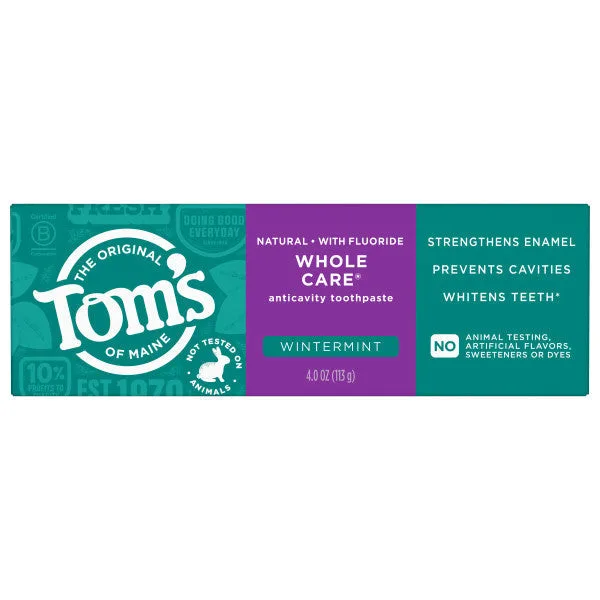
Whole Care Wintermint Anticavity Toothpaste
-
Fresh Mint Whole Care® Mouthwash: Tom's of Maine Fresh Mint Whole Care Mouthwash provides anti-cavity protection as part of a complete oral care regimen and leaves breath feeling fresh and clean. It adds cavity protection where your toothbrush might not reach, plus freshens breath, making it a valuable step in a comprehensive routine.
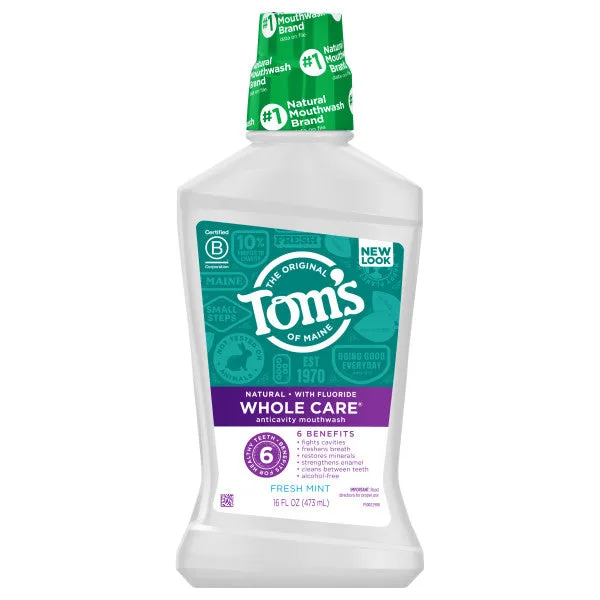
Fresh Mint Whole Care® Mouthwash
Who should choose what?
Best for
- People who want maximum cavity protection with minimal steps: choose anticavity toothpaste.
- Those who want a complete oral care routine and enjoy fresh breath: add anticavity mouthwash.
Not for
- People who prefer fluoride-free options: anticavity products contain fluoride, so look for non-fluoride alternatives if that's your goal.