Quick answer
Aphakic contact lenses are prescribed when the eye has no natural lens, usually after cataract surgery, and they replace that lens's focusing power. Standard contact lenses correct refractive error on an eye that still has its natural lens. If you have had cataract surgery without a lens implant, you need an aphakic fit; if your lens is intact, a standard lens is the starting point.
What each lens actually does
A standard contact lens sits on the cornea and bends light to correct myopia, hyperopia, astigmatism, or presbyopia. The eye's natural lens stays in place and continues to provide some focusing ability. An aphakic contact lens does a bigger job: it substitutes for the missing lens, so it must supply the high plus power that the natural lens would have contributed. That is why aphakic prescriptions are usually much stronger and why the lens is often thicker or made from a high-power material.
How fitting differs
Fitting a standard lens focuses on curvature, diameter, and the prescription on your glasses. Fitting an aphakic lens adds a step: the fitter has to account for the absent lens power and often for a larger or irregular corneal shape after surgery. Aphakic lenses may be fitted in rigid gas-permeable materials or in specialty soft designs, and the process can take more visits to refine. If a standard lens feels unstable or gives poor vision after surgery, that is a sign the fit needs to be reassessed as aphakic rather than standard.
Care and replacement schedules
Standard lenses follow familiar daily, weekly, or monthly replacement cycles. Aphakic lenses often follow the same care rules, but because they are specialty items, replacement supply can be less flexible. Daily disposables reduce cleaning steps; monthly lenses need a consistent solution and case routine. Whichever type you use, never stretch a replacement interval to save money, because deposits and protein build-up affect vision and comfort more quickly in high-power lenses.
Vision quality and adaptation
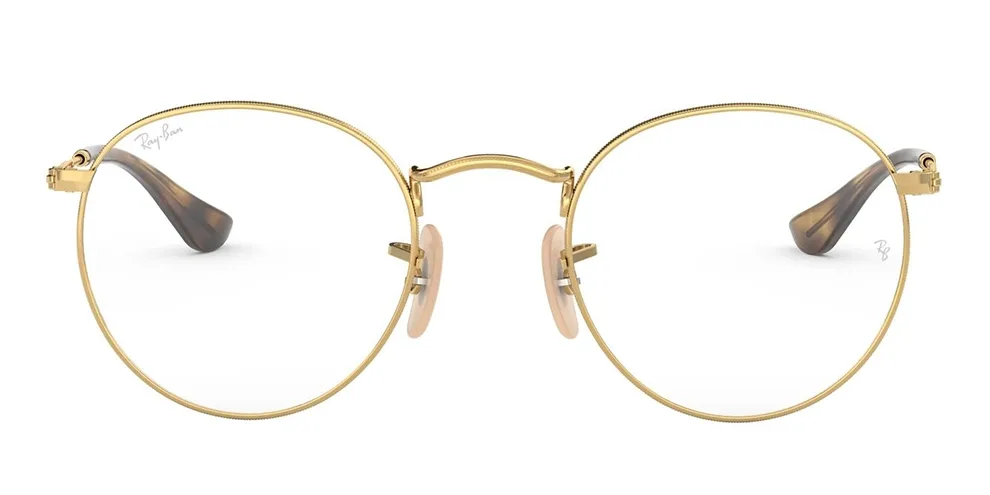
Aphakic wearers often notice a different visual experience: objects may appear larger or the field of view may feel altered, especially with high plus powers. Standard lens wearers usually adapt within days. With aphakic lenses, adaptation can take longer, and some people need a backup pair of glasses for certain tasks. If you also need a frame option, Lensabl carries eyewear such as the Vogue Optical 0VO4050 in Brown Pale Gold with Clear lenses, or the Ray-Ban 0RX3447V Round Metal in Gold with Clear lenses, both available with selectable frame and lens colors.
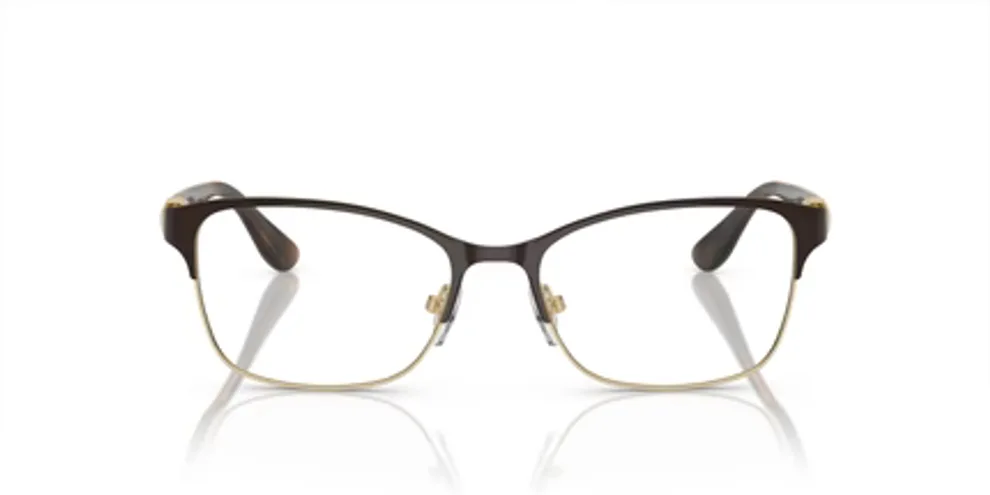
0VO4050
Trade-offs to weigh
- Vision correction scope: Aphakic lenses replace the focusing power of the missing natural lens, while standard lenses only correct refractive error on an intact lens. Choose aphakic if you have no natural lens; standard if you do.
- Fitting complexity: Aphakic fits often require more measurements and follow-up visits than standard fits because the lens must compensate for absent lens power. Expect a longer fitting process and possibly higher fitting fees for aphakic lenses.
- Adaptation and comfort: Standard lens wearers typically adapt quickly; aphakic wearers may notice size or field-of-view differences that take longer to get used to. Plan for a trial period and keep backup glasses handy during adaptation.
- Replacement and cost: Standard lenses come in predictable daily, weekly, or monthly cycles; aphakic lenses are specialty items with less flexible replacement options. Factor in the ongoing cost and ordering lead time for aphakic lenses.
Eyewear options for backup or everyday wear
- 0VO4050: The Vogue Optical 0VO4050 is offered in a Brown Pale Gold frame color with Clear lenses, and both the frame color and lens color can be selected when ordering. Useful as a backup pair when you need to remove specialty contacts, with color choices that let you match a preferred look.
- 0RX3447V-Round Metal: The Ray-Ban 0RX3447V Round Metal frame comes in Gold with Clear lenses and is designed as a round metal optical frame. A lightweight metal option for days when you want to rest your eyes from contact lens wear, with a classic shape that suits many face types.
Which one is right for you?
Best for
- People who have had cataract surgery without a lens implant and need to replace the missing lens power.
- Those whose standard contact lenses no longer provide clear vision after surgery.
- Wearers who need a custom or specialty fit due to high prescription or corneal changes.
Not for
- People with an intact natural lens who only need routine refractive correction.
- Those who prefer a simple, low-maintenance daily disposable routine with no specialty fitting.
- Anyone who has not had a recent eye exam to confirm their lens status and prescription.