Quick answer
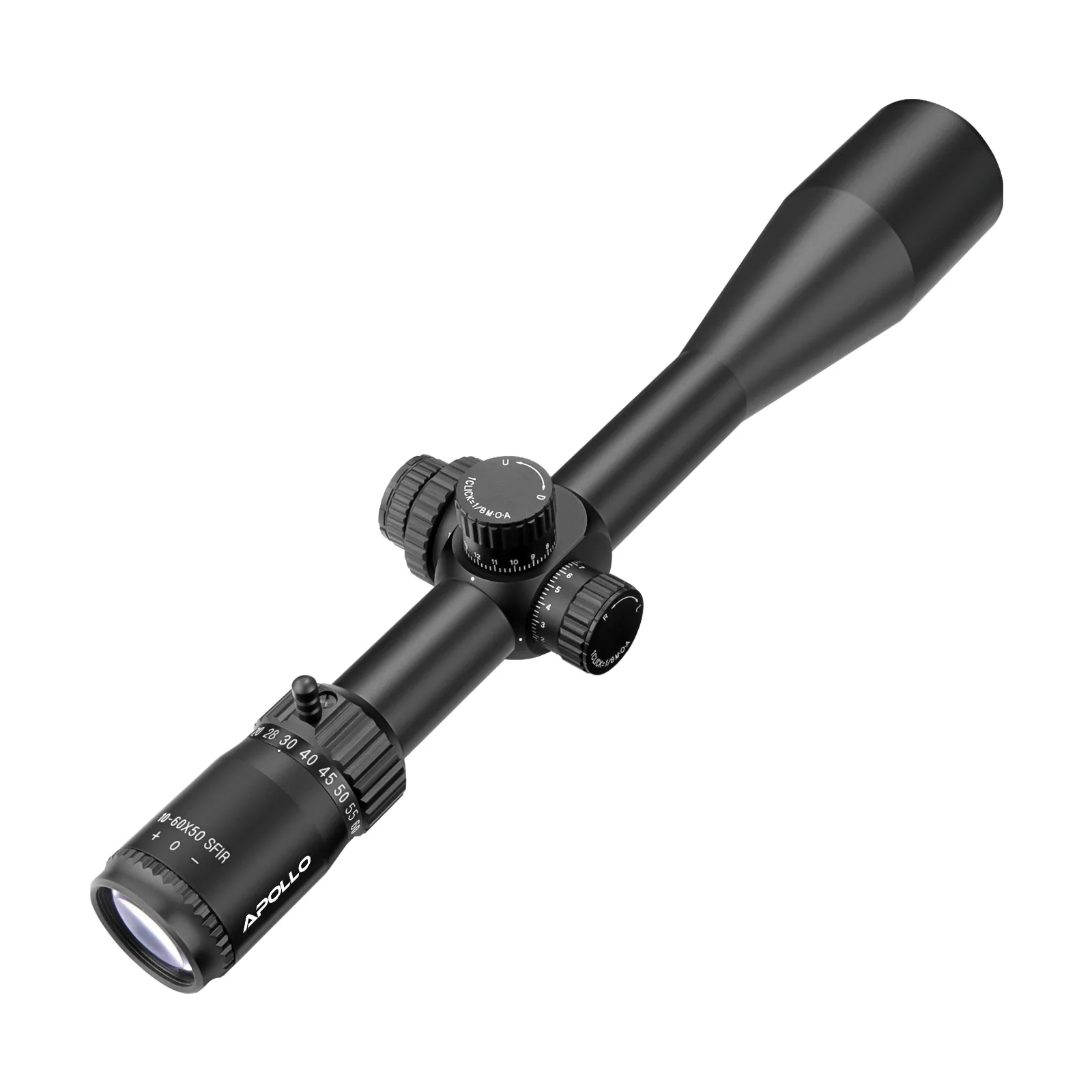
The Apollo Atlas 10–60×50 is a full-powered long-range scope built for shooters who work at distance. Its true 10–60× magnification range, 50 mm objective, 30 mm tube, and high-resolution glass are aimed at extreme-range work, precision competition, and serious tactical use. If you need a low-power optic for fast close-quarters aiming, the Atlas is the wrong tool; look at a 1–6× or 1–8× LPVO instead.
What does the 10–60× magnification range actually give you?
A true 10–60× range means you can dial down to 10× for a wider field of view when scanning or engaging closer targets, then zoom in to 60× for precise shot placement at extreme distances. The 60× top end is where the Atlas earns its keep: it turns small distant targets into something you can read and hold on. The tradeoff is that at high magnification, mirage, heat shimmer, and any wobble in your position are magnified too, so the scope rewards a solid rest and good fundamentals.
Why does the 50 mm objective matter?
The 50 mm objective is the front lens diameter, and it is the main physical driver of light gathering. A larger objective lets in more light, which helps maintain a bright image at high magnification and in lower light. It also means the scope sits higher and adds weight, so you need to check your ring height and consider whether the extra bulk fits your rifle and shooting style. For a dedicated long-range rig, the 50 mm objective is a reasonable choice; for a light hunting rifle, it may be more than you want to carry.
What does the 30 mm tube do for a long range scope?
A 30 mm tube is a common middle ground between 1-inch and 34 mm tubes. It provides more internal adjustment travel than a 1-inch tube, which matters when you need to dial elevation for long distances, and it is generally stronger than a 1-inch tube. It also gives you a wider selection of mounts than a 34 mm tube. If you plan to shoot at extreme distances and need maximum elevation travel, a 34 mm tube may be worth considering, but for most long-range shooters the 30 mm tube on the Atlas is a practical balance.
What should I know about the turret specs?
The Atlas is described as having turret control needed for extreme-range work, but the catalog does not list click value, adjustment range, or turret type. That is a decision limitation: before you buy, confirm the click value (for example, 0.1 mil or 1/4 MOA), total elevation travel, and whether the turrets are exposed or capped. Those details determine how far you can dial without a holdover and how the scope fits your shooting style.
Is the Atlas a good fit for competition or tactical use?
The Atlas is positioned for precision competition and serious tactical applications, where high magnification and a robust 30 mm tube are assets. It is built to hold zero under heavy use, according to the catalog description. That said, if your matches or duties involve fast transitions and close targets, a 10× bottom end is a handicap compared with a low-power variable optic. Match the scope to the job: the Atlas is for distance, not for room clearing.
How does the Atlas compare with the Obsidian and Phoenix LPVOs?
The Apollo Obsidian 1–6×24 and Apollo Phoenix 1–8×24 are low-power variable optics designed for fast, both-eyes-open aiming at close range while retaining some mid-range precision. The Atlas starts at 10×, so it cannot do what the LPVOs do up close. If you need one optic for short-range speed and occasional distance, an LPVO is the better fit. If you need maximum magnification for extreme-range precision, the Atlas is the more appropriate tool. They solve different problems, and owning both is common for shooters who cover both roles.
FAQ: Apollo Atlas 10–60×50
Is 60× too much magnification?
60× is useful for extreme-range precision, but it also magnifies mirage and movement. Use it when you have a stable position and clear conditions; back down to 20–30× for more forgiving viewing. Match magnification to conditions, not just distance.
Do I need a 30 mm mount?
Yes, the Atlas uses a 30 mm tube, so you need 30 mm rings or a one-piece mount. Check ring height to clear the 50 mm objective. Confirm mount size and height before ordering.
Can I use the Atlas on a hunting rifle?
It can work for long-range hunting, but the 50 mm objective and 30 mm tube add weight and bulk. If you walk far, consider a lighter scope. Weigh the benefit of high magnification against portability.
Apollo Atlas 10–60×50 at a glance
- Apollo Atlas 10–60×50: True 10–60× magnification range with a 50 mm objective, 30 mm tube, and high-resolution glass. Lets you scan at 10× and zoom to 60× for extreme-range precision, while the 50 mm objective supports a bright image at high power.
- Apollo Atlas 10–60×50: Engineered for extreme-range work, precision competition, and serious tactical applications. Signals the scope is built for distance and durability, not for fast close-quarters transitions.
- Apollo Atlas 10–60×50: Built to hold zero under heavy use. Important for competition and tactical shooters who need repeatable elevation dialing and return to zero.