Start with a week of real apron changes, not a guessed number
Bulk buying only saves money when the pack size matches how fast you actually go through aprons. Before you compare cases, count one normal week. Include every change: food prep shifts, messy play sessions, cleaning rounds, first-aid stations and any apron swapped because it tore or became saturated.
Write the number down per day, then multiply by the days you operate. A nursery open five days may use more aprons in messy play than a small café uses in service, so do not borrow someone else's estimate. The same count tells you whether a 1,000-apron case is a sensible few months' supply or a storage problem waiting to happen.
Where white disposable aprons fit in food prep and nursery routines
The Aprons Flat Pack White 10×100 record lists nurseries, catering, cleaning, dentistry, first aid and medical procedures as intended uses. That breadth is useful, but it also means you should separate tasks that need a fresh apron from tasks that do not.
- Food prep and catering: Use a clean apron for each shift or whenever splashes and spills reach the apron. The polythene construction is described as liquid resistant and intended to prevent fluid transfer, which is why it suits wet prep rather than dry plating.
- Nursery messy play and meals: Keep a flat pack near the sink or art table so staff can pull one apron without unrolling a whole dispenser. Count each child's messy session as a likely change if the apron becomes soiled.
- Cleaning and first aid: Store a small stack with cleaning chemicals and another with first-aid supplies. A flat pack lets you take a few aprons to a spill rather than carrying a full roll.
What the 10×100 case actually contains
-
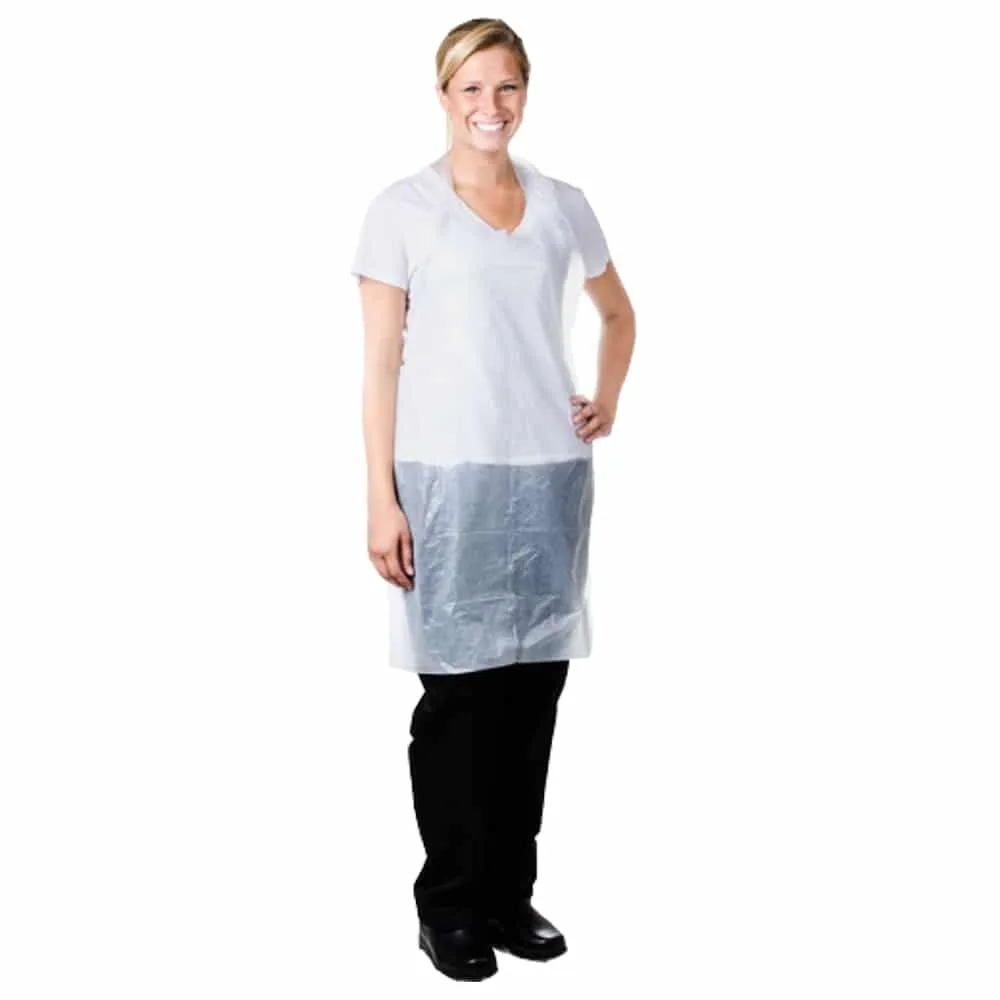
Aprons Flat Pack White 10×100: Ten lots of white flat packed aprons, with 100 aprons per pack. The case gives you 1,000 aprons in ten separate 100-apron packs, so you can open one pack at a time and keep the rest clean and compact.
Aprons Flat Pack White 10×100
-
Aprons Flat Pack White 10×100: Made from polythene and described as liquid resistant, intended to prevent the transfer of fluids. That matches splash-prone food prep, cleaning and nursery tasks where a cloth apron would soak through, but it is not presented as a reusable garment.
-
Aprons Flat Pack White 10×100: Single use disposable flat pack aprons. Plan your weekly count around one apron per task or shift, not around washing and reusing them.
Turn your daily count into a case decision
Divide 1,000 by your weekly apron count to see how long one case lasts. If your kitchen uses 100 aprons a week, the case covers about ten weeks. At 250 a week, it covers about four weeks. Those are planning sums from the pack quantity, not a recommendation for how often to change aprons.
The ten inner packs matter here. A 100-apron pack is easy to store on a shelf and carry to a prep area, while the unopened nine packs stay together. If you have very little dry storage, a smaller pack may be more practical even if the case price looks better.
Flat pack vs roll aprons in bulk: the handling trade-off
Both formats are disposable, but they change how staff take an apron. The Aprons Flat Pack White 10×100 is supplied as flat packed aprons, not a roll, so there is no dispenser to mount and no perforated strip to tear.
- Flat pack wins when: You want to keep a small stack at several stations, send a few aprons to a spill, or store packs flat in a drawer or cupboard. Opening one 100-apron pack at a time limits handling of the rest.
- Roll wins when: You have a fixed dispenser point and want staff to take one apron without opening a pack. The supplied record does not describe a roll version, so compare formats using the pack details you can verify.
- Storage and waste: A 1,000-apron case takes more shelf space than a single roll, but the ten inner packs let you break it down. Keep packs dry and away from food contact surfaces; the record does not supply separate storage instructions beyond the packaging format.
Checks before you commit to a 1,000-apron case
The supplied record does not confirm apron dimensions, tie style, sleeve length or a stated shelf life. Treat those as questions to resolve before a large order rather than assumptions.
- Confirm the fit you need: The record lists a Standard variant but no measurements. If staff sizes vary or you need a particular neck and waist fastening, ask before buying ten packs.
- Check your storage: Measure the shelf or cupboard where the case will live. Ten 100-apron packs need more room than one pack, and damp storage undermines any bulk saving.
- Match the material to the task: Polythene is described as liquid resistant, which suits splashes. It is not described as breathable or reusable, so do not plan long, hot shifts around a single apron.
- Compare the case price honestly: The catalog shows USD 10.50 against a comparison price of USD 17.22. Use that as one input, then check whether a smaller pack at a higher unit price still suits your storage and usage rate better.
A simple buying rule for busy kitchens
Buy the 10×100 case when your weekly count is high enough that 1,000 aprons will be used within a reasonable storage window, and when you can keep the unopened packs dry. Choose a smaller pack when space is tight, when you are trialling a new apron, or when your weekly count is low enough that a case would sit untouched for months.
For a nursery or café that already gets through disposable aprons every day, the flat pack format is the practical part of this product: open one pack, keep nine sealed, and restock each station from a known count.