Quick answer
Use a tap water conditioner every time you add or change water, because chlorine and chloramine can harm fish and shrimp. Use catappa products separately when you want to lower pH slightly, add tannins, or support mucous membranes and colour. They are not substitutes for each other, and both are easy to overdose if you treat them as a routine additive.
What counts as aquarium water treatment?
Water treatment covers anything you add to make source water safe or to adjust its chemistry for the animals you keep. The two jobs people mix up most are conditioning and adjusting. Conditioning removes or neutralises chlorine and chloramine from tap water so it does not burn gills or wipe out your filter bacteria. Adjusting changes pH, hardness, or tannin content to suit soft-water species.
A conditioner is a safety step, not a preference. An adjuster such as catappa is a choice based on the fish or shrimp you keep. If you treat them as the same product, you either skip the safety step or add botanicals your animals do not need.
When do you actually need a tap water conditioner?
Every time you add tap water to the tank, including small top-ups and large water changes. Chlorine and chloramine are added to municipal water to kill bacteria, and they do not distinguish between harmful bacteria and your biofilter. A conditioner neutralises them within minutes, so you can refill directly without pre-ageing water in buckets.
If you use well water, rainwater, or RO water, chlorine is not the issue, but you still need to match temperature and mineral content before adding it. A conditioner does not fix hardness or pH, so do not rely on it for that.
What does catappa actually do in a shrimp or fish tank?
Catappa leaves and their liquid form release tannins and other natural active substances. In practice, keepers use them to lower pH slightly, create a more natural environment for soft-water fish and shrimp, and support mucous membranes and gills. They also darken the water, which many blackwater species prefer.
The effect is gradual and modest. Catappa is not a pH crash tool, and it will not replace a proper mineral supplement for shrimp that need calcium and magnesium. Think of it as environmental enrichment with mild water-chemistry side effects.
Liquid catappa or leaves: which should you choose?
Liquid catappa gives you control and keeps the water clear. You dose a measured amount, it mixes immediately, and you can stop or adjust without fishing leaves out. Leaves release tannins slowly, provide surfaces for grazing shrimp and catfish, and look natural, but they discolour the water and take time to break down.
If you want a predictable tint and easy dosing, choose liquid. If you want a food supplement and a more natural look, choose leaves. Many keepers use both: leaves for grazing and long-term tannins, liquid for quick adjustments after a water change.
Do you need different treatment for freshwater and marine tanks?
Yes. Freshwater conditioners are formulated for freshwater chlorine and chloramine removal, and catappa is used mainly in freshwater soft-water setups. Marine tanks need salt mixed to the correct salinity, and many marine keepers use RO/DI water because tap water can carry nutrients and contaminants that fuel algae.
Do not assume a freshwater catappa product belongs in a reef tank. Tannins lower pH, and reef tanks need stable, high pH and alkalinity. If you keep both freshwater and marine systems, keep the treatments separate and labelled.
How do you dose without overdoing it?
Start with the lower end of the label dose and observe your animals and test results for a week. Catappa lowers pH gradually, so a large first dose can swing pH faster than fish and shrimp can adjust. If you already have soft, low-pH water, use less or skip it.
Test pH and, for shrimp, GH and KH before and after. If pH drops more than you intended, do a partial water change with conditioned water. Never use catappa to chase a specific pH number; use it to move gently toward a range your species tolerates.
Aquarium water treatment FAQ
Can I use catappa instead of a water conditioner?
No. Catappa adjusts pH and adds tannins, but it does not neutralise chlorine or chloramine. You still need a conditioner for any tap water you add. Condition first, then adjust if needed.
Will liquid catappa stain my water?
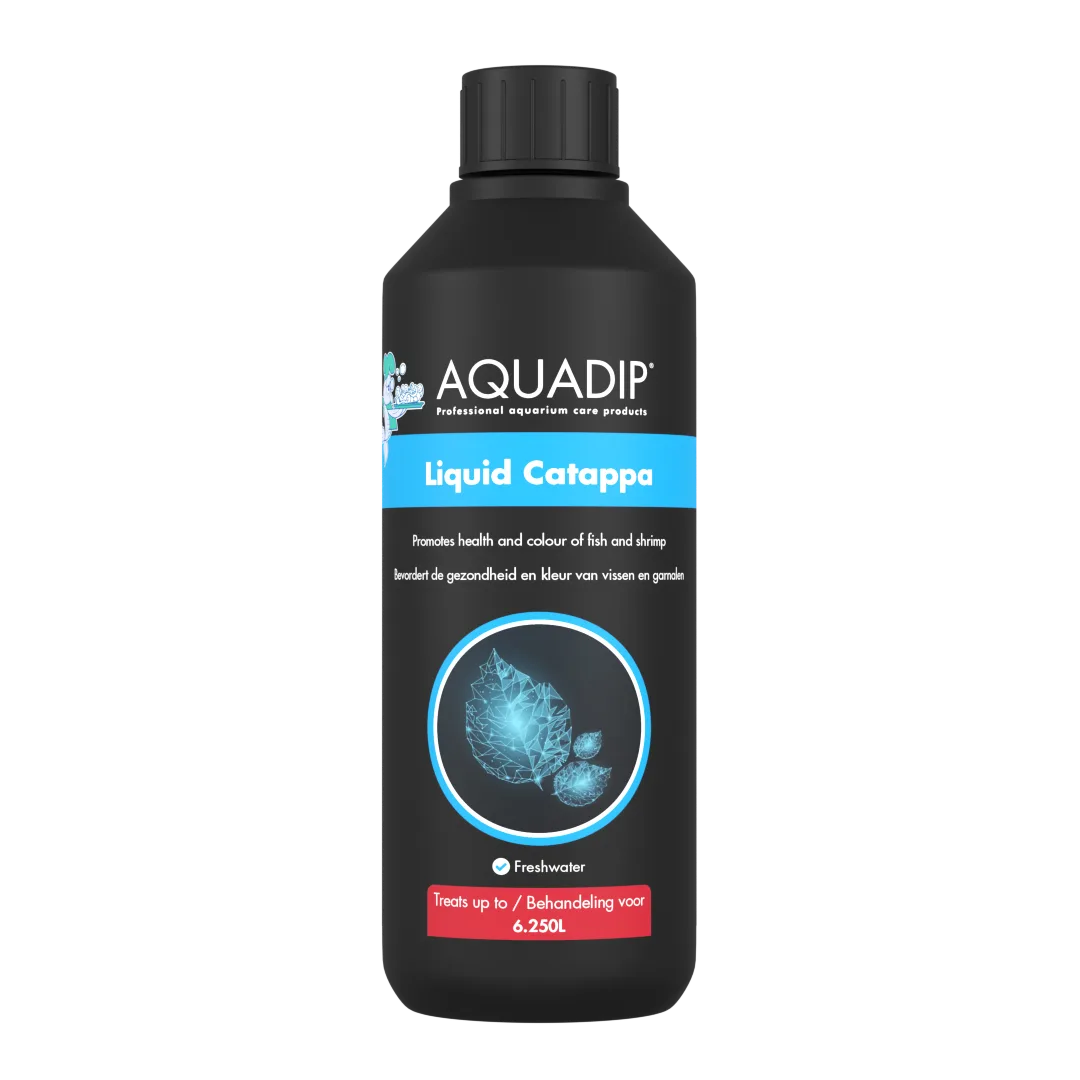
AQUADIP Liquid Catappa is designed to keep the water clear, unlike leaf tannins which naturally tint the water brown. If you want the blackwater look, leaves are the better choice. Pick liquid for clarity, leaves for the natural tint.
How often should I add catappa?
Only when you are doing a water change or when you want to refresh tannins. There is no fixed schedule; base it on pH tests and how your fish and shrimp respond. Dose, test, and wait a week before repeating.
Is catappa safe for all fish and shrimp?
It suits soft-water species and shrimp that appreciate tannins. It is not appropriate for hard-water African cichlids or marine reef tanks, where stable high pH matters more. Match the treatment to your species, not the other way around.
Product facts that affect your choice
- Aquadip Liquid Catappa: AQUADIP Liquid Catappa is the liquid form of catappa leaves. It keeps the water clear rather than discolouring it, and it supplies numerous active ingredients that lower pH for tropical soft-water fish, support mucous membranes and gills, improve colour, and reduce stress. Choose this when you want catappa benefits without the brown tint, and when you need to dose precisely after a water change.
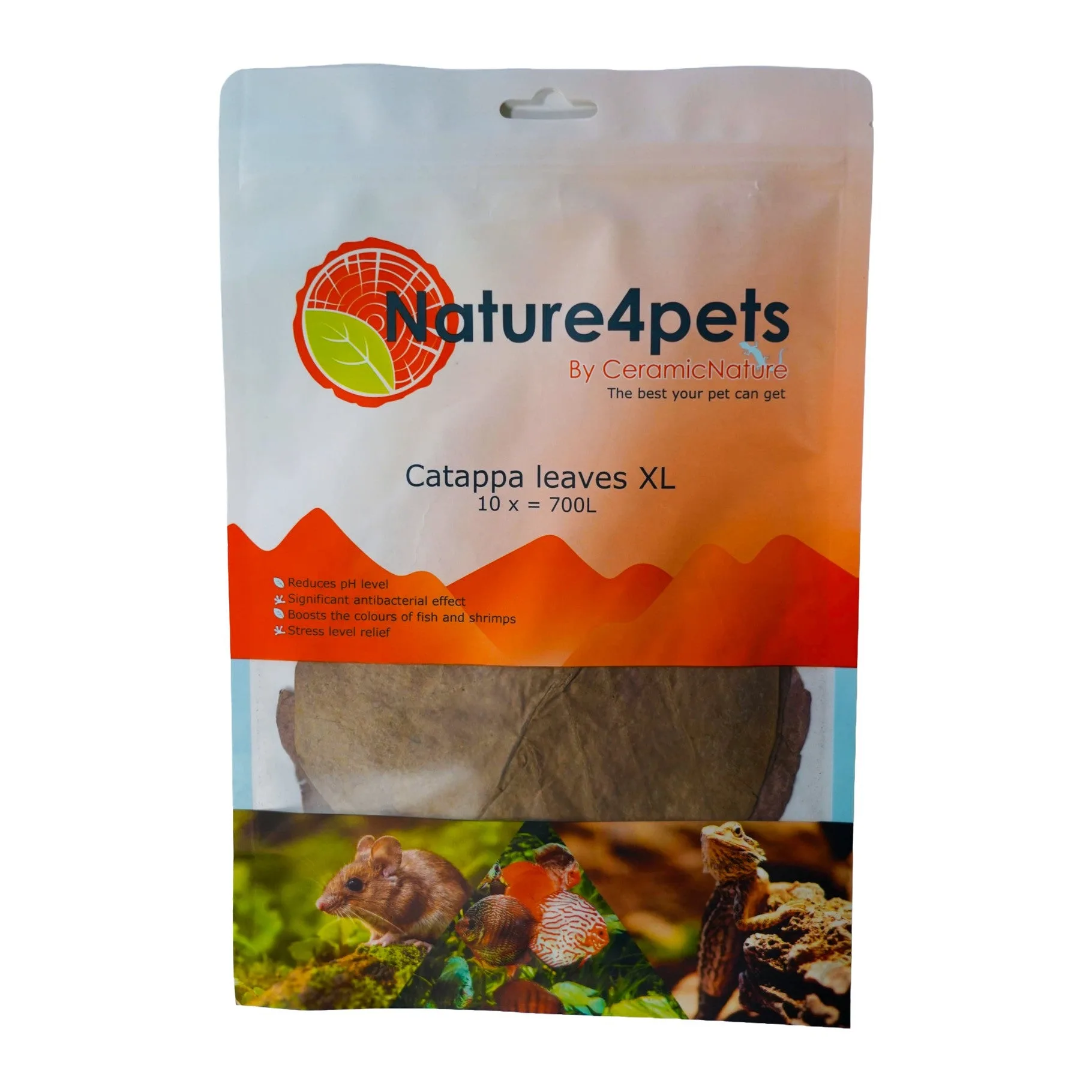
- Ceramic Nature Catappa Leaves XL: Ceramic Nature Catappa Leaves XL come from the Sea Almond tree and are sold as 10 pieces. They reduce pH, help with disease prevention, work as decoration, enhance colour, and serve as a dietary supplement for catfish, shrimps, and lobsters. Choose these when you want a natural look, a grazing surface, and a slow release of tannins, and you accept some water discolouration.
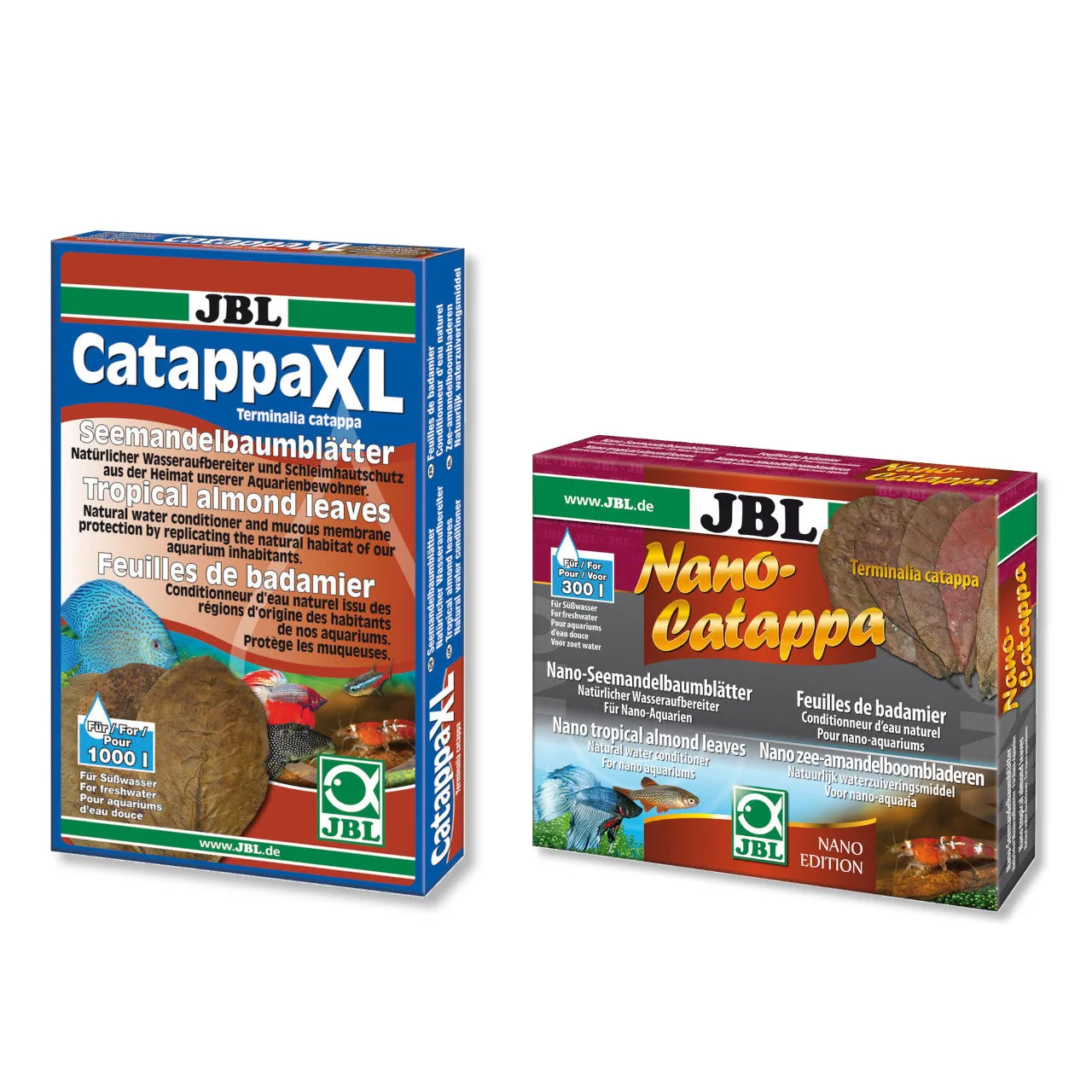
- JBL Catappa Leaves: JBL Catappa Leaves are mature, dried leaves of the tropical almond tree that supply numerous natural active substances. They are used as a feed supplement for sucker catfish, shrimp, and snails, and as natural water care. Choose these when you want a trusted leaf product for both water conditioning and supplemental feeding, especially for Ancistrus and similar grazers.