Quick answer
When a Fulton's deck is archived, it means the production run has ended and remaining stock sits in a separate, non-restocking category. The deck is not discontinued because it failed; it is retired because the print run was finite. If you want one, buy from current archive stock rather than waiting for a reprint that is not planned.
What exactly does archived mean at Fulton's?
Archived is a stock status, not a quality judgment. A deck moves to the archived category once its production run is finished and the remaining units are the last ones available. Nothing about the cards changes: same stock, same finish, same artwork. What changes is availability. Archived decks do not restock, so the listing is a countdown rather than a catalog item you can reorder later.
Why do retired Fulton's decks sometimes cost more than new ones?
Price reflects remaining supply against collector demand, not age. A deck with a small print run and a specific hook, such as a numbered seal or a hand-illustrated box, can command more than a current release because there is no path to more units. The archived listings in the store show a catalog comparison price alongside the current price, which gives you a quick read on how the market has moved since release. Treat that comparison as context, not a guarantee of future value.
Do numbered seals and low production counts actually matter?
They matter because they make a deck individually identifiable and verifiably finite. A numbered seal ties a specific box to a specific run size, which is useful when you resell, trade, or insure a collection. A stated production count does the same job at the run level. When a listing does not state a count or a seal type, treat that as missing information rather than assuming the run was large or small.
How should I decide between an archived deck and a current release?
Buy the archived deck if you specifically want that artwork, that collaborator, or that production detail, because the window is closing. Buy a current release if you plan to open, shuffle, and play regularly, since replacing a worn archived deck means paying whatever the remaining market asks. Many collectors do both: one archived copy to keep sealed and one current deck for actual table use.
Archived deck buying checklist
Confirm the run size before you compare prices
A stated production count is the single most useful number on an archived listing. Compare decks with similar counts, not similar prices, because a 25-unit gilded run and an unnumbered open run are not competing for the same buyer. If no count is listed, ask before assuming the run was limited.
Check whether the seal is numbered
Numbered seals let you verify a deck against its stated run and document it for resale or insurance. A numbered seal in good condition supports value; a damaged or missing seal weakens it even if the cards are untouched. Photograph the seal and number when the deck arrives.
Decide sealed or opened before you buy
Archived decks cannot be replaced at retail. If you intend to play with it, accept that wear is permanent, or buy a current release for table use and keep the archived deck sealed. One to keep, one to play is the simplest way to avoid regret.
Archived decks currently in stock
- 15 YEARS OF FULTONS LIMITED GILDED EDITION: Extremely limited gilded editions marking Fulton's 15th anniversary, with gold and silver versions carrying a clip joint owl seal that is color matched and numbered. The numbered, color-matched seal is the feature that makes each box individually traceable, which is what buyers check first when trading or reselling an anniversary release.
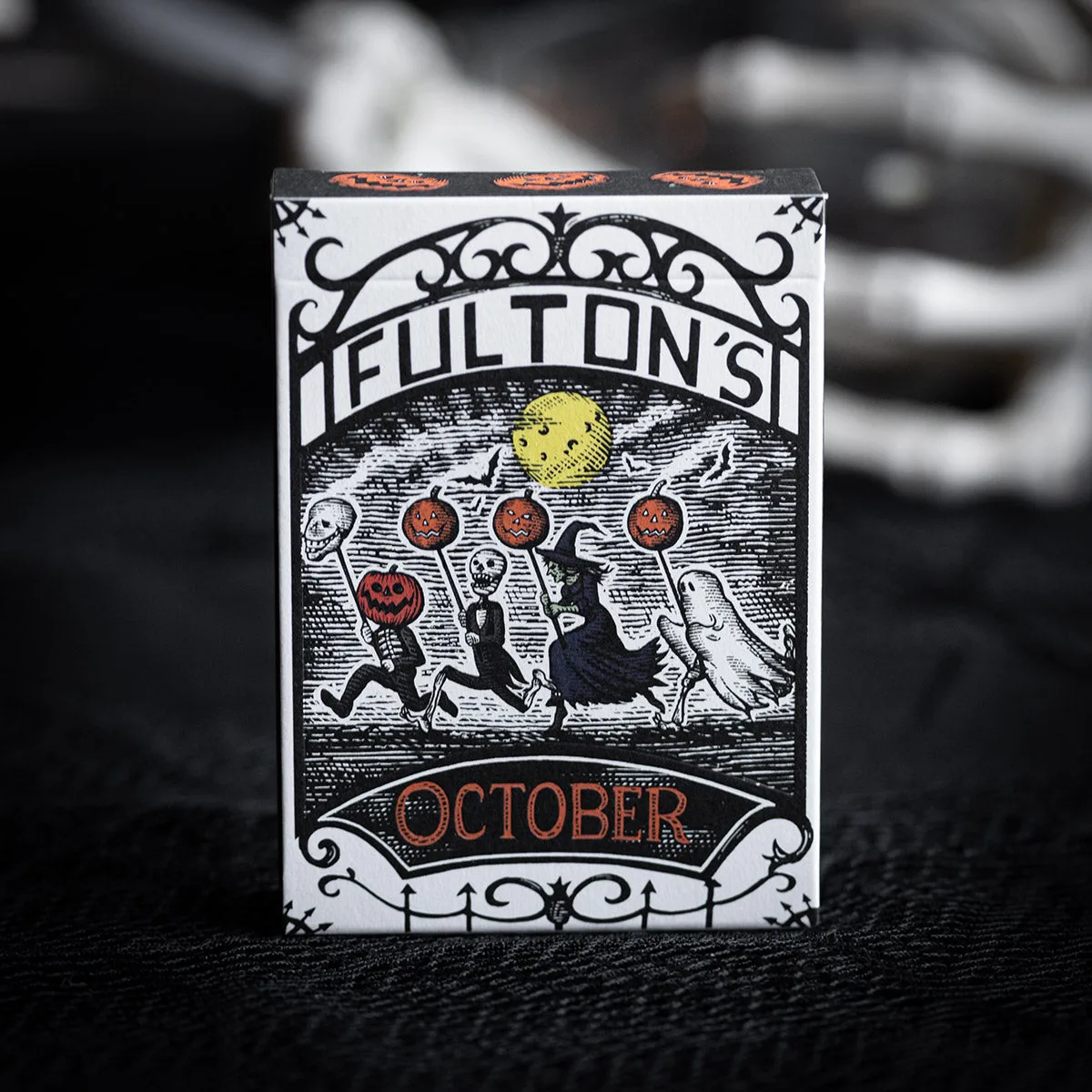
- OCTOBER V2 PLAYING CARDS INVERSED STEVEN NOBLE BOX: Only 66 inversed interior art boxes were made, each with a numbered tombstone seal, and each box contains one standard October V2 deck. A 66-unit run with numbered seals is about as small as a commercial playing card release gets, so condition of both the box and the seal drives most of the value here.
- ORANGE GILDED LIMITED EDITION FRANKLIN BBQ OFFICIAL PLAYING CARDS: Only 25 gilded orange Franklin BBQ decks were produced, each with a custom holographic seal. At 25 units, this is a crossover collectible that appeals to BBQ fans as well as card collectors, which widens demand beyond the usual playing card market.