Quick answer
A cheap leash is not automatically a safety risk, but low price often shows up in the hardware, the stitching, and the rope itself. Judge any leash by its carabiner or clasp, its material, and its condition, not by the price tag alone. If the clasp feels flimsy or the rope is frayed, replace it before your next walk.
What actually fails on a leash
Leash failures cluster in three places: the clasp or carabiner that connects to the collar, the stitching or knot where the handle meets the rope, and the rope or webbing itself. A cheap leash can use thinner rope, a stamped-metal clasp instead of a locking carabiner, or stitching that loosens with repeated pulling. None of those are visible from a product photo, which is why checking the hardware in person matters more than the price.
How to inspect any leash in 60 seconds
Before you buy or use a leash, run this quick check. It applies whether the leash cost $10 or $40.
- Squeeze the clasp or carabiner: it should not flex or feel hollow. A locking carabiner should open and close smoothly and lock without force.
- Look at the connection point where the rope meets the clasp. Fraying, loose stitching, or a stretched knot means the leash is nearing the end of its life.
- Run the rope through your hands. Rough patches, flat spots, or stiffness in one area suggest internal wear.
- Check the handle. Padding that has torn away or stitching that has pulled loose can fail under a hard pull.
- Test the swivel. If the carabiner no longer rotates freely, the leash can twist and bind, which puts stress on the clasp.
When a cheap leash is fine, and when it isn't
A cheap leash can be a reasonable backup or a short-term option for a calm dog on a quiet sidewalk. It is a poor choice for a strong puller, a dog in training, or any situation where a failure means your dog reaches a road. If you are choosing a durable dog leash, look for a rated carabiner, tightly woven rope or webbing, and a handle that is stitched or spliced rather than glued. Those features cost more, but they are the difference between a leash that holds and one that doesn't.
Signs of a worn dog leash you should not ignore
Even a well-made leash has a lifespan. Replace it when you see any of these: a clasp that no longer locks, visible fraying within a few inches of the clasp, a handle that has lost its padding or stitching, or rope that has become stiff and brittle. If you cannot remember when you bought the leash, and it shows two or more of those signs, replace it.
Myths about cheap leashes, settled
- Myth: A cheap leash is always unsafe.: Price alone does not determine safety. A cheap leash with a locking carabiner and tightly woven rope can be safe for a calm dog on a short walk. The risk comes from weak hardware and worn materials, not the price tag. Verdict: False. Judge the hardware and condition, not the price.
- Myth: Any metal clasp is strong enough.: Clasps vary widely. A stamped-metal clasp can bend or pop open under a hard pull, while a locking aluminum carabiner is designed to stay closed. If the clasp flexes when you squeeze it, it is not strong enough for a dog that pulls. Verdict: False. Look for a locking carabiner, not just any clasp.
- Myth: You can tell a leash is worn by looking at it.: Internal wear is not always visible. Rope can become stiff or brittle inside while looking fine outside, and stitching can loosen underneath a handle. Run the rope through your hands and test the swivel, not just the surface. Verdict: False. Check feel and function, not just appearance.
- Myth: A leash only needs replacing when it breaks.: A leash that has already failed is a leash that failed while your dog was attached to it. Replace it when you see fraying near the clasp, a handle that has lost its padding, or a clasp that no longer locks. Verdict: False. Replace on warning signs, not on failure.
What better hardware looks like
- Pacific Blue Reflective Long Lead - 30ft: Pacific Blue Reflective Long Lead - 30ft is made with tightly spun polypropylene/polyester 5/16 in rope, woven with reflective strands, and an aluminum carabiner that swivels and locks. The locking carabiner and tightly spun rope are the two features that separate a leash built for distance work from a cheap leash that can fail under load.
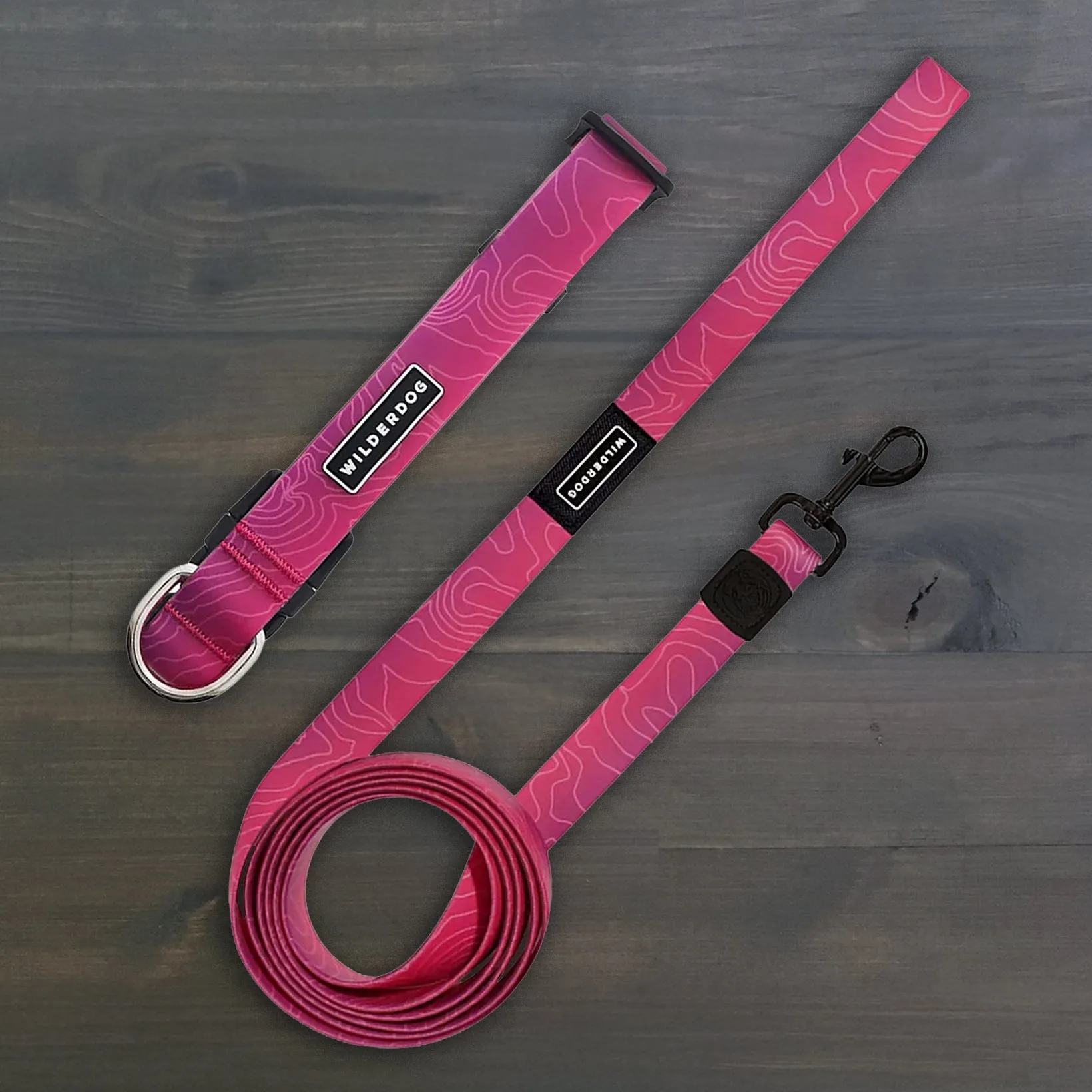
- Playa Ultralight Leash: Playa Ultralight Leash is 6 ft long, 1 in wide, weighs 3.75 oz, and uses tightly woven lightweight polyester webbing with a padded handle and an aluminum carabiner that swivels and locks, rated for 3 kN. A 3 kN rating gives you a concrete strength figure to compare against unrated clasps, and the padded handle reduces hand fatigue on longer walks.
- Daybreak Ultralight Leash: Daybreak Ultralight Leash shares the same build as the Playa: 6 ft, 1 in wide, 3.75 oz, tightly woven polyester webbing, padded handle, and a locking aluminum carabiner rated for 3 kN. If you want the same hardware in a different color, this is the same leash with the same safety features, so you are not trading strength for looks.