Quick answer
Sometimes yes, often no. Expensive knickers are worth it when the extra money buys a fabric you'll actually feel, a fit that stays put, and construction that survives repeated washing. They're not worth it when you're paying for a logo, packaging or a trend. Judge the garment, not the price tag: check the fabric content, the waistband recovery, the seam finish and the trim before you decide.
What the price tag actually pays for
A higher price can reflect better raw materials, more careful cutting and finishing, smaller production runs, or simply brand positioning. Only the first two change how the knickers feel on day 30. When you pick up a pair, ask what the extra cost is buying: if you can't point to a specific fabric, fit or finish difference, the price is marketing rather than quality.
This is why a mid-priced pair from a brand that specialises in one thing can outperform a luxury pair from a brand that makes everything. Specialisation usually shows up in the fit block and the fabric choice, which are the two things you notice every time you wear them.
Six signs of genuinely good knickers
Use these checks in the fitting room or when your order arrives. They take about a minute and they tell you more than the price ever will.
- Fabric content is stated clearly and matches the feel: soft, smooth and slightly stretchy rather than stiff or papery.
- The waistband springs back flat when you stretch it, instead of staying stretched or rolling over.
- Seams lie flat against the skin with no twisting, and the gusset is securely stitched rather than tacked.
- Lace trim is soft and flexible, not scratchy or stiff, so it decorates the edge without digging in.
- The rise sits where it's meant to: low hip stays at the low hip, mid rise stays at mid rise, with no riding up.
- Washing instructions are realistic. If a pair demands hand washing to survive, factor that ongoing cost into the price.
Where the money genuinely shows
Two areas repay a higher price most reliably: the fabric and the fit block. Naturally soft, breathable fabric keeps its hand feel after washing, while cheap synthetic blends tend to pill or go shiny. A well-developed fit block means the brief sits at the intended rise and the back coverage stays where it started, so you're not adjusting all day.
Construction is the third area. Flat, secure seams and a trim that doesn't scratch are small details that decide whether a pair becomes a weekly favourite or stays at the back of the drawer.
When a cheaper pair is the smarter buy
If you're rebuilding a drawer, trying a new rise, or buying for a short trip, a lower-priced pair is the sensible test. You learn whether the cut suits you before committing to multiples. The same logic applies to knickers you'll wear for workouts or heavy periods, where frequent replacement matters more than longevity.
Buying in multipacks is the other lever. A four-pack lowers the cost per pair while keeping the same fabric and fit, which is usually better value than one expensive single pair you're afraid to wash.
Decision rules: spend or save
- You've found a rise and coverage you already love: Buy the multipack rather than more singles. Same fabric and fit, lower cost per pair. Spend here. This is where price buys repeat wear.
- You're testing a new rise or level of coverage: Buy one pair first, wear and wash it twice, then commit to a pack if it still sits right. Save first, spend later.
- The extra cost is only packaging or a logo: Compare fabric content and waistband recovery against a mid-priced pair. If they match, the premium isn't buying comfort. Save.
- The pair needs hand washing to survive: Add the time and hassle to the price. A cheaper pair you can machine wash may be the better long-term buy. Factor care into cost per wear.
How this looks in practice
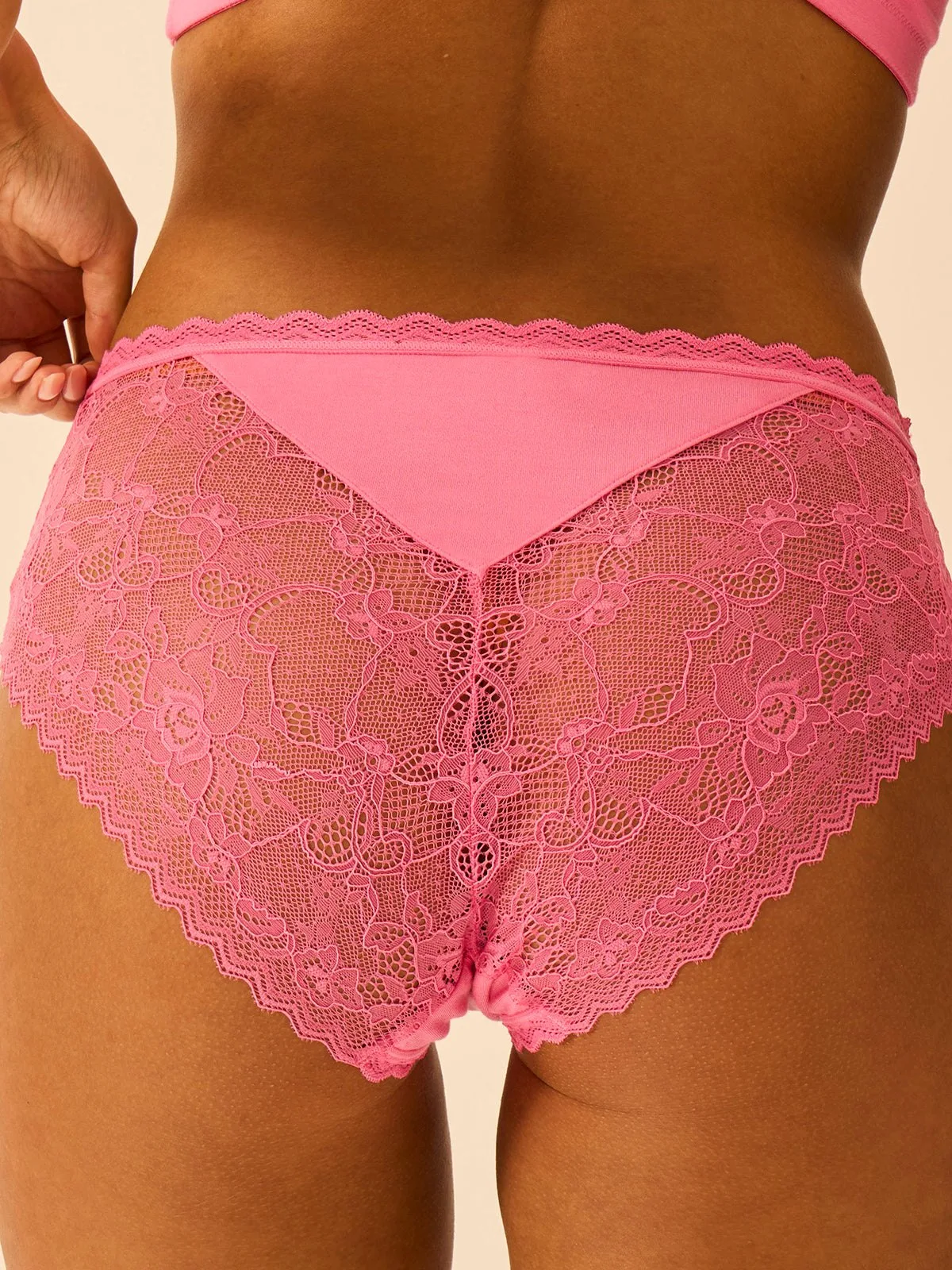
- The Original Brief - Cherry Baby: The Original Brief sits at the low hip with ample back coverage and a delicate lace trim. A defined rise plus generous coverage is the combination that stops the ride-up and adjustment cycle, which is what most people are really paying for.
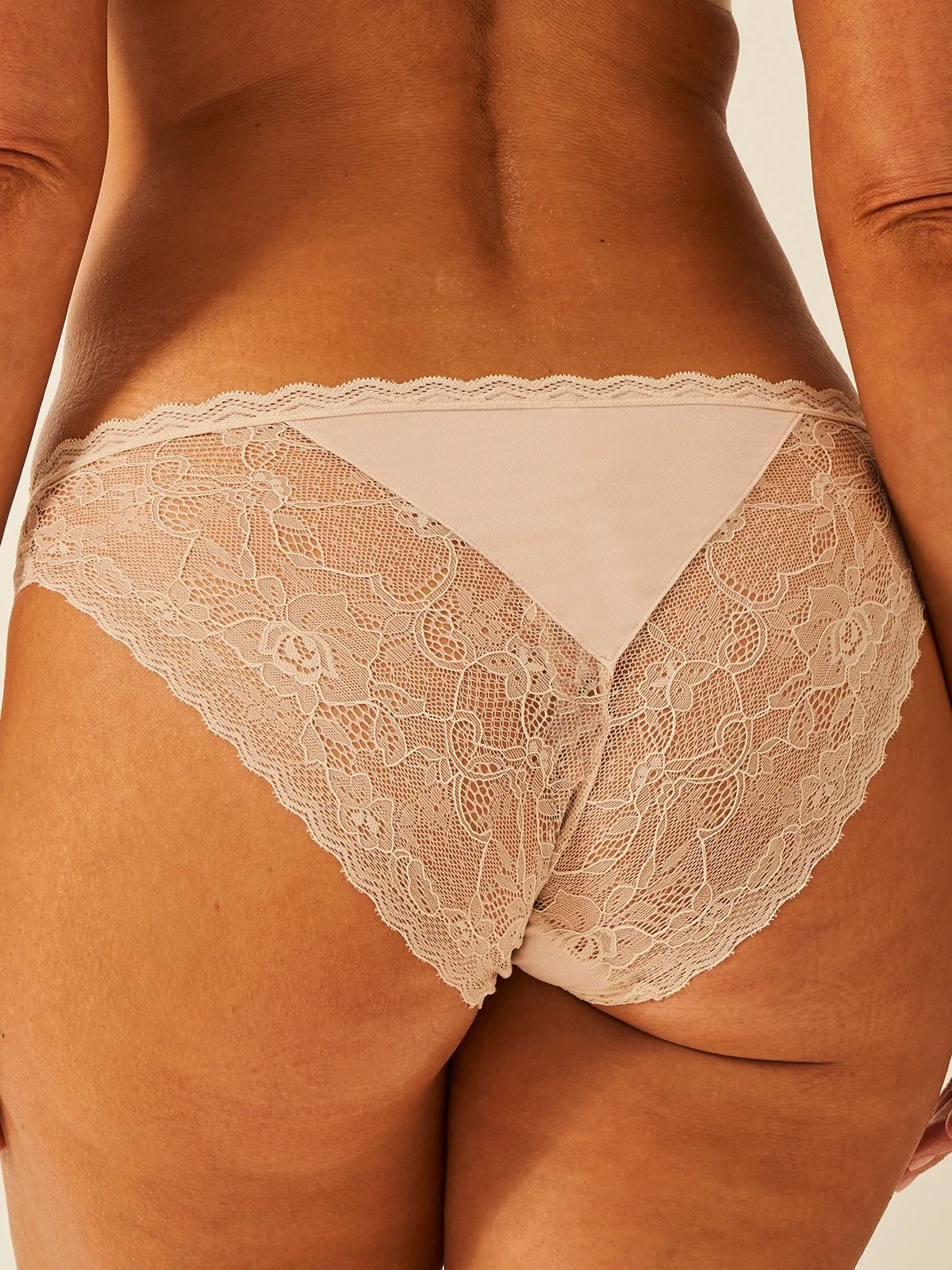
- Brazilian Brief - Latte: The Brazilian Brief has more minimal back coverage with a delicate lace trim and a barely-there feel. If you prefer less coverage, this is the version to test first, so you don't overpay for a cut you won't reach for.
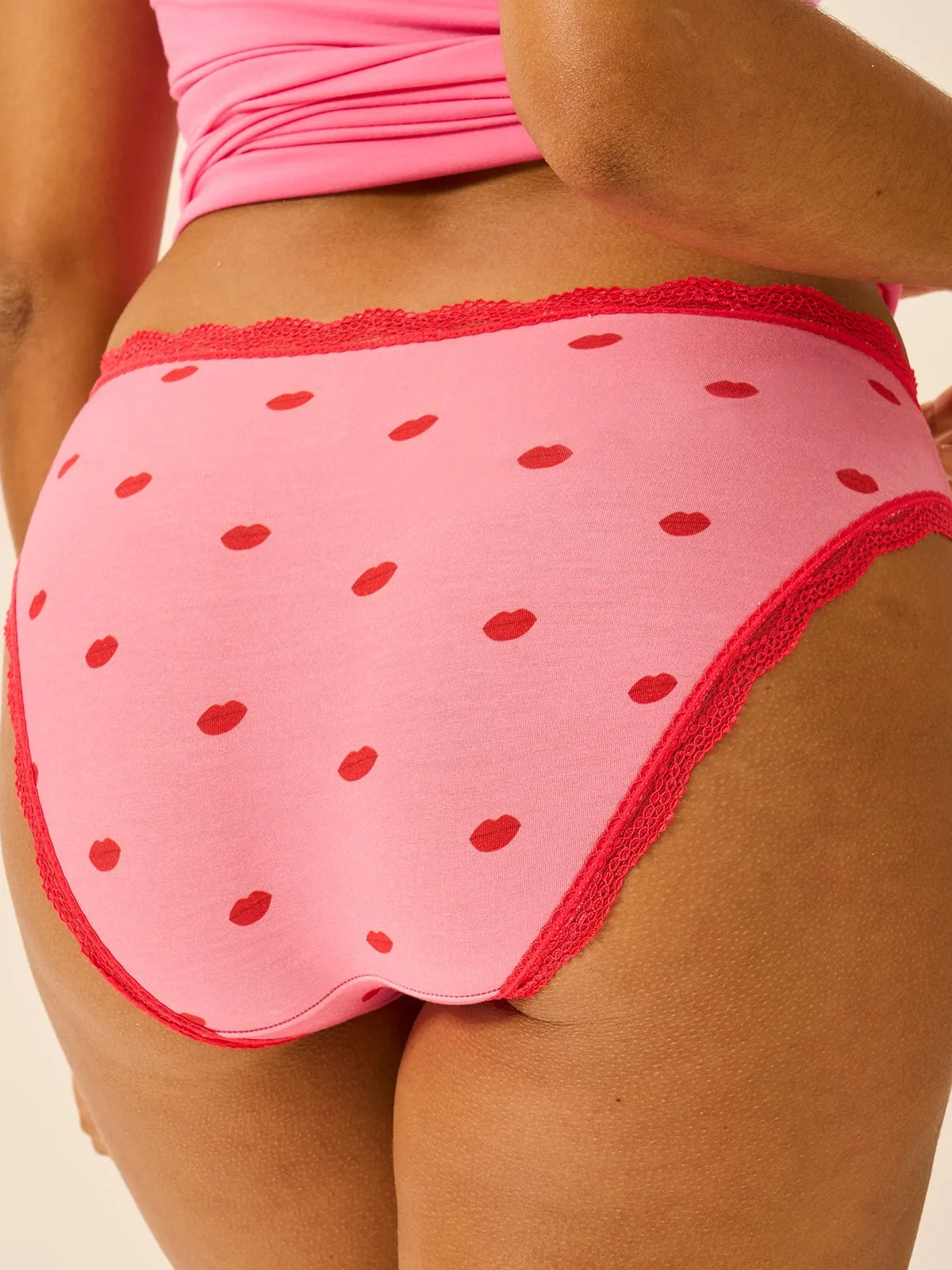
- The Original Brief Four Pack - Cherry Baby: The Original Brief Four Pack includes four pairs of the same brief. Multipacks lower the cost per pair, so you can standardise on a fit you've already confirmed rather than gambling on singles.
- Mid Rise High Leg Brief Four Pack - Black Cherry & Olive: The Mid Rise High Leg Brief Four Pack sits between the Original and High-Rise, with a soft mid rise, more coverage and a flattering high leg cut. Mid rise is the safer choice if you're between sizes or unsure which rise suits your body, and the high leg cut changes how the brief sits on the hip.
Which rise and coverage to choose
Best for
- Anyone who wants low-hip placement with ample back coverage and no adjusting
- Shoppers who prefer a barely-there feel with minimal back coverage
- Anyone who wants a mid rise that sits between a low and high rise, with a high leg cut
Not for
- Shoppers who want maximum high-rise coverage across the stomach
- Anyone who prefers a full-coverage brief with no lace trim
- Buyers who need a specific rise that isn't low, mid or high leg