Quick answer
Magnetic toys can be safe for young children, but only when the magnets are sealed inside and too large to swallow. Small, loose, or high-strength magnets are a serious hazard and should be kept away from kids under 6. Always check the age rating, inspect for cracks, and choose magnetic play that does not rely on tiny detachable pieces.
Magnetic toys are everywhere, from building tiles to fishing games, and parents often ask whether they are safe for young children. The honest answer is: it depends on the magnet. A sealed magnet inside a chunky plastic brick is very different from a tiny, loose neodymium ball.
This guide answers the most common questions about magnet toys for kids safety, including swallowing risk, age guidance, and what to look for when you buy. You will also see how everyday play items that use magnets, like a wooden fishing game, fit into a safe playroom.
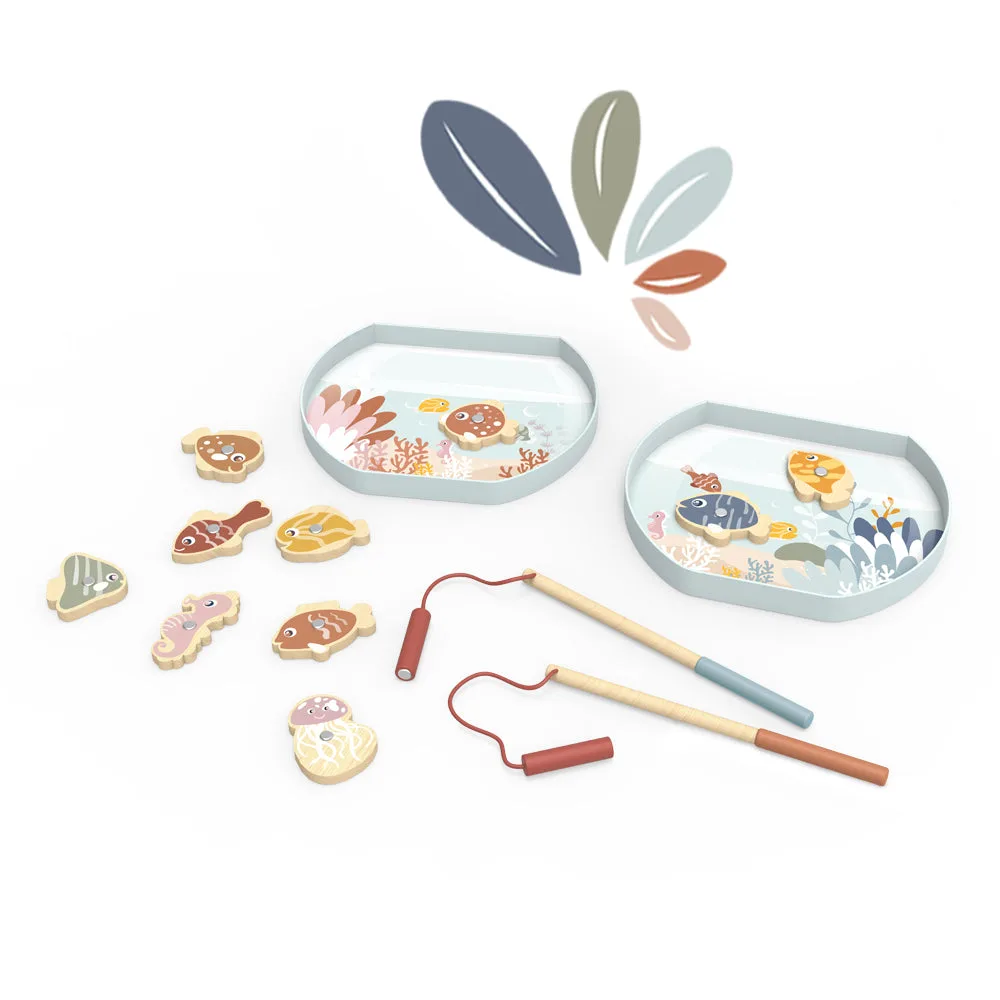
fishing game
If you are shopping, the safest approach is to match the toy to your child's age and to inspect it regularly. For toddlers, choose magnetic play where the magnet is fully enclosed and cannot come loose. For older kids, building sets and magnetic tiles are usually fine when they follow the age label.
What makes a magnetic toy dangerous?
The main danger is not magnetism itself. It is what happens if a magnet is swallowed. A single small magnet may pass through, but two or more magnets, or a magnet plus another metal object, can attract each other across loops of intestine. That can cause serious injury and requires emergency care.
High-strength magnets, often called rare-earth or neodymium magnets, are the biggest concern because they are small and powerful. Toys that contain them are usually labeled for ages 8 and up, or 14 and up. If a toy has loose magnets or a magnet that can be pulled out, treat it as unsafe for a child who still puts things in their mouth.
- Check the age label first, not the box picture.
- Look for cracks, seams, or loose parts where a magnet could escape.
- If a magnet is missing from a toy, stop using the toy and search for the piece.
At what age are magnetic toys safe?
Most magnetic toys are labeled for ages 3 and up, but that is a minimum, not a guarantee. A 3-year-old who still mouths toys is not ready for a set with small magnets, even if the box says 3+. A safer rule is to wait until your child reliably keeps non-food items out of their mouth, which is often closer to 4 or 5.
For toddlers, choose magnetic toys where the magnet is completely enclosed and the pieces are too large to swallow. A wooden magnetic fishing game is a good example: the magnet is built into the rod tip and the fish, and the play is about coordination, not small parts. For building sets with small magnets, follow the manufacturer's age rating and supervise.
- Under 3: avoid all loose magnets and small magnetic parts.
- Ages 3 to 5: choose sealed, large-piece magnetic toys and supervise.
- Ages 6 and up: many magnetic building sets are appropriate, but check the label.
What should I do if my child swallows a magnet?
Treat it as an emergency. Call your local poison control center or emergency services right away, even if your child seems fine. Do not wait for symptoms. Do not try to make your child vomit. Tell the medical team how many magnets were swallowed, their approximate size, and when it happened.
If you are unsure whether a magnet was swallowed, seek medical advice. Symptoms like stomach pain, vomiting, or fever can appear later, and early evaluation matters. Keep the toy or a matching magnet with you so the medical team can see exactly what was swallowed.
- Call emergency services or poison control immediately.
- Do not induce vomiting.
- Bring the toy or a matching magnet to the hospital.
Are magnetic building tiles and blocks safe?
Magnetic tiles and blocks are generally safe when the magnets are sealed inside the plastic and the pieces are too large to swallow. Problems usually come from cheap sets where the plastic cracks and the magnets fall out. Inspect tiles regularly, especially along the seams, and retire any piece that is cracked or rattling.
Age labels on magnetic building toys matter. Many sets are marked 3+, but some smaller sets are 6+ or 8+. If your child is under 3, or still puts toys in their mouth, skip magnetic building sets and choose wooden blocks or a magnetic fishing game instead. If you buy tiles for an older child, keep them away from younger siblings.
- Choose tiles with fully sealed magnets and no visible seams.
- Check the age rating and buy for the youngest child in the room.
- Store magnetic sets out of reach of toddlers.
How can I tell if a magnetic toy is well made?
Look for a brand that states the toy meets safety standards, such as ASTM or EN71. Check the seams and joints by gently flexing the toy. A well-made magnetic toy will not rattle or let you feel a loose magnet inside. If you can hear a magnet moving around, it is a sign the enclosure is not secure.
Also check for small parts that could break off. Buttons, eyes, and decorative pieces should be firmly attached. If a toy has a magnet that is exposed or can be picked out with a fingernail, do not give it to a young child. When in doubt, choose a magnetic toy where the magnet is not a separate play piece.
- Look for ASTM or EN71 safety marks.
- Shake the toy: rattling can mean a loose magnet.
- Avoid toys with exposed or removable magnets.
Are there safe magnetic toys for toddlers?
Yes, but they are usually magnetic play items rather than magnet sets. A wooden magnetic fishing game is a classic example. The magnet is built into the rod and the fish, so there are no loose magnets to swallow. It also builds dexterity and concentration, which is a bonus.
For toddlers, look for magnetic toys that are large, sealed, and free of small detachable parts. Avoid magnetic putty, magnetic balls, and any set with tiny magnets. If you want to introduce magnets, a fishing game or a sealed magnetic drawing board is a safer starting point than a building set with small magnets.
- Choose sealed magnets inside large pieces.
- Skip magnetic balls, putty, and loose magnet sets.
- Supervise play and store the toy out of reach after use.
Magnet toy safety checklist
Age label
Check the manufacturer's age rating and match it to your child's mouthing habits, not just their birthday. If your child still mouths toys, wait before buying magnetic sets.
Magnet enclosure
Inspect seams and shake the toy. A sealed magnet should not rattle or be removable. Retire any toy with a cracked or loose magnet immediately.
Small parts
Look for tiny detachable pieces, including magnets, buttons, and decorative parts. If a part fits inside a toilet paper tube, it is a choking risk for under-3s.
Supervision and storage
Keep magnetic toys for older kids out of reach of younger siblings, and store them after play. A locked bin or high shelf prevents accidental access.
Magnetic play picks and what to check
- Fishing game: Made with FSC-certified wood and non-toxic, child-safe paints; colorful wooden fish are caught with a magnetic rod, and the toy meets ASTM safety standards. The magnet is built into the rod and fish, so there are no loose magnets for a toddler to swallow. It is a safer way to introduce magnetic play while building dexterity and concentration.
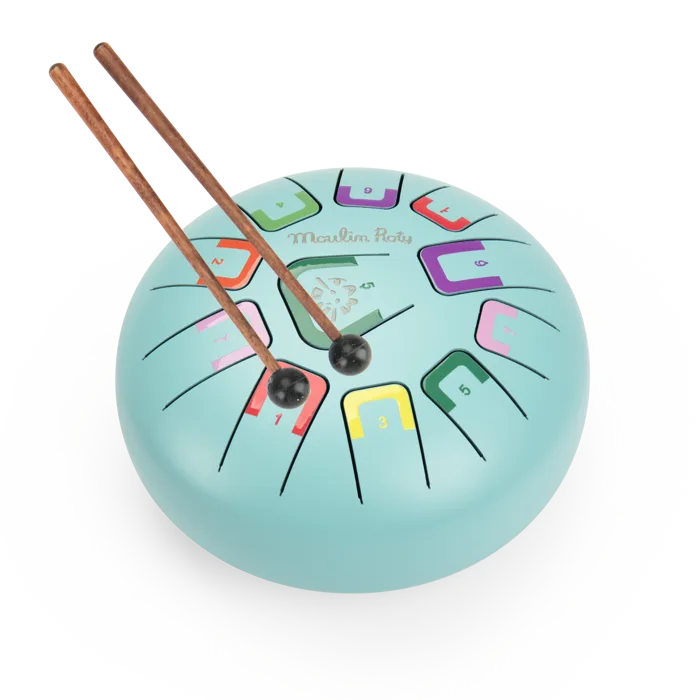
- Tongue Drum L (Light Blue): Recommended for ages 3 and up; a percussion instrument designed for kids to create sounds solo or with friends. A no-magnet option for music play. If you are worried about magnet toys choking hazard, a tongue drum gives you a creative, safe alternative for the same age group.
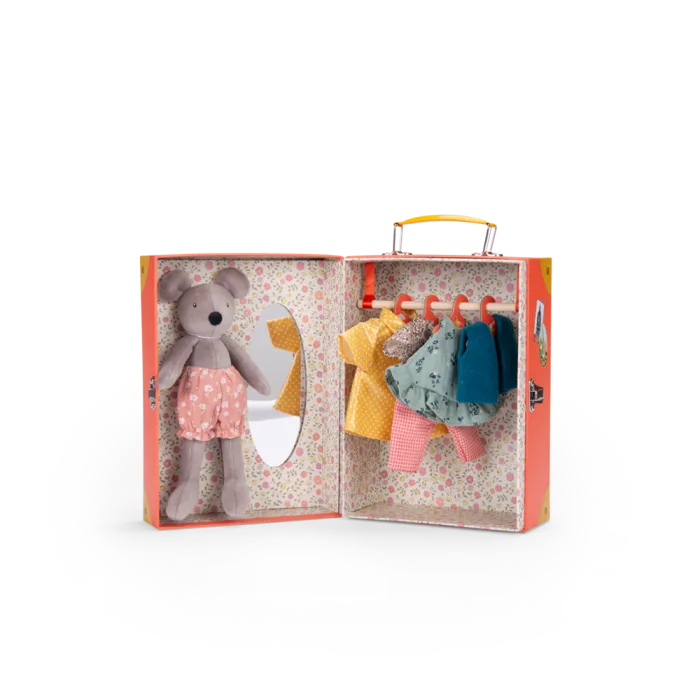
- Nini Little Wardrobe Suitcase - The Big Family: Recommended for ages 3+; a wardrobe suitcase with an integrated mirror, wooden closet, and illustrated hangers; made from cardboard, paper, plastic PP, and iron. Pretend play without small magnets. It supports role play and organization, and it is a good choice if you want to avoid magnetic building sets for a 3-year-old.
Magnetic toys can be a wonderful part of play when the magnets are sealed, the pieces are large enough, and the age rating matches your child. For toddlers, choose magnetic play like a wooden fishing game where the magnet is built in. For older kids, inspect magnetic building sets regularly and keep small magnets away from younger siblings. When in doubt, size up the risk and choose the safer option.