Quick answer
Scented candles are not inherently bad for indoor air, but how they are made and how you burn them matters. Choose candles with lead-free cotton wicks and non-toxic soy blend wax, keep the wick trimmed, and ventilate the room. If you have asthma or chemical sensitivities, consult a doctor before regular use.
Myth: All scented candles release harmful toxins
The claim that every scented candle pollutes your home ignores differences in wicks and wax. Candles made with natural lead-free cotton wicks and non-toxic soy blend wax are designed for a burn that is pure and intensely fragrant. They also avoid parabens, silicones, and PEGs. That does not mean any candle is risk-free, but it does mean you can reduce exposure by choosing better materials.
Myth: Scented candles are automatically unsafe for small rooms
Room size affects how concentrated a fragrance feels, not whether the candle is safe. A 60g scented candle is easier to place on a desk or bedside table, while a 380g candle suits larger spaces. The real issue is burn time and airflow. In a closed small room, any candle can feel overpowering. Burn for shorter periods and crack a window if the scent becomes heavy.
Myth: If it smells strong, it must be toxic
Fragrance strength is not a safety rating. A candle can smell intense because of the fragrance load and wax blend, not because it is releasing something dangerous. The ingredients list is a better guide: look for lead-free cotton wicks and a soy blend wax base, and avoid candles that list parabens, silicones, or PEGs. If a scent gives you a headache, that is a personal sensitivity signal, not proof of toxicity for everyone.
Myth: You can burn a candle all day without consequences
Even a clean-burning candle produces some soot if the wick is long or the melt pool is disturbed. Trim the wick to about 5mm before each burn, keep the candle away from drafts, and stop burning once the melt pool reaches the edge. For a 60g candle, that may mean shorter sessions; for a 380g candle, longer but still within the manufacturer's recommended maximum. Never burn a candle unattended or near flammable objects.
Myth: Candle smoke is always harmful
A well-trimmed candle with a lead-free cotton wick should not produce visible smoke during normal burning. If you see a sooty flame, the wick is probably too long or the candle is in a draft. Extinguish it, trim the wick, and relight. Persistent smoking suggests the candle is not burning correctly, not that all candle smoke is toxic.
Verdicts on common scented candle claims
- Claim: Scented candles are always toxic: Materials vary. Candles with lead-free cotton wicks and non-toxic soy blend wax, and no parabens, silicones, or PEGs, are a cleaner choice. Verdict: False. Choose better materials.
- Claim: Candle smoke is always harmful: Normal burning with a trimmed wick should not produce visible smoke. Smoke signals a wick or draft problem. Verdict: Misleading. Fix the burn, not the candle.
- Claim: Strong scent means unsafe air: Scent intensity comes from fragrance load, not toxicity. Personal sensitivity is real but not universal. Verdict: False. Judge by ingredients and your own reaction.
- Claim: You can burn candles all day safely: Every candle needs sensible limits: trim the wick, avoid drafts, and follow the recommended burn time. Verdict: False. Burn responsibly.
Products that meet cleaner-burning criteria
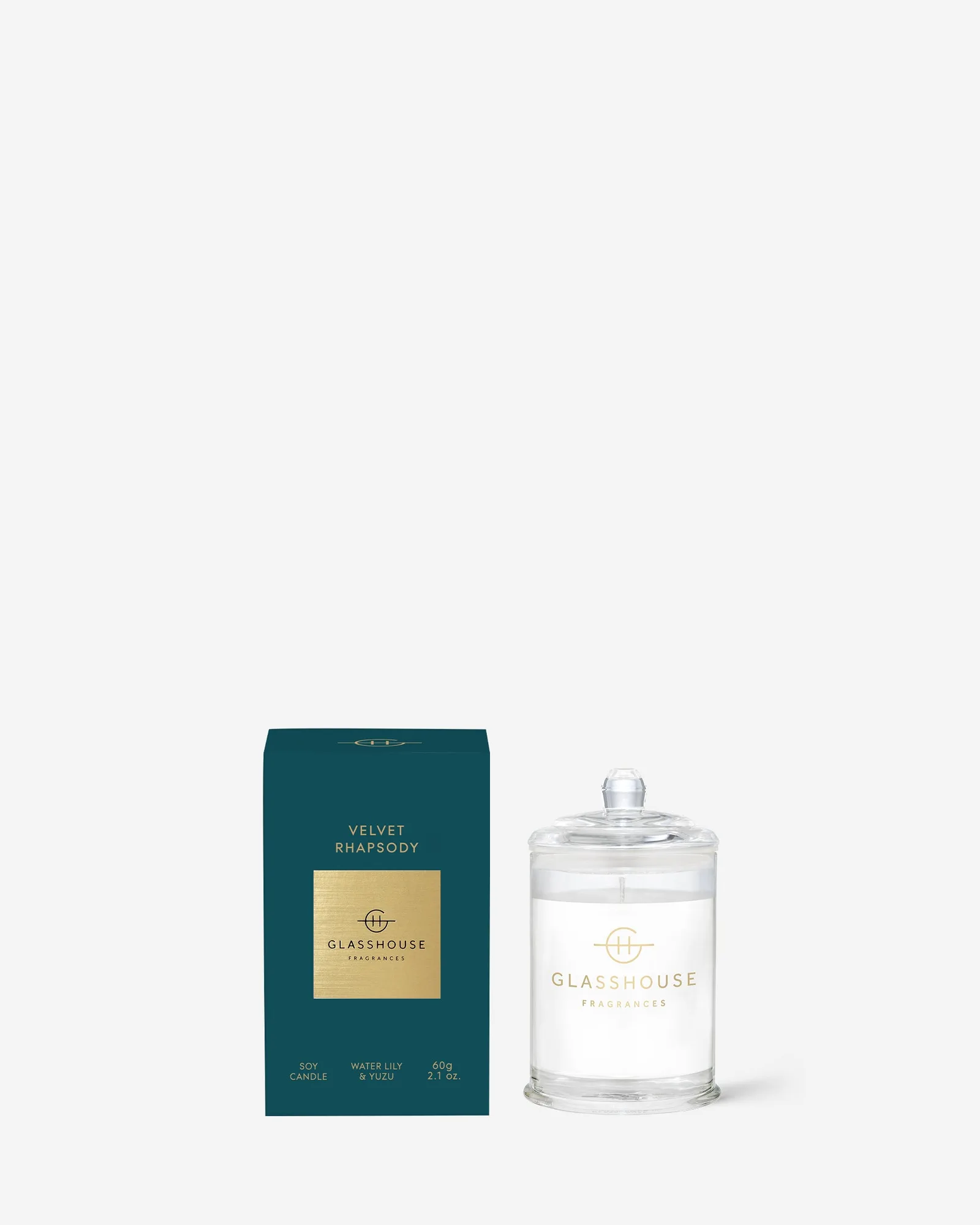
- Velvet Rhapsody: Made with natural lead-free cotton wicks and the highest quality non-toxic soy blend wax; no parabens, silicones, or PEGs. A 60g size is easy to test in a small room and fits a shorter burn session.
- Kakadu Dreaming: Released from the vault, available exclusively online; water lilies, honeyed orange blossom, jasmine, and ylang ylang. A 380g candle for larger spaces where you want a longer, even burn.
- A Tahaa Affair: French triple-milled for a luxurious lather and infused with sweet almond oil, shea butter, and vitamin E. A hand and body option if you want scent without an open flame.