Quick answer
Wash argyle tights inside a mesh bag on a cold, gentle cycle or by hand, then air-dry them flat away from heat. Prevent snags by smoothing rough skin and nails before dressing, and store brown tights folded in a breathable pouch rather than hung. If a ladder appears, stop the run with clear nail polish only when the damage is small and off-pattern; if the knit is broken across the argyle design, replace the pair.
Why argyle tights snag more than plain hosiery
Argyle patterns use floating yarns across the back of the fabric, so a single pulled thread can distort the diamond motif even when the surface looks intact. Plain tights often hide a small pick; patterned tights show it immediately because the contrast colors shift. That means your handling routine matters more than the wash cycle alone.
How to wash argyle tights without ruining the pattern
Turn the tights inside out and place them in a fine-mesh laundry bag before they go near a machine. Use cold water and a gentle detergent with no bleach or fabric softener, because softener coats the yarn and can make the pattern look dull. If you hand-wash, squeeze suds through the fabric instead of rubbing the argyle diamonds against each other. Rinse until the water runs clear, then press the tights in a towel to remove excess water. Never wring or twist them.
Drying and storing brown tights to avoid ladder runs
Lay the tights flat on a drying rack or a clean towel, reshaping the legs and the diamond pattern while damp. Heat is the enemy here: radiators, direct sun, and tumble dryers can weaken the elastic and make the yarn brittle, which turns a small pull into a full ladder. Once dry, fold the tights loosely and store them in a breathable cotton pouch or a dedicated drawer divider. Avoid hanging them by the waistband, because the weight of the legs stretches the knit over time. For brown tights, keep them away from darker denim or rough wool items that can transfer lint and abrasion.
Prevent tights snags before you leave the house
Most snags happen during dressing, not during the day. Smooth rough cuticles, file jagged nails, and check for dry skin on heels and hands before you roll the tights on. Put them on one leg at a time, gathering the leg first and easing the fabric upward rather than pulling from the waistband. If you wear rings, remove them or turn the stones inward. When you sit, be aware of rough chair edges, splintered wood, and Velcro closures on bags or coats. A quick check of your shoes for exposed stitching or grit inside the heel can save a pair.
When a ladder can be repaired and when to replace
A ladder is a run in the knit, and it will not heal on its own. If the run is short, in a solid-color area, and away from the argyle diamonds, you can stop it with a tiny dot of clear nail polish at the top and bottom of the run, then let it dry completely. Do not use polish on the pattern itself, because it can stiffen the yarn and create a visible shine. If the run crosses the diamond design, if multiple yarns are broken, or if the tights have lost their stretch, replacement is the better choice. Repairing a patterned run rarely looks invisible, and a failed repair can make the ladder worse.
Styling argyle tights without adding wear
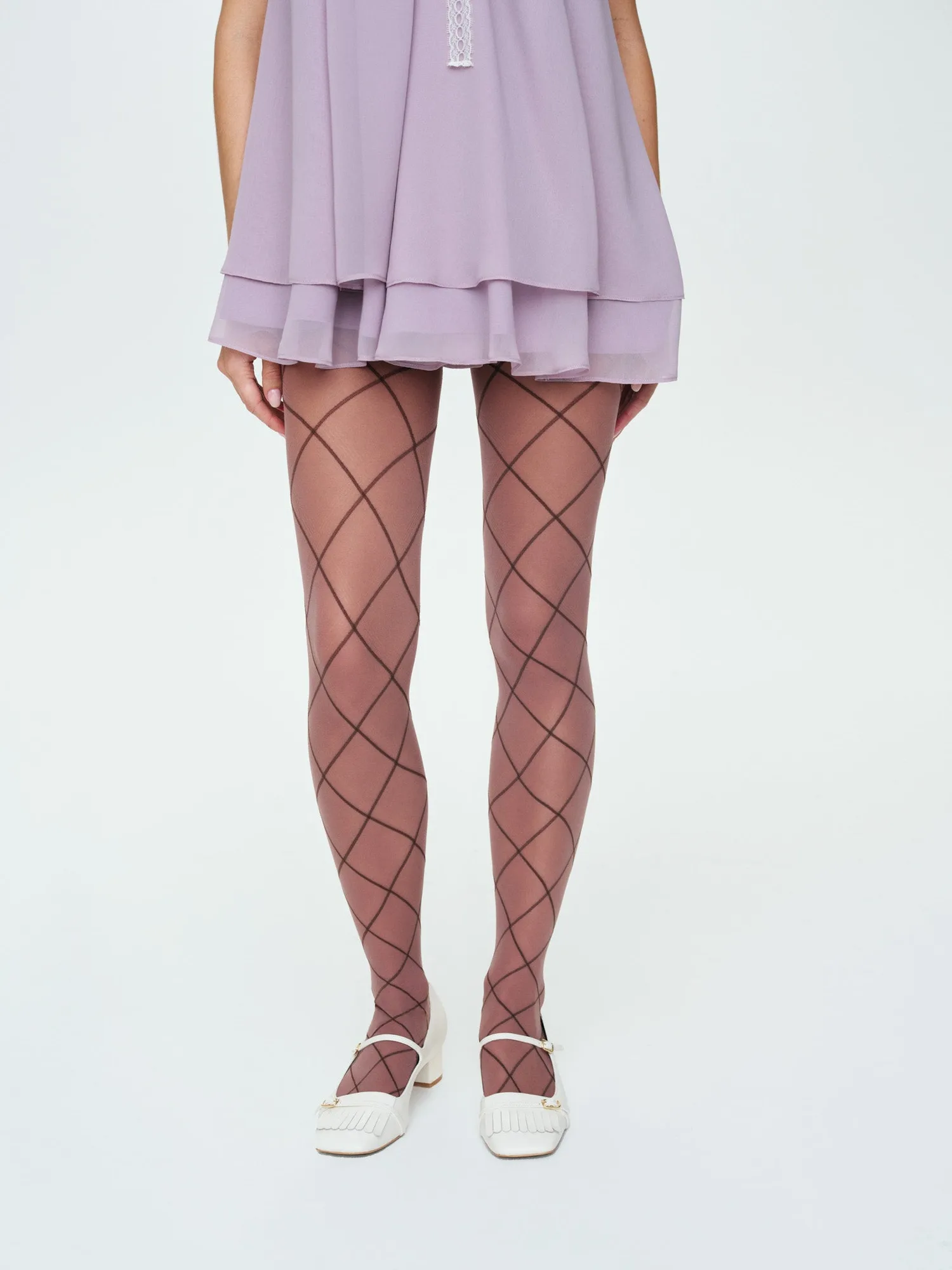
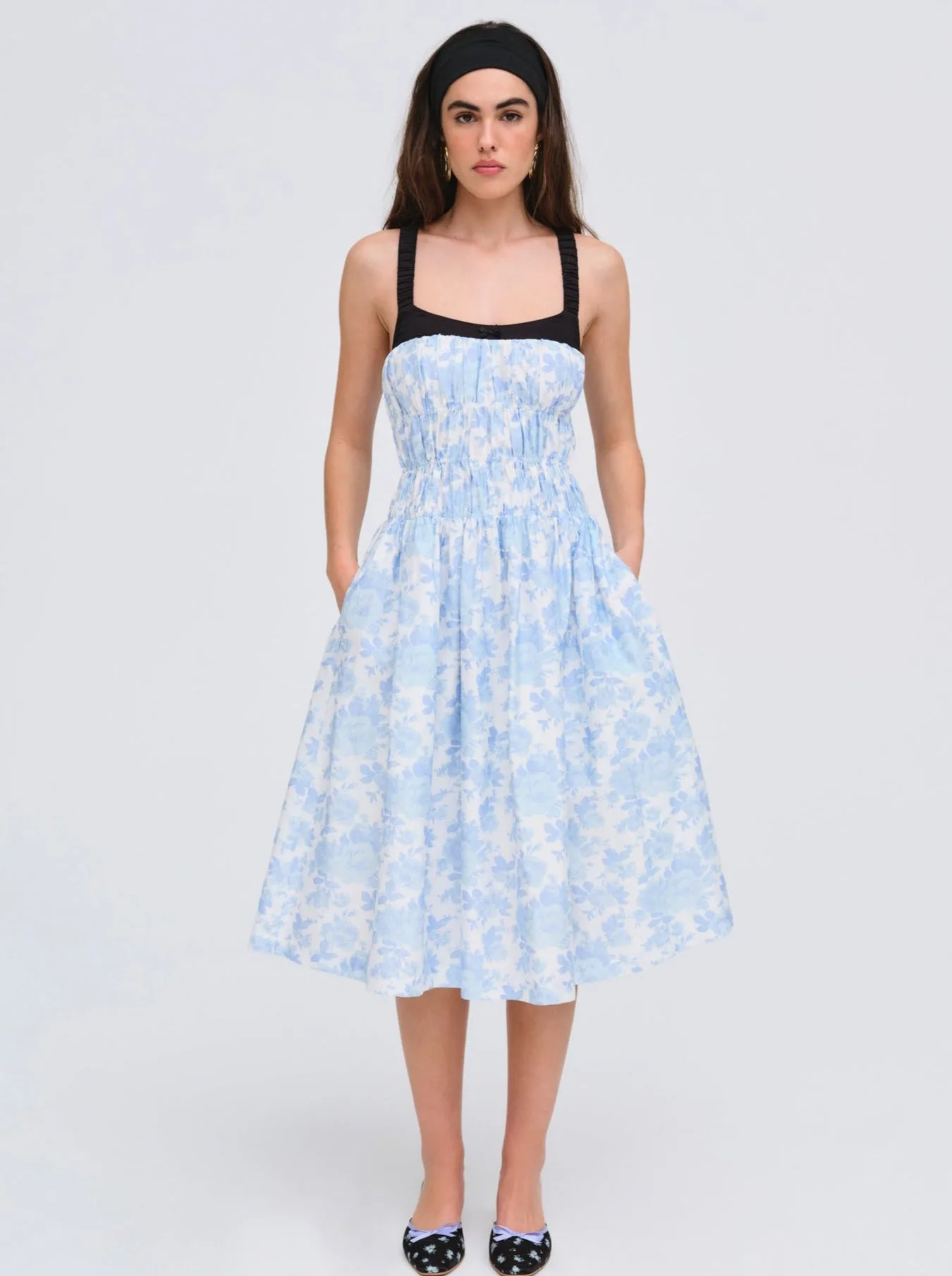
Argyle tights already carry a strong pattern, so pair them with simpler pieces to reduce friction and visual noise. A knit bra top in a solid brown, like the Nathalie Knit Bra Top — Brown, keeps the look tonal and gives you a soft layer that will not catch on the hosiery. For a dress, choose a midi length that clears the tights rather than a rough-textured skirt that rubs against the pattern as you walk. The Oliver Midi Dress — Blue in cotton poplin has a smooth finish and a gathered skirt, which limits direct abrasion compared with heavy wool or sequins. If you want to ground the outfit, the Argyle Tights — Brown are the patterned layer, so let the top and dress stay quiet.
Diagnose your tights problem
- Small pull in a solid area: A single yarn is pulled but not broken, usually from a nail or ring during dressing. Ease the yarn back with a blunt needle, then wash and store as usual. Stop if the pull sits on a diamond.
- Ladder running down the leg: A broken yarn is releasing neighboring stitches, often after contact with a rough surface or a failed repair. Apply clear polish to the top and bottom of the run if it is short and off-pattern. Replace if it crosses the argyle design.
- Overall sag or loss of stretch: Heat from drying or long storage under tension has weakened the elastic, so the tights no longer snap back. Replace the pair. No washing method will restore elastic that has already broken down.
Products that work with this care routine
- Argyle Tights — Brown: Argyle Tights — Brown are made by a brand that describes its clothing as enchanting pieces for a vibrant muse who takes risks and embraces adventure. The patterned knit is the focal point, so the rest of your outfit and your storage routine should protect the design rather than compete with it.
- Nathalie Knit Bra Top — Brown: The Nathalie Knit Bra Top — Brown is a pull-on cable-knit bralette with a V neckline, designed for a soft afternoon wardrobe. A smooth knit top in a matching brown tone layers over tights without adding hardware or rough texture that could snag the hosiery.
- Oliver Midi Dress — Blue: The Oliver Midi Dress — Blue is 100% cotton poplin with a ruched elasticated bodice, gathered skirt, rose print, and a contrast poplin neckline with a small satin bow. The smooth poplin skirt glides over tights instead of catching on them, which helps prevent pulls while you move.