Quick answer
For a functional garden decoration that also measures rainfall, choose a metal bird rain gauge with a clear glass tube and a sturdy stake that fits your soil type.
Material and durability trade-offs
Metal bird rain gauges combine decoration with function, but the material choice affects longevity. Painted metal resists rust better than raw metal, especially in humid climates or areas with frequent rain. However, even painted metal can chip over time, so look for a design where the bird and stake are well-coated. Glass tubes are more accurate than plastic for reading rainfall, but they are fragile and may need replacement if knocked over by wind or animals.
Measurement clarity and capacity
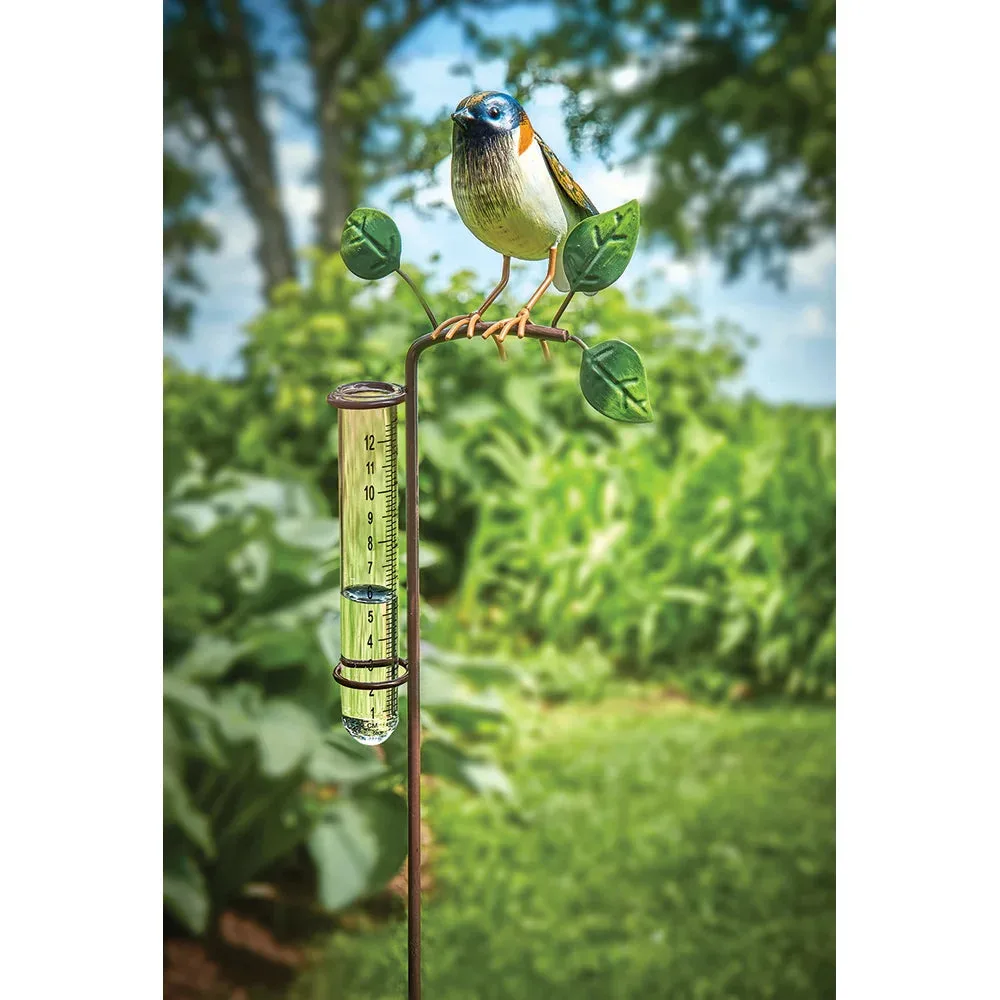
A rain gauge for garden use should have easy-to-read markings. Check whether the tube shows inches and centimeters, and whether the increments are large enough to read from a short distance. The tube capacity also matters: a 5-inch tube is typical for most gardens, but if you live in an area with heavy downpours, a deeper tube prevents overflow. The Artisan Metal Bird Rain Gauge includes a 5-3/4" glass tube marked in both inches and centimeters, which is a practical size for moderate rainfall regions.
Stake stability and assembly
The stake must hold the gauge upright in wind and rain. A double-pronged stake provides better grip than a single spike, especially in loose or sandy soil. For hard or clay soil, a stake with a pointed tip and wider prongs is easier to insert. Minor assembly is common with these gauges, so check if the instructions are clear and if any tools are required. The Artisan Metal Bird Rain Gauge uses a 4-1/2" double-pronged stake, which offers good stability for most garden beds.
Decision rules for choosing a metal bird rain gauge
- Check the tube material: Glass tubes offer clear, accurate readings but can break. Plastic tubes are more durable but may fog or scratch over time. Choose glass if you prioritize readability and can place the gauge in a sheltered spot.
- Assess the stake design: Double-pronged stakes provide better stability than single spikes. For windy areas, consider adding a small stake anchor or placing the gauge near a fence for wind protection. If your soil is very loose, you may need to secure the stake with a garden staple.
- Match the tube capacity to your climate: A 5- to 6-inch tube works for most gardens. If you receive more than 6 inches of rain in a single storm, look for a deeper tube or empty the gauge after each storm to avoid overflow.
- Consider the bird design placement: The painted metal bird on top adds charm but can fade in direct sun. Place the gauge where it gets morning sun and afternoon shade to preserve the paint and reduce evaporation from the tube. Rotate the gauge occasionally to ensure even sun exposure on the bird.
Product facts
-
Artisan Metal Bird Rain Gauge: The Artisan Metal Bird Rain Gauge stands 39" tall with a 5-3/4" glass tube measuring rainfall in inches and centimeters. This height allows you to read measurements without bending, and the dual-unit markings work for both US and metric users.
Artisan Metal Bird Rain Gauge
Who this rain gauge is for
Best for
- Gardeners who want a decorative piece that also provides functional rainfall data
- People with moderate rainfall who can read a 5-3/4" tube without overflow
Not ideal for
- Very windy locations where a taller, heavier gauge or a ground-mounted model would be more stable
- Areas with frequent hail or heavy debris that could break the glass tube