Quick answer
Choose the Asuna Olympic Bar if you want a compact, versatile barbell for Olympic-style training with standard 2-inch plates. A standard bar is lighter and uses 1-inch plates, but limits your upgrade path and weight capacity.
Key differences that matter
The most obvious difference is the sleeve diameter: Olympic bars use 2-inch sleeves, while standard bars use 1-inch sleeves. This means you cannot interchange plates between the two systems without an adapter. The Asuna Olympic Bar is built for Olympic plates, which are more common in commercial gyms and offer a wider weight range.
Weight capacity is another major factor. Standard bars typically max out around 200-250 lbs, while the Asuna Olympic Bar supports up to 300 lbs. If you plan to lift heavy or progress over time, the Olympic bar gives you more room to grow.
Bar weight also differs. The Asuna Olympic Bar weighs 26 lbs, which is lighter than a full-size Olympic bar (45 lbs) but heavier than most standard bars (15-20 lbs). This makes it a good middle ground for refining technique or for users who prefer a lighter bar for higher rep work.
Space and setup considerations
The Asuna Olympic Bar has 10-inch loadable sleeves, which is shorter than a standard 16-inch Olympic bar. This makes it easier to fit in smaller home gyms or storage racks. However, the shorter sleeves limit how many plates you can add, so you may need to use heavier plates to reach higher weights.
Standard bars are often cheaper and more compact, but they lack the rotating sleeves that Olympic bars have. The Asuna Olympic Bar features smooth rotating ends, which reduce wrist strain during lifts like cleans and snatches. If you do dynamic lifts, the rotating sleeves are a clear advantage.
Trade-offs at a glance
- Weight capacity: The Asuna Olympic Bar supports up to 300 lbs, while standard bars typically max out around 200-250 lbs. If you plan to lift heavy, the Olympic bar is the better choice.
- Plate compatibility: Olympic bars use 2-inch plates; standard bars use 1-inch plates. The Asuna Olympic Bar requires Olympic plates, which are more widely available for progressive loading. Check your existing plate collection before deciding.
- Bar weight and feel: At 26 lbs, the Asuna Olympic Bar is lighter than a full-size Olympic bar (45 lbs) but heavier than most standard bars (15-20 lbs). It is ideal for technique work or lighter lifting sessions.
- Rotating sleeves: The Asuna Olympic Bar has smooth rotating ends, which reduce wrist strain during dynamic lifts. Standard bars have fixed sleeves, which can cause discomfort during Olympic lifts.
- Storage and space: With 10-inch sleeves, the Asuna Olympic Bar is shorter than standard Olympic bars, making it easier to store in small home gyms. Standard bars are even shorter, but lack the weight capacity. Measure your storage area to ensure the bar fits comfortably.
Product facts
-
ASUNA Olympic Bar: The ASUNA Olympic Bar weighs 26 lbs, has diamond-textured knurling, 10-inch loadable sleeves, and supports up to 300 lbs. It is compatible with standard 2-inch Olympic plates. This bar offers a compact, versatile option for home gyms where space is limited, and its knurling provides a secure grip without being overly aggressive.
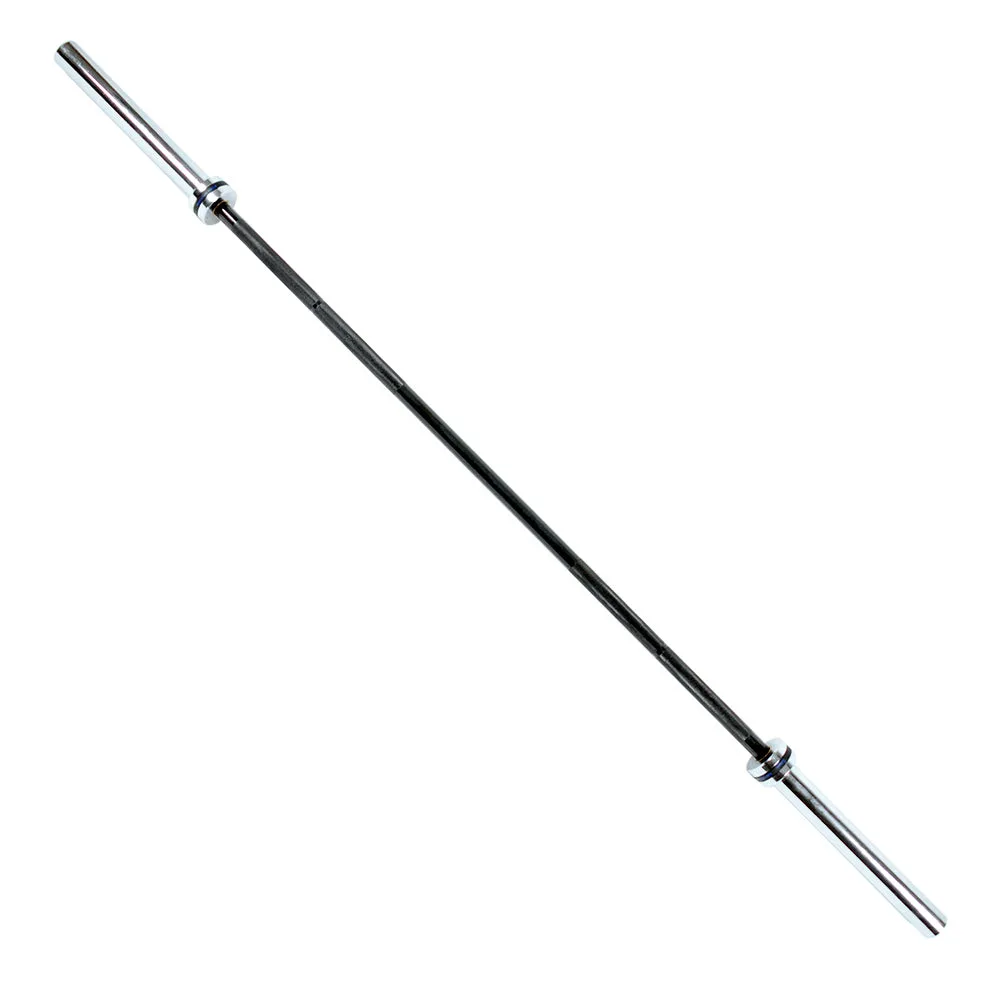
ASUNA Olympic Bar
Which one fits you?
Best for
- Home gym users who want a compact Olympic bar for progressive overload and Olympic lifts
- Lifters who already own or plan to buy 2-inch Olympic plates
- Anyone who prioritizes grip comfort and rotating sleeves for dynamic movements
Not for
- Users who only have 1-inch standard plates and don't want to buy new ones
- Lifters who need a full 45 lb Olympic bar for competition-style training or very heavy loads above 300 lbs