Quick answer
Install the Asuna Sit Up Bar Attachment above or below most standard doors, adjust the tension for a snug fit, and you're ready for sit-ups, crunches, and more.
Why a door-mounted sit up bar works for home gyms
A sit up bar attachment like the Asuna model lets you perform ab exercises without a dedicated bench or floor mat. It mounts securely to any standard door, making it ideal for small spaces or temporary setups. The foam-padded footrests keep your feet comfortable during reps, and the adjustable tension settings ensure a custom fit on different door thicknesses.
One trade-off: the bar relies on the door for stability, so it won't work on sliding or hollow-core doors. Always check that your door is solid and the frame is sturdy before mounting.
Step-by-step installation and use guide
- Choose the right door and position: Select a solid wood or metal door with a standard thickness (1.375 to 1.75 inches). Decide whether to mount the bar above the door (for a higher foot position) or below (for a lower foot position). Above-door placement works best for most sit-ups and crunches. Common mistake: mounting on a hollow-core or sliding door can cause the bar to slip or damage the door. Always test the fit before full use.
- Adjust the tension settings: Turn the adjustment knobs on each side of the bar to match your door thickness. The bar should slide onto the door edge with moderate resistance — not too loose that it wobbles, and not so tight that it's difficult to remove. Checkpoint: if the bar shifts during a rep, tighten the tension slightly. If it leaves marks on the door, loosen it and add a thin cloth pad between the bar and the door.
- Secure the bar and test stability: Slide the bar onto the top or bottom edge of the door until the foam pads sit flush against the door face. Give the bar a firm tug to confirm it won't pull off during movement. Then perform a few gentle sit-ups to verify the bar stays locked in place. Common mistake: skipping the stability test can lead to the bar detaching mid-exercise. Always test with light effort before going full intensity.
- Perform sit-ups and crunches with proper form: Hook your feet under the foam-padded footrests, lie back on a mat or towel, and perform sit-ups or crunches. Keep your lower back pressed into the floor and avoid yanking your neck. The bar holds your feet steady so you can focus on your core. Checkpoint: if you feel pressure on your shins rather than your feet, reposition your feet deeper under the pads. The foam should contact the tops of your feet, not your ankles.
- Remove and store the bar after each session: Loosen the tension knobs slightly, lift the bar off the door edge, and store it in a dry place. The compact design fits in a drawer or gym bag. Avoid leaving the bar mounted on the door for extended periods, as constant pressure can leave indentations on the door frame. Common mistake: storing the bar on the door overnight can cause the foam pads to compress unevenly or leave marks. Remove it after each workout to keep both the bar and door in good condition.
Product facts
-
Asuna Sit Up Bar Attachment: The Asuna Sit Up Bar Attachment features a universal design that fits securely above or below most standard doors, with adjustable tension settings for a custom fit. You don't need a separate ab bench or floor anchor — this attachment works with the door you already have, saving space and money.
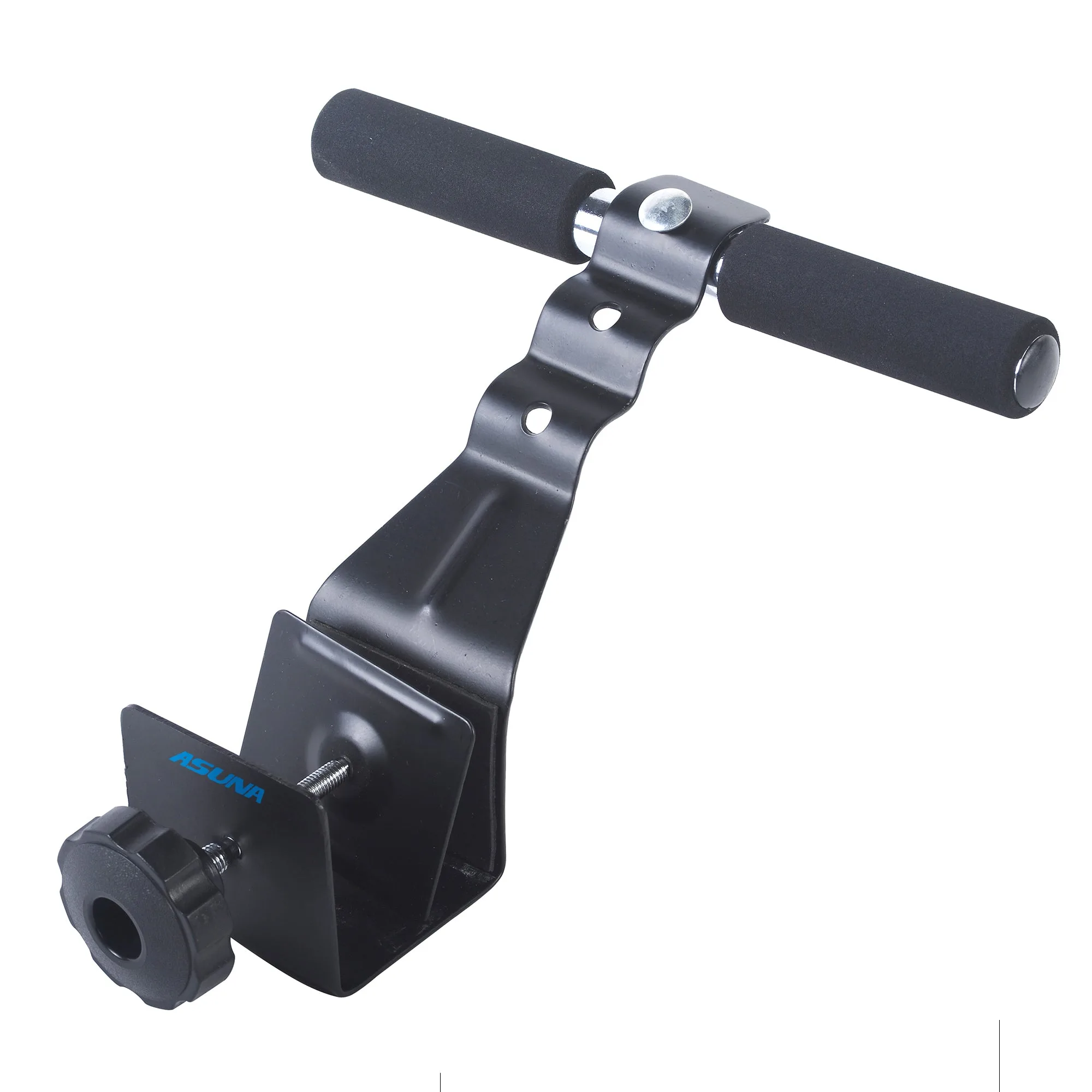
Asuna Sit Up Bar Attachment