Quick answer
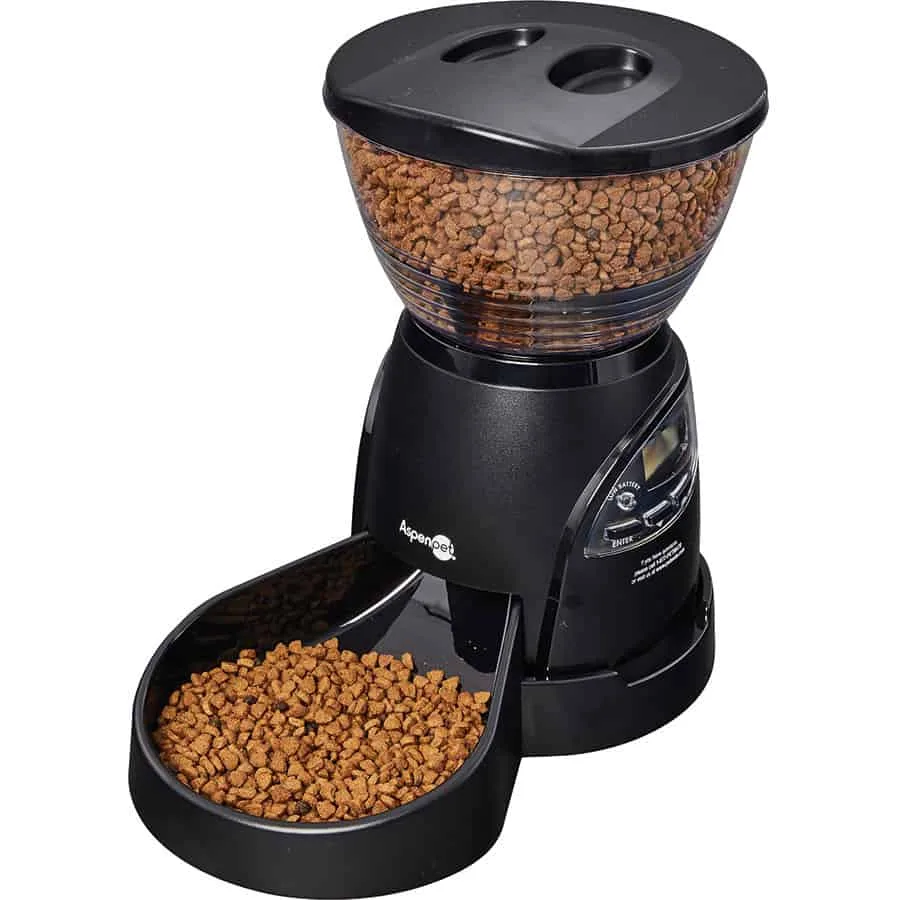
For most households, a programmable automatic feeder with adjustable portion sizes and multiple daily meals is the most reliable way to control portions. If your pet eats dry food and you want a simple, proven design, the Aspen Pet Lebistro Electronic Portion Control Feeder is a solid choice. For multi-pet homes or pets that need free access, a different approach may work better.
Why portion control matters more than you think
Overfeeding is one of the most common reasons pets gain weight, and it often happens because measuring cups vary or because multiple people feed the same pet. An automatic feeder removes that guesswork by dispensing the same amount at the same times every day. This consistency supports weight management, helps prevent begging, and makes it easier to follow a veterinarian's feeding plan. It also helps if you work long or irregular hours, since your pet gets meals on schedule even when you are not home.
Key features to compare before you buy
Not all automatic feeders are built the same. The most important differences come down to portion adjustability, programming flexibility, food compatibility, and power source. A feeder that only offers one or two portion sizes may not fit your pet's needs, while one that dispenses too much at once can defeat the purpose. Check how many meals per day the feeder can schedule and whether the portion size can be adjusted in small increments. Also confirm the feeder works with your pet's food shape and size; some feeders handle only small kibble, while others accommodate larger pieces. Finally, consider power: battery-only models are simple but require monitoring, while plug-in models with battery backup offer more reliability during outages.
How to set up an automatic feeder for success
Start by measuring your pet's current daily food intake with a kitchen scale or a consistent measuring cup, then divide that into the number of meals you want to serve. Program the feeder to match that total, and resist the urge to top off the bowl between meals. Introduce the feeder gradually: place it where your pet normally eats, and for the first few days, stay nearby during meals so your pet associates the feeder with positive experiences. Clean the food hopper and dispensing mechanism regularly according to the manufacturer's instructions to prevent clogs and keep food fresh. If your pet is on a prescription diet or has special dietary needs, confirm with your veterinarian that the feeder is appropriate.
Decision rules for choosing an automatic feeder
- Match portion range to your pet's meal size: Check the minimum and maximum portion the feeder can dispense. If your pet eats 1/2 cup per meal, a feeder with a 1/4-cup minimum lets you fine-tune. If your pet needs 1.5 cups, a feeder that maxes out at 1 cup won't work. Choose a feeder whose adjustable range covers your pet's typical meal size.
- Confirm food compatibility: Feeder openings and augers are designed for specific kibble sizes. Measure your pet's kibble diameter and compare it to the feeder's stated maximum. Very small or very large pieces can cause jams or inconsistent dispensing. If your kibble is outside the recommended size, look for a feeder with a wider chute or consider a different feeding method.
- Decide on power backup: Battery-only feeders are easy to place anywhere but depend on battery life. Plug-in models with battery backup keep working during power outages. Some feeders offer both options. If you live in an area with frequent outages or travel often, prioritize a model with battery backup.
- Plan for multi-pet households: Standard automatic feeders dispense food into a common bowl, which doesn't work if pets need different amounts or diets. For multiple pets, consider a feeder with a collar-activated door or separate feeding stations. One feeder per pet is usually the simplest solution unless you invest in selective-access technology.
Product facts to consider
- Aspen Pet Lebistro Electronic Portion Control Feeder 5 lb: Can be programmed to dispense 1/4 cup to 2 cups at 3 selected times per day; 5 lb capacity handles food sizes up to 3/4 inch diameter; requires 3 D batteries (not included). This feeder offers flexible portion sizes and multiple meals, making it suitable for many dogs and cats. The battery requirement means you'll need to plan for replacements, and the 3/4-inch limit means very large kibble may not work.
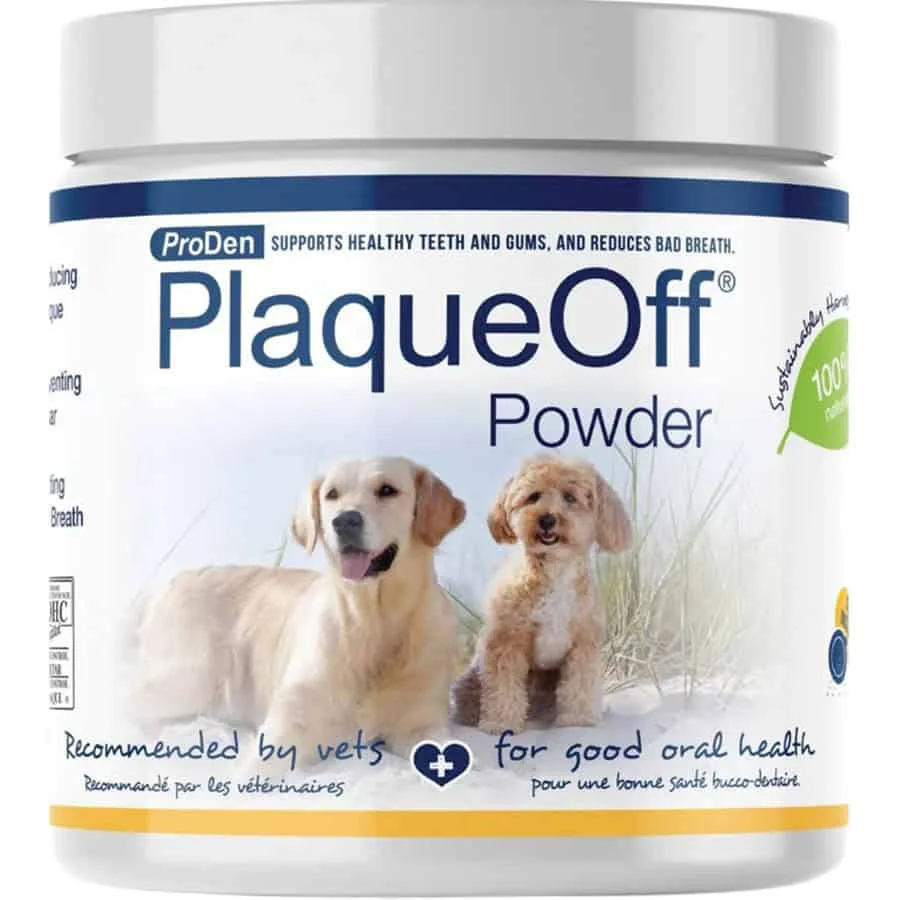
- ProDen PlaqueOff® Powder Dental Supplement for Dogs & Cats 6.4 oz: ProDen PlaqueOff Powder is a daily dental supplement made with North Atlantic seaweed, simply sprinkled over food. If you're using an automatic feeder, you can still support dental health by adding this supplement to the food bowl, but it must be mixed in manually—automatic feeders cannot dispense powder.
Is an automatic feeder right for you?
Best for
- Pet parents who work long or irregular hours and need consistent meal times
- Households where multiple people feed the pet and portion sizes vary
- Dogs or cats on a weight-management plan that requires precise portions
- Owners who want to reduce begging by separating feeding from human presence
Not for
- Pets on wet, raw, or mixed diets that cannot be dispensed from a dry-food feeder
- Multi-pet homes where pets eat different amounts and no selective-access feeder is used
- Pets with medical conditions requiring free-choice feeding or constant food access
- Owners who prefer to feed by hand and monitor every meal directly