Quick answer
Automatic feeders win on consistency and convenience when you're away, but manual feeding gives you direct control over portions and lets you bond with your fish. The right choice depends on your schedule and fish type.
Portion control and overfeeding risks
Manual feeding lets you adjust portions instantly based on how your fish behave, which helps prevent uneaten food from fouling the water. Automatic feeders, on the other hand, rely on pre-set doses that may not account for a fish's appetite on a given day.
However, many automatic feeders now offer multiple dose settings and anti-clump features to reduce waste. The EKOMIXO and MIXO feeders, for example, use a special mixing vibration to prevent clumps, ensuring each portion is consistent.
Reliability during vacations or busy weeks
If you travel frequently or work long hours, an automatic feeder is nearly indispensable. It can dispense food at the same times each day, removing the risk of missed feedings. Manual feeding relies on someone being home, which isn't always possible.
That said, automatic feeders depend on batteries and mechanical parts. A dead battery or jammed mechanism can lead to missed meals. The EKOMIXO and MIXO both run on batteries, so you'll need to check them before a long trip.
Interaction and observation benefits
Manual feeding gives you a daily chance to observe your fish closely. You can spot signs of illness, check water conditions, and enjoy the interaction. This is lost with an automatic feeder, which operates without your presence.
For fish that are shy or easily stressed, a consistent automatic schedule can actually reduce anxiety. But for social species that recognize their keeper, manual feeding strengthens that bond.
Trade-offs at a glance
- Convenience: Automatic feeders handle daily feedings without your presence. Manual feeding requires you to be home at feeding times.
- Portion control: Manual feeding allows instant adjustment based on fish behavior. Automatic feeders rely on pre-set doses, but models like the EKOMIXO and MIXO offer 10 dose settings to fine-tune portions. If your fish have variable appetites, manual feeding gives more flexibility.
- Reliability: Automatic feeders depend on batteries and mechanics. Manual feeding depends on human memory. Both can fail, but the risk is different. For vacations, an automatic feeder is more reliable than relying on a pet sitter.
- Interaction: Manual feeding provides daily observation and bonding. Automatic feeders remove this opportunity. If you enjoy watching your fish eat, manual feeding is better.
Product facts
-
EKOMIXO: Battery operated food feeder for fish with a see-through, detachable high capacity container (approx 90 ml) and 10 different dose settings. You can customize the portion size to match your tank's needs and easily see when to refill.
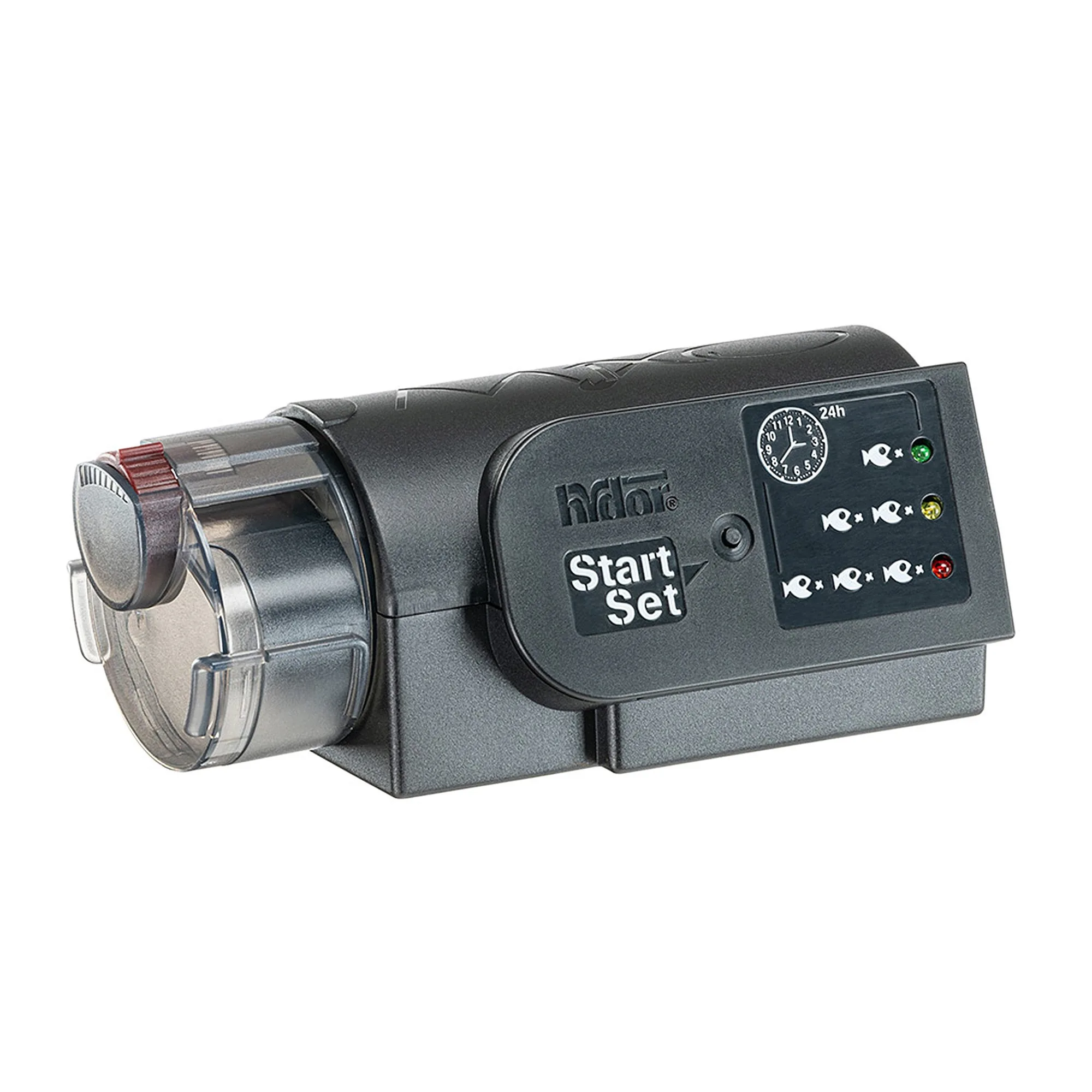
EKOMIXO
-
MIXO: Battery operated digital food feeder for fish with a see-through, detachable high capacity container (approx 90 ml), 10 different dose settings, and special mixing vibration that prevents clumps. The digital interface makes programming precise schedules simple, and the anti-clump feature ensures each dose is consistent and free of clumps.
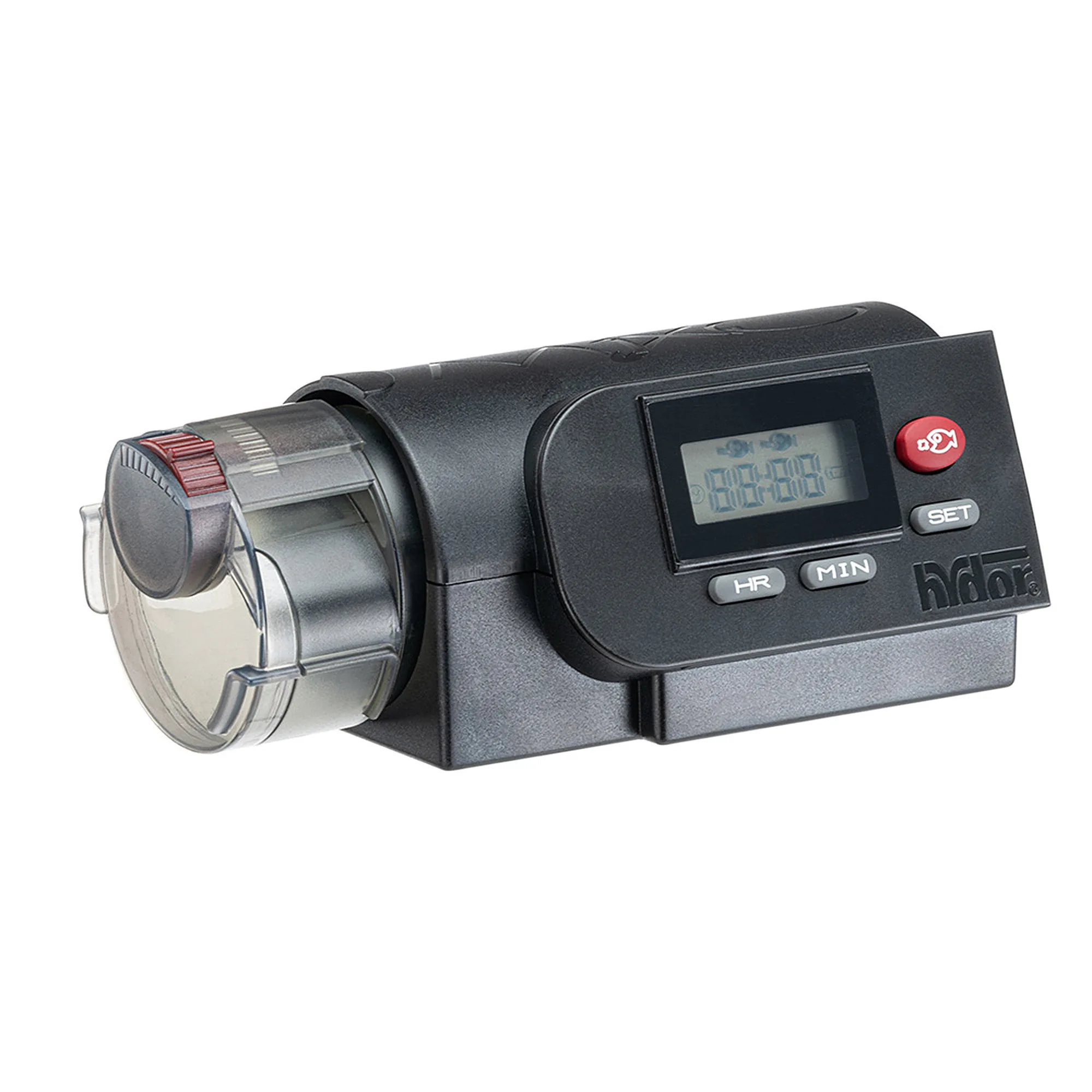
MIXO
Which one fits you?
Best for
- Busy fish keepers who travel or work long hours and need consistent feeding without daily attention.
- Aquarists with multiple tanks who want to standardize feeding schedules.
Not ideal for
- Keepers who want daily interaction with their fish and prefer adjusting portions based on real-time observation.
- Those with fish that have specific feeding needs (e.g., live food, hand-feeding) that automatic feeders cannot handle.