Quick Answer
If you want a modern, visual, and angle-proof transposition that you can perform surrounded, Ax3 is the stronger choice. If you prefer a classic, elegant three-card transposition with a clean, hands-off finish, Three Fly remains a timeless favorite. Your performance style and audience will ultimately decide which impresses more.
Three Fly
Card transpositions are a staple of close-up magic, and two effects often come up in conversation: Ax3 and Three Fly. Both deliver the impossible moment where cards change places, but they do it with different methods and feels. Understanding those differences helps you pick the one that fits your persona and performing conditions.
In this comparison, we'll look at what each effect offers, the trade-offs in handling and visual impact, and which audiences each one suits best. We'll also reference related products from our store to give you concrete options if you're ready to add one to your routine.
What Makes Ax3 Stand Out?
Ax3 is a modern take on the three-card transposition, known for its visual clarity and directness. It often plays as a series of quick, impossible exchanges, sometimes building to a final kicker. The handling is designed to be clean, with cards openly changing places in front of the spectator's eyes.
The main strength of Ax3 is its visual impact. Because the transpositions happen openly, it reads as pure magic even to lay audiences. It also tends to be more angle-proof, making it suitable for close-up settings where spectators are on all sides. However, the method may require more practice to perform smoothly, and the props might be more specialized.
- Practice the handling until the changes look natural and unhurried.
- Use it in walk-around or table-hopping situations where angles matter.
The Enduring Appeal of Three Fly
Three Fly is a classic plot: three cards are placed face down, and one by one they change places with three face-up cards, often culminating in a final, surprising transposition. Its beauty lies in its simplicity and the elegance of the method, which often allows for a hands-off approach.
The strength of Three Fly is its theatrical pacing. It lets you build suspense with each successive change, and the final moment can be a showstopper. It's also versatile: you can perform it with a borrowed deck in many versions, making it ideal for impromptu situations. The trade-off is that some versions are more angle-sensitive and require careful positioning.
- Consider the classic plot if you want a routine that builds to a climax.
- Check whether your version works with a borrowed deck for impromptu performances.
Comparing Visual Impact and Handling
When it comes to pure visual impact, Ax3 often wins because the changes are more direct and visible. Spectators see the cards transform in front of them, which can be more startling. Three Fly, on the other hand, relies on misdirection and timing; the changes may be covered by a hand or a card, but the effect is still powerful.
visible
Handling is another key difference. Ax3 typically involves more intricate moves, which means a steeper learning curve. Three Fly, especially in its classic forms, can be easier to master but may require more attention to angles. Your skill level and practice time should guide your choice.
Performance Fit: Which Suits Your Style?
Your performing persona matters. If you're a high-energy, visual magician who likes quick, hard-hitting effects, Ax3 aligns well. If you're more of a storyteller who enjoys building a narrative with a classic plot, Three Fly gives you that framework.
Audience type also plays a role. For a casual or mixed audience, Ax3's visual nature tends to get a stronger reaction. For magicians or more sophisticated laypeople, Three Fly's elegant construction may be more appreciated. Consider your typical gigs and choose accordingly.
Trade-offs to Consider
- Visual Impact: Ax3 typically offers more direct, visible changes that are immediately impressive to lay audiences. Three Fly's changes are often more subtle and build over time. If you need instant reactions, Ax3 has the edge.
- Handling Difficulty: Ax3 often involves more intricate sleights and requires dedicated practice. Three Fly versions can be simpler, but some are angle-sensitive. Beginners may find Three Fly easier to start with.
- Angle Sensitivity: Modern Ax3 routines are often designed to be angle-proof, making them safe for surrounded spectators. Many Three Fly versions require careful positioning to avoid flashing. For walk-around, Ax3 is more forgiving.
- Impromptu Potential: Some Three Fly versions work with a borrowed deck, making them great for impromptu situations. Ax3 may require special props or setup. If you need to borrow a deck, check the Three Fly version's requirements.
Related Products to Consider
- Quantum: A 'Quantum' is the smallest amount of something that can exist by itself. It's no wonder then, that Justin Miller calls this tiny, effortless movement containing both a Transposition and a Sandwich effect his 'Quantum'. A pair of court cards are removed from the deck and inspected by the spectator, before being inserted partially back into the pack - left out-jogged. A card is chosen, signed and held away from the... If you enjoy the transposition plot but want a compact, self-contained routine, Quantum offers a different take that combines a transposition with a sandwich effect.
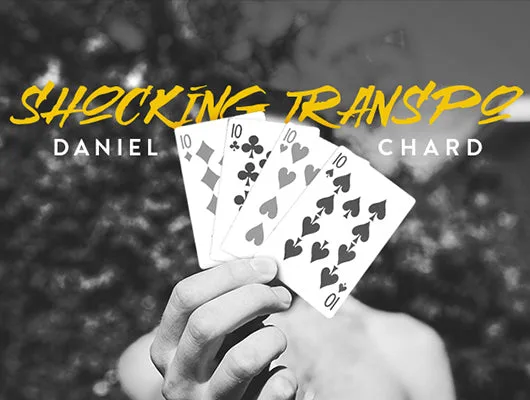
- Shocking Transpo: Instantly produce a four of a kind at the snap of the fingers - then take it to the next level by switching all four cards...Twice. Daniel Chard has created a version of Paul Harris’s ‘Reset’ that takes it out of the realm of packet trick and into a masterpiece using a full deck. Four Kings are produced in a flash, and then instantly changed into the four aces. The Aces are placed aside and the Kings shuffled back... If you want a transposition-style effect with a bigger payload, Shocking Transpo offers a full-deck routine with multiple changes, giving you a different kind of wow factor.
Which Should You Choose?
Best For
- Magicians who perform in close-up, walk-around settings where angles are a concern and want a visual, direct transposition.
- Performers who are willing to invest practice time to master a more intricate routine for a stronger payoff.
Not For
- Magicians who prefer a classic, elegant plot that can be performed impromptu with a borrowed deck.
- Those who are just starting out and want a simpler handling to master quickly.
Both Ax3 and Three Fly are impressive card transpositions, but they serve different performance needs. Ax3 shines with its visual, angle-proof directness, while Three Fly offers a classic, build-up approach that can be more impromptu. Consider your style, audience, and practice time to pick the one that will make your spectators gasp. Whichever you choose, the key is to practice until it's smooth and natural.