Quick answer
Do a baby carrier fit check in front of a mirror or a phone camera. The carrier should hold your baby high and tight, with the panel supporting the back of the head and the seat reaching knee-to-knee. If you can fit more than two fingers between the carrier and your baby's back, or if your baby's chin drops toward their chest, stop and adjust before you walk away.
What a correct babywearing position looks like
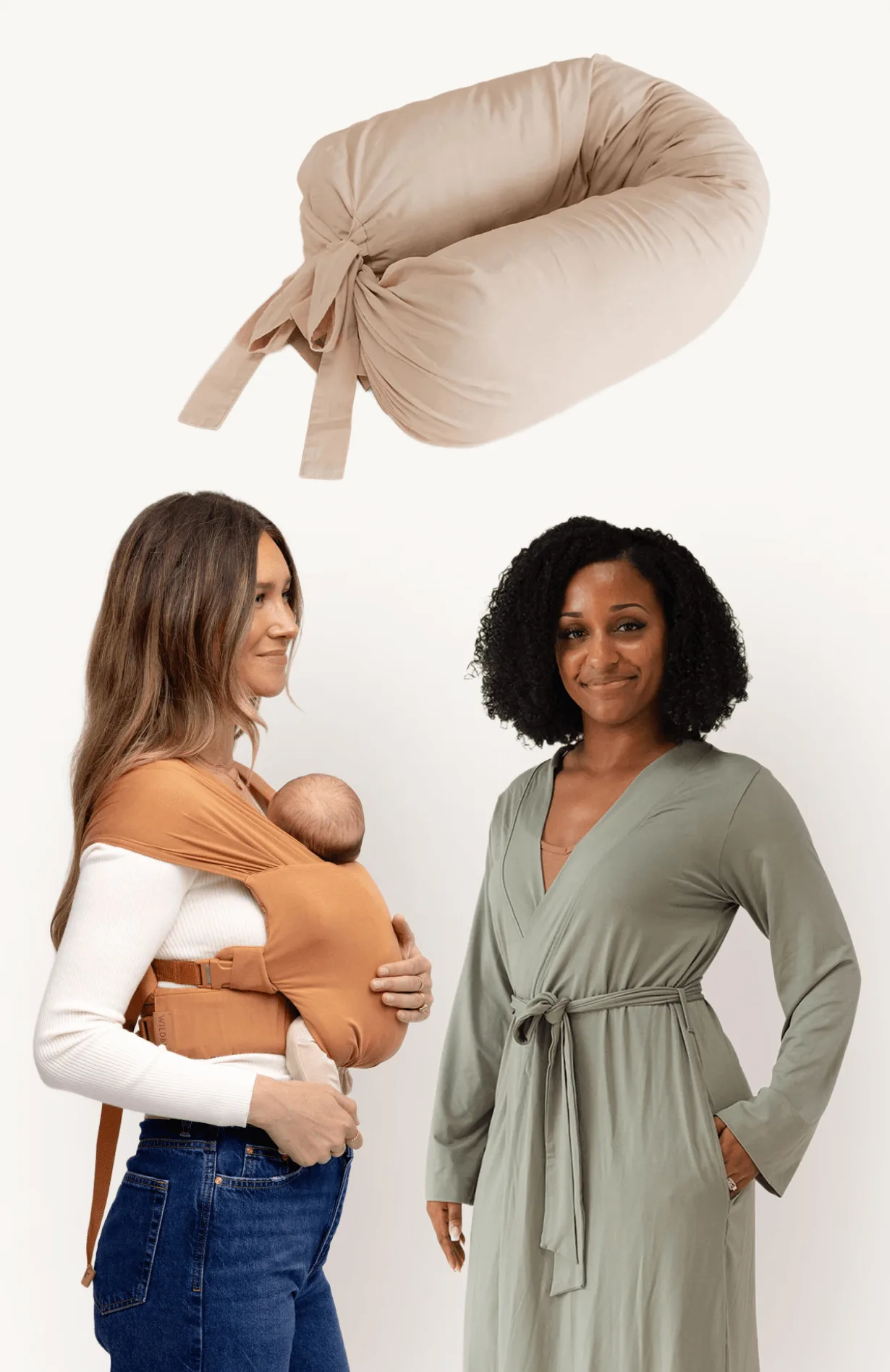
A correct babywearing position has three non-negotiables: visible airway, supported spine, and a supported seat. Your baby's face should always be visible and clear of fabric, with the chin off the chest and no fabric covering the nose or mouth. The back should be gently rounded, not slumped, and the knees should sit higher than the bottom so the hips fall into an M shape. In a soft-structured carrier, the waistband carries most of the weight, not your shoulders. If your shoulders ache within minutes, the waistband is probably too low or too loose.
Carrier too loose signs you should not ignore
Loose carriers are the most common fit problem because they feel comfortable at first. Watch for these carrier too loose signs: your baby sags lower as you walk, the shoulder straps slide outward, the panel gaps away from your baby's back, or you instinctively support the carrier with one hand. A loose carrier also lets your baby slump, which can push the chin toward the chest and narrow the airway. Tighten the waistband first, then the shoulder straps, then the adjusters closest to your baby's back. Recheck in a mirror after every change.
Ring sling fit tips for a secure seat
Ring slings follow the same safety rules but need a different tightening sequence. Put the rings high on your shoulder, thread the tail, and tighten the bottom rail first so the fabric cups your baby's bottom. Then tighten the top rail until your baby is snug against your chest. The fabric should run from knee to knee, not just across the middle of the back. Check that the rings sit at your shoulder, not on your neck, and that the tail is long enough to tuck away. If the sling feels loose after ten minutes, retighten the bottom rail before the top.
Adjusting a soft structured carrier for your body
A soft structured carrier fit depends on matching the panel and waistband to your torso. Fasten the waistband first, level with your belly button or slightly higher, and tighten it until it stays put when you bounce gently. Put your baby in, then tighten the shoulder straps one side at a time. The panel should reach from the base of your baby's neck to the back of the knees, and the straps should sit flat, not twisted. If your carrier has a size range, choose the range that matches your body measurement rather than guessing by height.
Step-by-step baby carrier fit check
- Start with the waistband: Fasten the waistband level with your belly button and tighten until it stays in place when you bounce gently. Common mistake: wearing it too low on the hips, which lets the carrier sag and puts weight on your shoulders. Checkpoint: the waistband should not slide down when you lift your arms.
- Settle your baby high and tight: Place your baby against your chest with their knees higher than their bottom and the panel supporting the back of the head. Common mistake: letting the baby sit too low, which makes the carrier feel loose even when the straps are tight. Checkpoint: you should be able to kiss the top of your baby's head without straining.
- Tighten the shoulder straps one side at a time: Pull each shoulder strap until the carrier hugs your baby's back without pressing on their face. Common mistake: overtightening one side, which twists the panel and pulls the carrier off-center. Checkpoint: the panel should sit flat and centered, with no gap at the small of your baby's back.
- Check the seat and knee position: Slide your hands under your baby's bottom. The fabric should run from the back of one knee to the back of the other, with the knees higher than the hips. Common mistake: a narrow seat that lets the legs dangle straight down. Checkpoint: the M shape should be visible from the side.
- Confirm the airway and head support: Look at your baby's face in a mirror. The chin should be off the chest, the nose and mouth clear of fabric, and the back of the head supported by the panel. Common mistake: pulling the panel up over the chin, which can block the airway. Checkpoint: you can always see your baby's face without moving fabric.
- Recheck after ten minutes: Walk around, then look in a mirror again. Tighten anything that has shifted, starting with the waistband. Common mistake: assuming the first fit is final, when most carriers settle once your baby relaxes. Next step: if the carrier still feels loose, adjust the size range or try a different carry position.
Carrier details that affect fit
- Damson - Aerial Carrier: The WildBird Damson Aerial Carrier is a soft-structured carrier in pale sky blue with grey undertones, available in two size ranges: XS-XL and L-4XL. Choosing the size range that matches your body measurement helps the waistband stay level and the panel sit knee-to-knee, which are two checkpoints in the fit check.
- Acadian - Aerial Carrier: The WildBird Acadian Aerial Carrier is a soft-structured carrier in dusky sage green with color-matched straps, mesh, and buckles. Color-matched straps and buckles make it easier to see twists or loose adjusters at a glance, so you can spot a fit problem faster.
- Sparrow - Linen + Maple Ring Teether: The Sparrow Linen + Maple Ring Teether is a carved maplewood bird with a length of soft linen that snaps on and off for washing. A teether that snaps off keeps the linen clean and gives your baby something safe to chew while you finish tightening the carrier.