Quick answer
Wash your baby's cashmere cardigan by hand in cool water with a gentle wool detergent, never wring or twist, dry flat on a towel away from heat, and store folded in a breathable cotton bag. Avoid hanging, which stretches the delicate knit, and skip fabric softener, which coats the fibers and reduces softness.
Why cashmere needs special care
Cashmere fibers are much finer than sheep's wool, making them incredibly soft but also more prone to stretching, pilling, and felting if handled roughly. A baby cashmere cardigan, like the Rosa Baby Cashmere Cardigan, is a timeless investment piece — but only if you treat the knit gently. The biggest mistake is treating it like a regular cotton sweater: hot water, machine agitation, and the dryer will ruin the fabric in one cycle.
Pilling is normal for cashmere, not a defect. It happens when short fibers work loose and ball up on the surface. A cashmere comb or fabric shaver removes pills without damaging the knit. The key is to catch pills early, before they mat into the fabric.
What you'll need for hand washing
Gather a basin or clean sink, cool or lukewarm water (below 30°C / 86°F), a pH-neutral wool or cashmere shampoo, and a large, clean towel for drying. Never use regular laundry detergent, which contains enzymes that break down animal fibers. If you don't have a wool-specific detergent, a tiny amount of baby shampoo works as a backup.
Step-by-step cashmere care routine
- Step 1: Pre-treat stains gently: Spot-clean any visible stains with a drop of wool detergent diluted in cool water. Dab — don't rub — using a soft cloth. Rubbing pushes the stain deeper into the fibers and can cause felting. Checkpoint: If the stain is oily, apply a tiny amount of cornstarch to absorb the grease before washing.
- Step 2: Hand wash in cool water: Fill a basin with cool water and add the recommended amount of wool detergent. Submerge the cardigan and gently squeeze the soapy water through the knit. Do not scrub, twist, or wring. Let it soak for 10–15 minutes, then drain and refill with clean cool water to rinse. Repeat rinsing until no suds remain. Common mistake: Using hot water or agitating the fabric causes shrinkage and felting. Always keep the water cool.
- Step 3: Remove water without wringing: Lay the wet cardigan flat on a clean, dry towel. Roll the towel up like a jelly roll and press gently to absorb excess moisture. Unroll and transfer the cardigan to a second dry towel, reshaping it to its original dimensions. Checkpoint: Never hang a wet cashmere cardigan — the weight of the water will stretch it out of shape permanently.
- Step 4: Dry flat away from heat: Place the cardigan on a drying rack or a flat mesh surface in a well-ventilated area, out of direct sunlight and away from radiators. Flip it over halfway through drying to ensure both sides air out evenly. Drying usually takes 24–48 hours depending on humidity. Common mistake: Using a tumble dryer, radiator, or hairdryer will shrink and roughen cashmere. Patience is the only safe drying method.
- Step 5: Store folded, not hung: Once completely dry, fold the cardigan and store it in a breathable cotton storage bag or on a shelf. Hanging stretches the shoulders and creates permanent bumps. Add a cedar block or lavender sachet to deter moths, which are attracted to natural fibers like cashmere. Checkpoint: For long-term storage, avoid plastic bins — they trap moisture and can cause mildew. Use a fabric bag or acid-free tissue paper instead.
Product spotlight
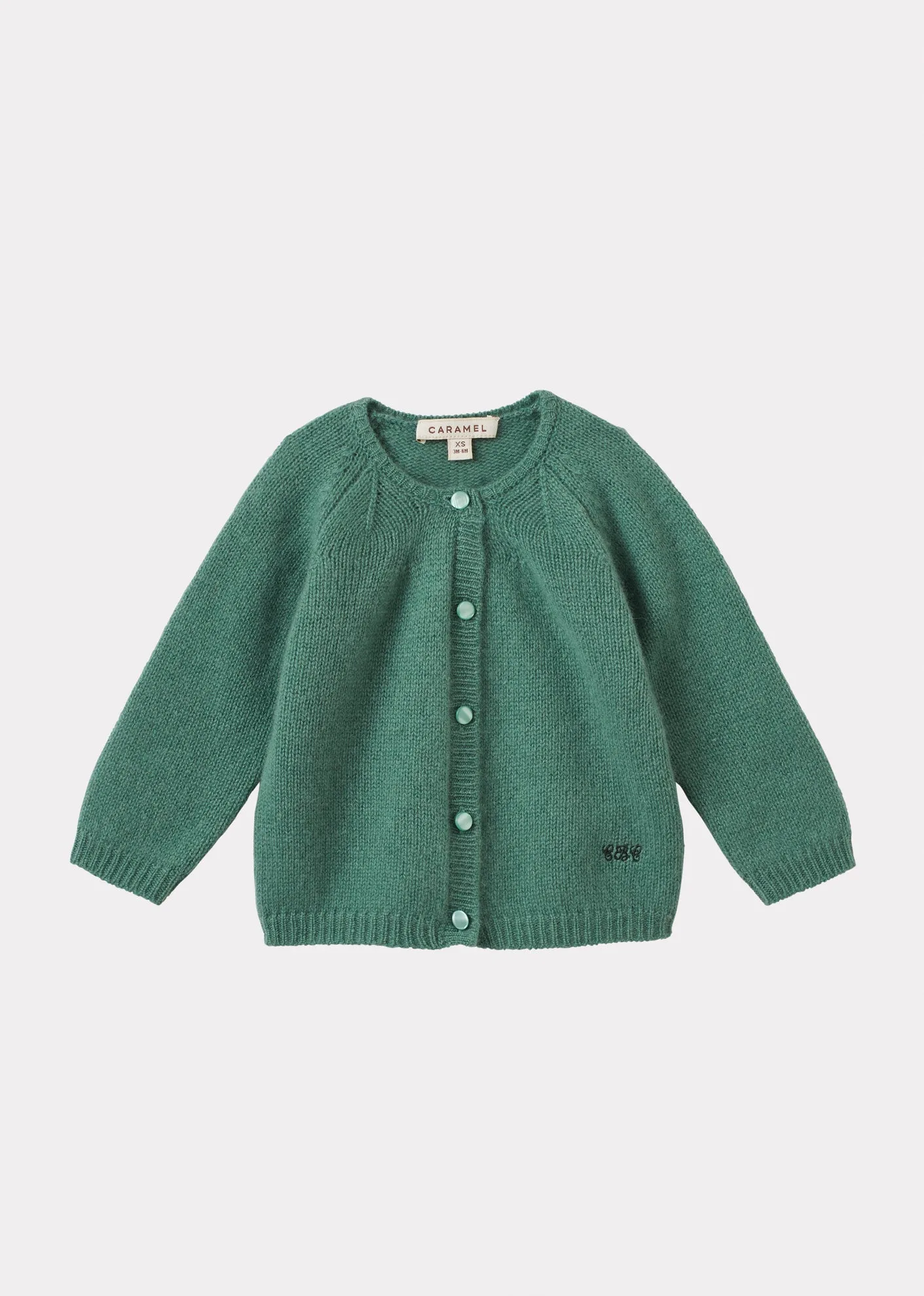
- ROSA BABY CASHMERE CARDIGAN - SAGE: The Rosa Baby Cardigan is crafted from feather-soft mid-gauge cashmere in soft green. It boasts a round neckline and elegant raglan sleeves, with ribbed detailing at the cuffs, neckline, and hem, and opalescent buttons — a timeless classic and a perfect baby gift. Mid-gauge cashmere is less prone to snagging than ultra-fine gauge, but still requires gentle washing. The ribbed details and opalescent buttons mean you should turn the cardigan inside out before washing to protect the buttons and prevent the ribbing from catching.