Quick Answer
For most babies, a baby comforter with a soft body and chewable parts offers more soothing versatility than a flat lovey, especially during naps and night waking. Choose based on your baby’s age and sleep habits.
Material and Texture Differences
A baby comforter often combines multiple textures—like organic cotton and natural rubber—to engage touch and chewing. A lovey is typically a flat, soft square with a small animal head, offering simpler sensory input.
If your baby self-soothes by chewing or mouthing, a comforter with a natural rubber part may be more satisfying. If they prefer stroking or hugging, a lovey’s plush surface might be enough.
Safety and Age Considerations
For newborns and infants under 12 months, the American Academy of Pediatrics recommends a bare crib—no loose objects. Both comforters and loveys are typically introduced after 12 months when the risk of SIDS decreases.
Always supervise use and follow the manufacturer’s age recommendations. A comforter with small parts, like a rubber apple, should be checked for secure attachment.
Trade-Offs at a Glance
- Soothing Features: Comforters often include chewable parts and varied textures, offering more sensory input than a flat lovey.
- Portability: Loveys are typically smaller and easier to tuck into a diaper bag or stroller, while comforters may be bulkier. If you travel often, consider size and how easy it is to keep clean.
- Age Suitability: Both are safe for older babies (12+ months) when used as directed. For newborns, avoid any loose sleep aids in the crib. Check the product’s age recommendation and always supervise first uses.
Product Facts
-
Baby Comforter, Pepa the Apple: Pepa the Apple Big Doudou features organic cotton fabric, soft leaf details, and a 100% natural rubber apple, measuring 52 cm. The combination of soft fabric and chewable rubber gives babies multiple ways to self-soothe, while the generous size is easy for little hands to hug.
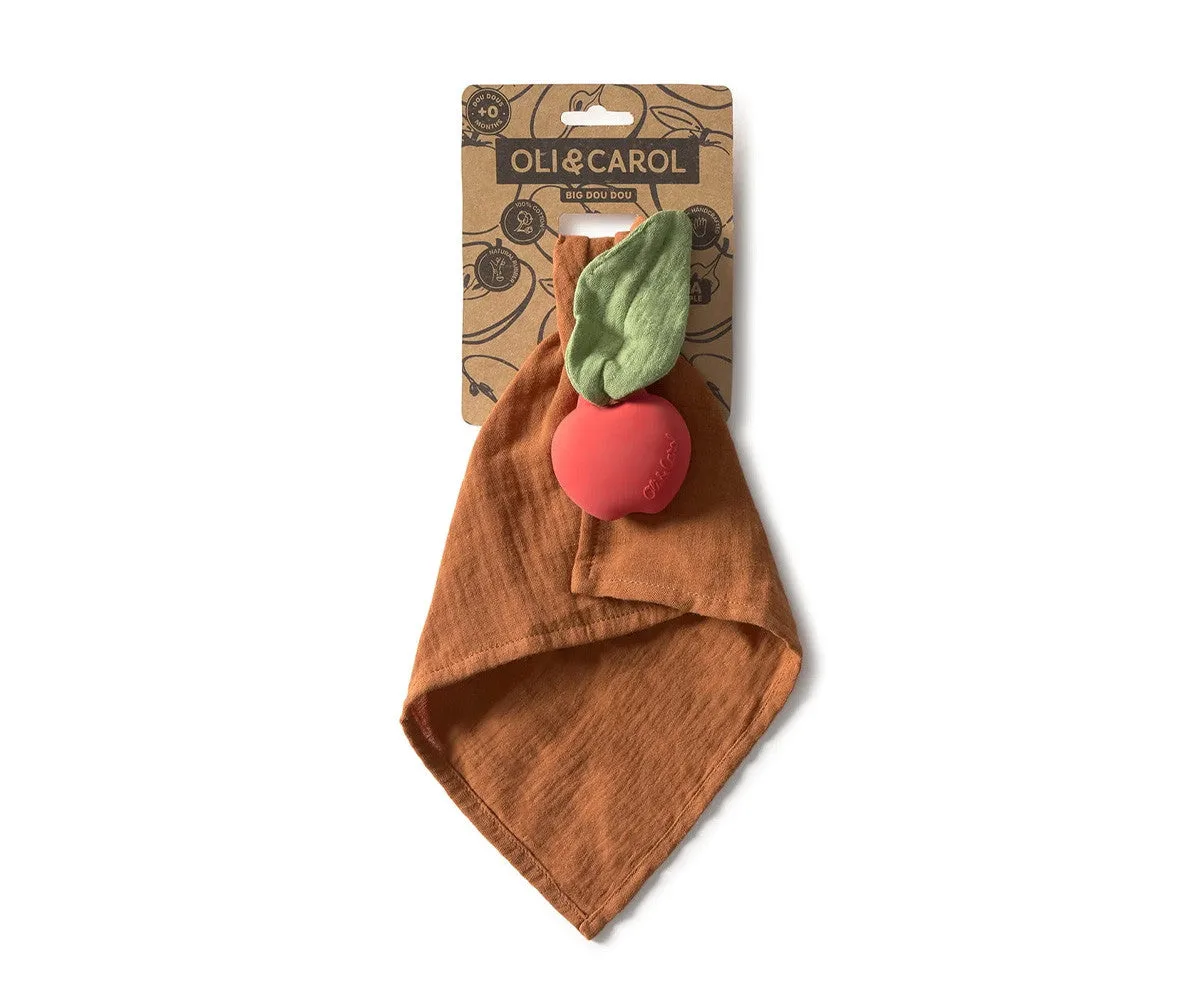
Baby Comforter, Pepa the Apple
Which Should You Choose?
Best for
- Babies who chew or mouth objects to self-soothe
- Parents wanting a multi-textured comfort object for naps and travel
Not for
- Newborns or infants under 12 months (safety guidelines recommend a bare crib)
- Parents who prefer a compact, flat comfort item for easy portability